rotating header

Sunday, July 16, 2017

2017 Africa Reading Challenge

5 books from, or about, this continent.  That's the only rule.
Here's the site that focuses on blogging about literature and poetry from Africa, which is something we all need more of in our life.

And here are my 5 books (so far) for 2017:


Ngugi Wa Thiong'o grew up in Kiambu county, Kenya, very close to where we live.  He was born in 1938, making him a near contemporary of my own parents.  Reading the history of Kenya as an eye witness account through the eyes of a child is well worth the effort.  I prefer his novels, such as The River Between, for writing style.  However this book offers an important alternative history that contrasts with the more popular accounts of the colonists.  As an American doctor working in Kenya with a mission agency, it is important to me to acknowledge that the history of white people in Kenya is permeated with terrible injustice and tragedy, even if sprinkled with courageous health care and education.  Thiong'o recognizes the struggle of Kenyans to speak, to control, their own education and future.  Worth the read.


This read I can best describe as painful truth.  Gyasi tells the sweeping epic of hundreds of years of history by following two branches of a fictional family through generations, until they meet again.  The chapters are named for key characters in the lineage, and she uses certain images of water and fire to connect the stories.  The author is Ghanian-American woman, and a very very talented writer.  She deftly weaves West Africa with the story of enslaved people brought to America, both in the South and in Harlem.  As hard as the stories are, she draws you in with her empathetic ear for dialogue and her vivid descriptions.  The sexuality in this novel is mostly violent or tragic.  She does not gloss over the horrors of war and slavery.  This is not an easy read.  However the ending I found hopeful. My favorite genre is "dark and redemptive" and this novel fits.  Because that's the story of the world.


This book is a collection of short stories that read like a chat around the campfire.  Arensen grew up in Tanzania and Kenya and then worked in Sudan.  He draws upon a lifetime of adventures to paint life in East Africa in its beauty and drama.  This is a generally positive view of this part of the world.  Arensen can be funny, and he has a real talent for taking what seem like normal incidents of daily life and making them interesting enough to read in a book.  Some of his family still live near Naivasha, which makes this even more of a treat.


I have to admit that I ordered this book hoping for another meaty, long read by Adichie ( I did notice the price was surprisingly good, so that should have been a clue, and mine didn't have the nice red tag "short" on the cover).  I read Americanah a few years ago, and some of her other books prior, and wanted more.  Instead it is a very tiny volume that basically reprints a TED talk.  That said, I think it's worth a quick read.  Feminism from an African standpoint is survival.  It is about justice.  It is where the rubber meets the road in the Gospel stories.  She is forthright and sensible and thought provoking.   Nigerians and Indians are saving the English language in my opinion, the greatest talents are coming from those countries.  This isn't lyrical like her novels, but still a good short read to listen to another's opinion and story.


Surprise!  The last one by me.  Sincerely I have read this book about five times in the last few months of editing, so it definitely counts, even though the publication date is still just over a month away. Quality literature written in and set in Africa, about contemporary continental challenges, with African kids as heroes, needs a wider audience.  Please buy a few and send them to your local library or school, or give them to your kids or grandkids.  This is the third in the Rwendigo Tales series.  Each book relates loosely in characters and setting to the others, but can stand alone as well.  As with the others, the Read A Story, Change A Story benefit of royalties to enable real kids to write new endings still applies.  Hope you enjoy.  Available for pre-order at Amazon or New Growth Press.


You can link to the 2017 African Reading Challenge web site for more suggestions, and feel free to leave comments here on what your favorite African reads of this year might be.

Thursday, July 13, 2017

Kenya Nursing Strike, is anyone paying attention???

The public sector nurses went on strike six weeks ago.  Has anyone noticed?  The poorest once again lack health care, lack immunizations, lack labor and delivery services, lack options for ill family members, lack supervised TB therapy.  I googled and found only two news stories this week, here and here.

So, a little eye-witness reporting.
This baby's brain may never recover from the strike.  His mom came to our hospital three times last weekend, having been turned towards public care after a private clinic found her with dangerously high hypertension and bleeding (and probably not enough money) . . . but all three times she was sent away because of the strike.  The fourth time, she met the requisite standard for inevitable delivery (6 cm dilated) so she got to stay, but her labor progressed so slowly and the baby's distress was so unrecognized, that he was born in critical condition.  Because our hospital is trying to keep some minimum emergency care available, our medical director has hired some non-union temporary nurses.  But partly out of solidarity with the strikers, and their concerns, the temporary nurses still follow guidelines agreed upon to make it clear that this is not a normal situation (like not admitting anyone in labor until they are 6 cm dilated).  And partly because the funds for hiring nurses are limited and they have to cover many areas with few people, the care is not as good as normal (and normal is still very far from perfect).  I suppose the politicians are supposed to notice, but in reality the babies pay the price. And the moms.  After only two maternal deaths in the 9 months we worked from October to June . . there have been two maternal deaths THIS WEEK.  


As you can see, our newborn unit still has babies, moms, student nurses.  Because in Naivasha, the private care paradoxically lags far behind this public hospital. So the sickest babies, even if born at a private clinic, find their way back.  I had one die this week who would have been born here were it not for the strike, but instead had substandard private care and arrived too late to save.


In a few months or years, who can count the cases of tetanus and measles that will spread through Kenya because the entire vaccine system has been disrupted?  Some of the private clinics are trying to make use of the otherwise-expiring public stores . . but charge 100-200 KSH (1-2 $) as a service fee for administering them.  That's a daily wage for most of our clients.  A huge barrier.


So we have our most trusted senior nurses sitting at home, frustrated, asking that the government legally sign the agreement they wrote months ago.  We have the governors saying that paying each nurse an extra $250/month will break their budget (remember the average wage here is about $60/month).  We have the central government trying to deflect any attention from this health crisis in order to focus on staying in power through the upcoming election.  We have hospital administrators trying to eke out some minimum services.  We have doctors, and those in training, trying to care for patients and learn, which is not possible without nurses on the team.  We have public health faltering in delivery of vaccines, HIV and TB drug programs, school programs, the backbone of health all run by nurses.  We have parents who agonize over the lives of their children with no ability to pay for private care.  We have half our normal load of patients, knowing that the other half aren't well, only excluded.  

And most ominously, we have the psychological discouragement of a fragile system that limps along with inadequate resources.  I read a Kenyan proverb today:  Hope is the pillar of the world.  But hope is fading, and the world is shaking.  I see it in the trainees, those who sat out the doctor strike have never quite recovered, coming later, leaving earlier, demoralized and unmotivated.  Those who wanted to dedicate their lives to public service feel unseen and unheard.  Participating in a system that feels antagonistic and uncertain leaks the life out of us all.  This week a senior surgeon in our area was found dead in his home.  The strikes take a toll on mental health of providers, too.

So once again, we ask that the world not forget Kenya.  That the government work towards a solution.  That God intervene in hearts to bring real healing and peace.  That miracles continue to fill the gap between peoples' needs and available care.  That we have wisdom to walk in this murky situation, shining a little light.  Thanks for listening.


Wednesday, July 12, 2017

In whom I am well pleased

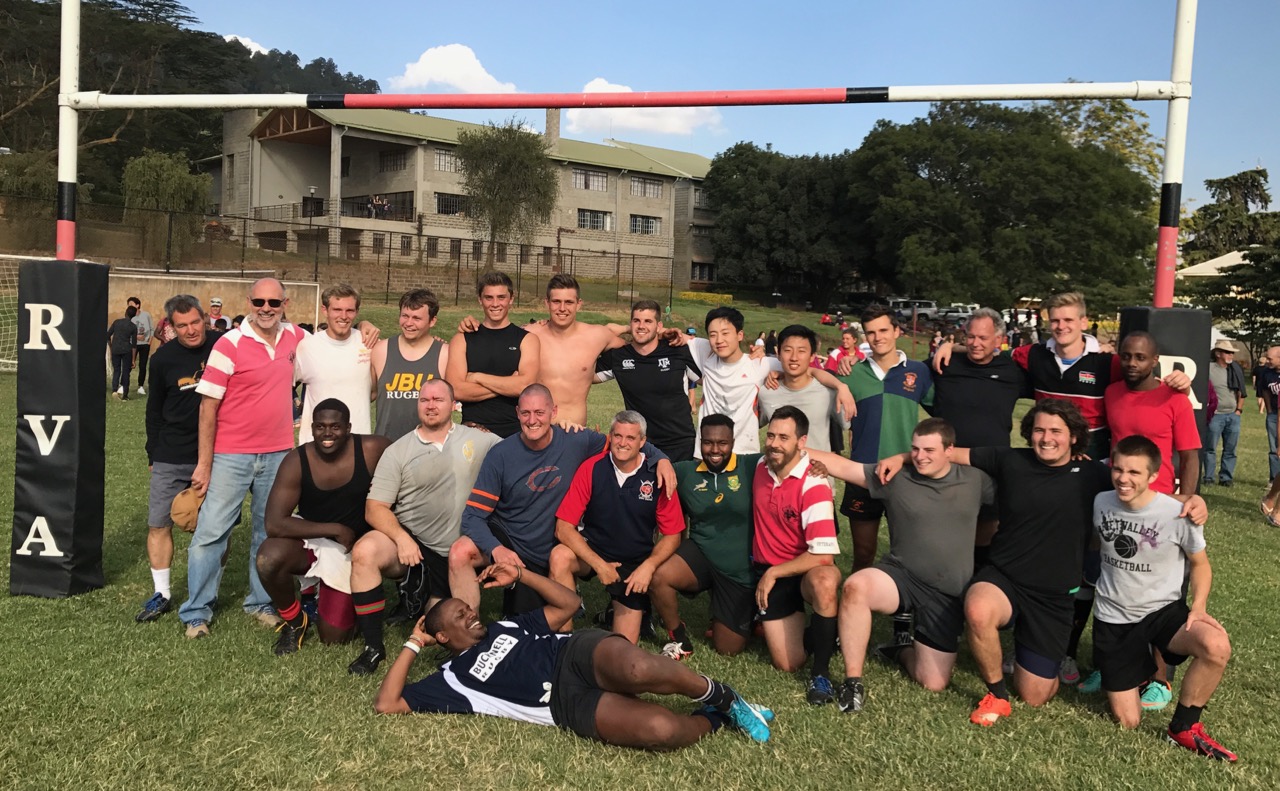
Our youngest dropped in for a few days, between his semester-in-six-weeks studying French in Aix-en-Provence and his semester-in-four+-months studying engineering in New Zealand.  He came bearing some French goodies like local cheese and scented soap, and full of stories of his adventures in language.  We hiked our local volcano, and by the wildlife-laden lake.  We worked on visas and finances.  We hosted a few of his friends.  And we cheered in the alumni games as his class returned (40 of them!!) to RVA to touch base with each other and teachers and dorm parents after two years of dispersion.  And then, all too soon (we had about 6 days of intersection) we took him to the airport once again.


Neither Scott nor I were ever youngest children, and there are unique joys to each birth order position.  But three years ago it was just the three of us through Jack's senior year, and this visit was a bittersweet memory of that time.  The phrase that comes to mind is God's voice over His own son, affirming the PLEASURE of watching someone you love mature, thrive, speak wisely, strive passionately, hug warmly, laugh freely, run fast, and live thoughtfully.  Visits are a glimpse of a life that was, and will be.  A sip of a delicious unity.  A treat of joy in presence.  As much as we would like them to go on and on, we acknowledge he's off to the life God is giving him and we TRY to remember to just gratefully accept the days we have.

So .. enjoy a few phone photos below, and pray for our faith as we trudge on with our empty nest, until the next visit.  Nothing like being a parent to make one long for the no-more-tears of eternity.  And if you're struggling with whining babies, wild toddlers, weepy teens or anything in between, take a deep breath. They're going to turn out amazing in spite of all of us, our foibles, our dragging them into wars and diseases and our own sin.  Because this is not just our son, he's God's son, and we are all pleased as we see the glory shine through.


Tuesday, July 04, 2017

On Just Mercy, and Creating Noise

Yesterday I was walking down the hospital sidewalk with a Kenyan friend and colleague whom I greatly respect.  She talked me off the ledge last week, and I value her wisdom.  I was lamenting that one of our discharged NICU preems was still in her cot; she has been held hostage for weeks now over inability to pay her bill, even though costs here are quite low with government subsidies.  She doesn't even look like a preemie any more as she gains and grows.  My friend said something along the lines of, well, I used to try and advocate for individual patients, but I found it just created noise.  In other words, be quiet and let the system (slowly) work, because if you call attention to the dysfunction it just generates ill will.  Focus on the places we can make an impact, like this afternoon session teaching "Helping Babies Breathe" to our interns.


She's probably right.

As God is my witness, I've generated some serious ill will lately.  The week before I had bugged social work and hospital administration repeatedly over the cases of two other kids, both with AIDS, from desperately poor families struggling with their own illnesses.  I could feel the hostility.  Then I spoke up, in what I thought was an appropriate, anonymous, and systems-improvement-oriented manner, about some gaps in our own team's care which I believe contributed to a death and could have resulted in several more.  Gossip and assumptions percolated until I got texts saying "working with you is unbearable" and "do you know everyone has a problem with you, no one wants to work with you, do not interfere with how we work."  Those are not paraphrases, they are direct quotes.  And they hurt.

I am sharing this because I've been at this for 24 years, and it is still murky.  And hard.  I still struggle with the wisdom of finding that line between cultural acceptance and passive aggression.  When does the lack of noise represent playing into an unjust system, and when does it represent humility?  Could I have been more gracious, wise, patient, and kind?  YES, always.  Should I acquiesce to systemic dysfunction because it is the delicate balance of this reality?  Maybe, sometimes.  Can my education, my otherness, my skin color and nationality, my age, my verbal tendencies, all become liabilities of power that wound?  Sadly they can.  What would Jesus do?

The answer to that I find complex, and impossible to dictate.  Jesus observed Jewish cultural norms that will not necessarily be universal or eternal: temple visits and festivals, synagogue reading of scrolls, choosing men as his closest disciples for his itinerant teaching.  Jesus also created a LOT of noise.  Healing on the sabbath, challenging the perceived righteousness of the established leaders, defining love with an enemy as the example (the "good" Samaritan), touching the unclean.  Only he knew how to do that with perfect wisdom, and with genuine love for all involved, both oppressed and the rule-blinded enforcers.  I don't.

So where does that leave me, and probably most cross-cultural workers who join the struggle for justice and healing and hope, then find that attempted change meets serious resistance and generates quite a bit of noise?

Mostly, I think, we have to embrace over and over the paradox of the prophet--speaking truth requires love.  Acting for mercy requires humility.  I so much want to make things right that I often get it wrong.  We are never perfectly able to hold both mercy and justice equally well.  So we ask for wisdom (Job 28 was this morning's reminder), for the Spirit to groan in and for us (Romans 8), so we can choose our battles, and accept God's pace.  Sometimes we encounter something worth creating noise about.  Most times a bit more patience would allow us the quiet space to be heard more gently.  There's no formula for always getting that right.  Please pray for us.

Let me end with a plug for a book about someone who seems to embody a modern-day example of getting this more right than most.  I finished Bryan Stevenson's Just Mercy last week too.  He writes the true story of his career in law, representing people on death row in Alabama (there were so many) as part of the Equal Justice Initiative, because our American court system suffers from some of the same imbalance, structural discrimination, tragic unfairness, dysfunction, and just plain sorrow, as the Kenyan health care system.  As you read, you cheer for him, but you also see his own pain and the way slamming up against racism over a lifetime has left him broken as well. And after about 280 pages he opens his heart.  He tells us that once he realizes he is fighting, not because it is necessary or important, but because he's broken too, he finds the strength in that common humanity to continue with compassion.  "I understood that even as we are caught in a web of hurt and brokenness, we're also caught in a web of healing and mercy.  I thought of the little boy who hugged me outside of church, creating reconciliation and love.  I didn't deserve reconciliation or love in that moment, but that's how mercy works.  The power of just mercy is that it belongs to the undeserving.  It's when mercy is least expected that it's most potent--strong enough to break the cycle of victimization and victimhood, retribution and suffering."

That's the Gospel.  Kenya needs it, and so do I.

Lest you think we're quitting, we're not. Yet anyway.  After absorbing a good bit of hate, I also got a good dose of encouragement from someone else.  I received mercy, whether I deserved it or not. This person, also a cultural insider, told me not to quit, and ticked off a list of changes that have happened these 9 months for the better:  doing exchange transfusions, tracking data, creating what's-app sign-out lists for communication, using second-line drugs, recognizing and treating life-threatening dehydration, organizing rounds to see the sickest patients first, increasing our level of teaching.  Change is hard, but some change is good.


Tuesday, June 27, 2017

These are a few of my favorite things . . .

Starting the day with a run, a dog, sunrise, birds . . . and my favorite guy.

Who then makes us coffee and frozen fruit/yoghurt/avocado smoothies while we read our Bibles.


Biking to the hospital for rounds, which is not technically always my favorite, but the new interns are a breath of fresh air, and eager to learn.  Here we are today in a sit-down teaching time at the canteen for chai.  I'm working on a series of core lectures using the Kenya protocols to hone in on the top evidence-based interventions that impact leading causes of under-5 mortality.  I do love teaching.  This is a "discuss the next step in management with your neighbor" moment.

Grace is definitely a favorite thing, and I need a lot of it, so when a miracle like getting a line in a dehydrated 730-gram 25-week preem occurs after countless attempts, I give the glory to God:

It's not a favorite to see empty beds, and even today many are filling, but the lower patient volume does allow for more teaching time.  Still praying for nurses to be paid, and the strike to end.

The other half of our life is supervising 9 teams in 4 countries, so another favorite is when we get team mates to visit us.  We've had seven or eight different groups in the last few weeks, most staying a couple of nights, a couple just passing through.  That means a full table, and creative sleeping arrangements.


Some, like these summer interns from Nairobi, accompany us to see our work . . 
And give us a good excuse to go visit our local game reserve, Crescent Island.

A particularly favorite thing of mine is to see our Serge kids thriving.  Life as a third-culture-kid can be very rich, but also carries chronic loss, grief, and stress, always the outsider, anxious for parents in dangerous situations, missing grandparents or former homes.  These kids were evacuated from South Sudan in the latest wave of civil war, and I love seeing them blossom in a safer place here in Kenya, expressing their personalities and likes in their new home.


This one just wanted to see zebra after a year in Burundi, and there they are in the background as we took an evening walk.
This one also survived both Uganda and South Sudan, and is now discovering his musical and theatrical talents at RVA.  Here he is in the lead male role in "You Can't Take it With You", which we were privileged to see.
Just had to throw this one in for sheer cuteness, as we walked by Maasai herding sheep.

And this third-culture kid sent us a photo as he was driving to Alaska . . . a REAL favorite is watching our own kids branch out into their lives, making hard decisions, taking risks, loving each other. Hearing from them, and SEEING them even if it's just photos, is a very favorite thing.
This one represented the rest of us on a 48-hour break from med school to WV during our annual Aylestock reunion.
This one just completed two semesters of French in six weeks . . and arrives in Kenya tomorrow!!
And this one hasn't posted any non-snap-chat photos of her environmental internship in Jordan, reducing me to stealing a photo from her friend's fb page earlier in the summer, delighting over a baby turtle.  So cute, and I don't mean the turtle.  Being a mom to these four is a MAJOR FAVORITE THING.

Being an author is also a favorite thing, but generally kind of me-and-my-computer experience. So when I met some fans, I had to celebrate.  These dorm parents at RVA are reading the books aloud to these kids, who were almost as excited as I was to take a photo together.  A Forest, A Flood, and an Unlikely Star comes out in September!!

As the day draws to a close, reading books is definitely a favorite thing.  Yes, I packed this entire stack for my Birthday overnight to Nairobi . . .  

Sunsets in Naivasha are definitely a favorite thing.


Even in the midst of a country teetering on chaos, seeing abused and abandoned kids, stressing over finances and outcomes and piles of work, far from most of the people we love most . . . there are many beautiful reminders of God's presence and power and love to carry us through.


Eid Mubarak

This is the equivalent of wishing people Merry Christmas on December 25, and this year Eid al-Fitr fell exactly 6 months later on June 25, otherwise known as my birthday.  Muslims around the world ended their month-long daylight-hours fasting/night-time hours feasting and prayer on Sunday/Monday with festivities highlighting community.  That day, my Bible reading happened to fall in Genesis chapter 21, which provoked some pondering.

Earlier in Genesis, Abraham is promised a son, and not just a son but a large family of innumerable descendants, and not just good numbers but a vision of God blessing and transforming all of creation through this family. But he's old, and his wife Sarah is also old, and years pass, and Sarah gets the idea that maybe God meant for Abraham's son to be born to an Egyptian slave-girl named Hagar.  So Abraham agrees to get Hagar pregnant (Hagar had no choice) and she has a son named Ishmael.  Thirteen more years go by and strangers appear at Abraham's tent again, and announce that within the year Sarah will have a son.  Sarah laughs at the idea, but within the year she gives birth to Isaac, whose name means laughter.  When he's ?3 ish, Abraham throws a weaning party for him, and his older brother Ishmael (now presumably 17 or 18?) laughs at his little brother's antics, causing Sarah to complain that he and his mother Hagar should be banished.  In an act of weakness and cruelty even more shameful than getting her pregnant in the first place, Abraham gets up the next morning and sends Hagar and Ishmael into the desert.  Before this happens, though, God speaks.  "I will make a nation of the son of the slave woman also, because he is your offspring."

Muslims trace their lineage back to Ishmael.  Ishmael, like Jacob the son of Isaac, had 12 sons of his own, and populated the area.  It's certainly possible that the tribes of Arabia in the 6th century descended from this line.  And it's certainly in the Bible that God intended Ishmael's family to be populous and to bless the earth, even though the final fulfillment of that role passed through Isaac's line to Jesus.

Yet so much of our reaction in the 21rst century reflects Sarah's fear.  Chase them away.  Deport them.  No matter that this is a child, a woman, that there are dangers in the desert, that they have nothing but a bottle of water and one loaf of bread.  Don't let that one share in my son's glory.  Don't let my children's inheritance be shared with them.  How different would our story today be if all along the family of Abraham embraced each other, accepted and celebrated their common father, expected to find something of God's blessing in each line?  We are always thinking zero-sum, whatever you have takes away from me.  But God doesn't operate that way, grace flows outside and around the equations we expect.  

Ishmael's offspring and Isaac's offspring and all the rest of us who entered the family by adoption have the potential for reconciliation and redemption.  Terrorist attacks and phobic responses both threaten to derail that trajectory, but we can choose something better, because Jesus' vision was bigger, all-encompassing, transformative.

Oh, and I had a great birthday by the way.  Wonderful greetings, a special 24-hour Nairobi get-away with my husband, apple pie and a hike with friends, connections with all our kids and moms.


(June 25th sunset from the escarpment as we traveled back home to Naivasha)

Tuesday, June 20, 2017

A lament for Otto and Nabra, for London, for Earth

Last night Otto Warmbier died.  You know the story:  a young college student on an adventure trip is accused of stealing a poster from a hotel wall in North Korea and ends up sentenced to 15 years hard labor.  Seventeen months later, North Korea sends him back to the USA in a coma, and in less than a week he dies.  This could have been us.  Otto grew up in the same small suburb of Cincinnati that Scott did.  He attended the same high school, graduated with academic and athletic honors, like Scott.  Went to UVA, like Scott, not a common pathway from Cincinnati.  He was the age of our kids now.  It gives me a pit in my stomach, to imagine his parents receiving him home in an awake coma, unresponsive.  The fact that he held on for 17 months then died when he reached them seems to point to his ability to perceive more than we realized, that he finally relaxed and let go.

Nabra Hassan also died yesterday.  She was a 17 year old girl and she was murdered 2 miles from the home where I grew up.  As a muslim, she was observing Ramadan, meaning fasting from sunup to sundown and praying and eating with friends during the night.  She was walking back to the mosque from an IHOP with a group of fellow teens returning to pray, when a 22 year old man engaged in a verbal fight with them, drove his car up onto the curb, and though the story is incomplete it seems he got out of his car with a baseball bat as the teens ran.  Nabra tripped, and was the one caught, bludgeoned, and dumped in a pond.  We don't know if her assailant targeted this group because of their dress, but it seems pretty suspicious to me the day after a similar incident in London.

This morning my heart sinks with the sorrow of these two young people.  Empathy comes more quickly when we have a human connection, in this case our two childhood homes.  My Bible reading this morning was Job 14.  It makes sense at this moment to sit with the lament, for days few and full of trouble, for the parched river that dries up as the soul disappears in the grave, for hope destroyed.  To ponder the enormity of evil.

In John 11, the same Jesus who preached resurrection, wept.  Death was not the end of the story, but it would always be a crucial part of the story of that friendship, that family.  Of all of us.  At that moment, trapped in time, he mourned with his friends.

Let us lament Otto and Nabra, the dozens of Londoners killed in the terrorist attacks on the bridges and the street, or in the horrific fire.  Baby D who succumbed in our newborn unit to overwhelming infection after being born two months early this week.  Death stings, moreso the closer you are.  Even though every person ever born has died or will die, we appropriately recognize that this should not be the end.  Let us not rush through Lamentations, or Psalms, to the comfort, before we let the bitterness and woe sink in.

Those who watch in the darkness will embrace most dearly the dawn.