rotating header

Friday, February 15, 2019

Abounding with Abundance, Everything that Creeps: Life, Youth, and Calling

Those phrases are from Genesis 1 and nowhere more apparent than the tropical rainforest that is Bundibugyo. When I was growing up in the 70;s, terrariums were popular, and I remember making mine in a glass jar, a mini-ecosystem with moisture and green mosses and transplants from the woods. Now with live in one. Stifling humidity gathers in a haze for days into a pounding downpour, grasses taller than our heads, vines thicker than arms, splashes of color in wildly thorny bougainvillea, ares of cocoa trees. Whirring insects and trilling birds, swooping bats, bleating goats, and all manner of lizards from geckos to massive blue-headed reptiles, tiny ants in the shower and huge biting ants in the yard. Walls and screens are a porous line between indoor and outdoor, easily traversed by all manner of life.  Likewise skin, as insects feed and burrow. Any low point of ground becomes a soup of more life. What would be a puddle in in most places is a cacophonous croaking amphibian habitat here.

And human life in all its messy glory abounds as well, giggling toddlers and self-assured packs of young boys, teens in school uniforms and mothers with basins on their heads, farmers carrying machetes and young women lingering behind roughly made tables piled with tomatoes and matoke and cabbages for sale.

Eden literally means paradise, and Uganda has as good a claim as any to being the steaming fertile incubator of life.

The median age in Africa is 18, compared to 37 in the USA.  In Uganda that is even lower, 15 years, the second youngest country in the world (that means HALF the population is younger than 15 years old . . and we have seen that population more than double in our 25 years on the ground). This is a young continent. I routinely meet women who have 8, 10, more children; plus families care for orphaned nieces and nephews, or grandchildren, or neighbors. Progeny are the most precious goal of life here. All the world over, when survival improves, child spacing and planning for a family's education and future follows suit, and things even out a bit But right now, this generation is booming.


If you are sitting in one of the red/orange countries above, you might think of priorities differently than if you are sitting in a green one.  WE NEED PEOPLE COMMITTED TO THE YOUTH. Teachers, youth pastors, coaches.  Health care workers.  More teachers. School administrators. Physical therapists, occupational therapists, counselors. This generation holds potential, and if people of God, people with kindness and maturity and selflessness and skill do not pay attention to them, unscrupulous people will. The green countries are also recruitment grounds for rebel movements. My former neighbor became a rebel soldier as a youth, trained in Khartoum, took advantage of an amnesty to return to Uganda then became a gun dealer selling to gangs of thieves, and is now in jail. His brother, instead, went to CSB and is now an accountant doing solid honest work. Both were influenced by adults who took interest in their lives, one to exploit and one to empower. Another neighbor girl who grew up with our daughter has now been recruited by one of over 140 firms operating in Uganda to export workers to the Middle East, to countries with abundant oil revenue who want cheap labor in their homes. It's a fine line between jobs and human trafficking. We are torn between being worried for her safety and empathizing with her spirit of courage and adventure.

This is a map where Africa shines. Green is usually the "good" on maps, and red is usually "danger".  Will God's people the world over see this youthful abundance as blessing and opportunity? As strength? As a call for sacrificial investment?

We have a dozen important things that we could use help with here in the valley of biological exuberance. Contact us here to get some ideas!

Friday wrap up: A few photos of the week . . .
We were invited for lunch yesterday to celebrate with old friends Bamparana and Donatina.  Days are full with work, correspondence, calls, mentoring, budgets, meetings . . and then moving about in the community or receiving visitors as we renew friendships.

A rare moment of work intersection, with Dr. Marc and the nutrititon team of Bahati, Jessie, and Alisha, on the Paeds ward.


One of our jobs this week: raising money to replace ALL the wooden dorm bunks with metal beds, for fire safety and improved hygiene. Our supporters already replaced half the beds before school started, and we have had funds come in this week for 20 of the remaining 75 beds. Donate here if you want to help us! (Type in any amount but it's $100/double bunk, and type "beds" in the dedication)

One of our Kule Leadership Scholars, Dr. Kisembo Peter, came with his mother and brother to express thanks for his graduation from medical school (complete with a live rooster and bags of rice!). He's now an intern. His father died in our Bundibugyo Ebola epidemic 11 years ago.

We had a 3-day visit from the LaRochelle family as they returned to DRC. Praying for their wisdom and safety as they continue their work, even as the Ebola epidemic just over our border percolates on.

Mary teaching mothers and children about nutrition at Nyahuka Health Center.

This baby's mother died, but after a week on our inpatient nutrition service the grandmother is re-lactating!

A young family very dear to us, Ndyezika was in the inaugural CSB class and later married Juliet, who taught there for many years.

Scott and CSB staff on an hour-long radio talk show, complete with call-ins and questions! They were promoting the school to boost enrollment.

Sorting the haphazard stack of files on the Paeds ward and weighing every patient . . the ward gets more full every time I go.

A quick visit to our friend Melen's Alpha Kindergarten, some of the 200 tiny people in those classrooms spilling out.
With John and his mothers, feeling thankful.

Wednesday, February 06, 2019

The Roiling River of Justice

Justice, like many intangible words, sounds glorious but may be entirely something else in real life. Think of faith--who doesn't want to walk by faith, until you actually HAVE to walk by faith and realize that it is an experience of murky uncertainty with little support.  Likewise, justice.  It is something we want for ourselves, when we think it means we win, and people who are not seeing things our way lose. That, it seems, is exactly how the ancient Israelites viewed God's work.  They were feeling the stress of large movements of armies through their crossroads and expecting God to destroy their enemies and restore their fortunes, to punish outsiders while pouring wealth and power onto their kingdom.

Enter Amos, a no-qualifications nobody from over the southern border, who had the audacity to speak for God. Let justice roll down like a river, and righteousness like an ever-flowing stream.  Sounds good, until you read on. The day of the Lord is darkness, not light, he said. God is all about justice and you who oppress the poor, who crush the needy, are about to get a big surprise. The river of justice is not a gentle peaceful brook where one dips toes on a grassy bank. The river of justice is more like rafting the Nile: forceful, turbulent, destructive, loud, irresistible, dangerous.

The nine Serge women on the Bundi team just started studying the minor prophets, and we're already neck-deep in the parallels between many centuries BC and 2019. Because there is nothing like living in a place where justice is so severely lacking to make the Old Testament sound reasonable, even hopeful.

Meaning, living on earth.

A few local examples from this week alone.

  • Riding in a matatu with CSB staff back from our retreat in Kasese, the driver tops up a tiny bit of fuel at a station in town as we start, as most all public transportation rides do. Taxis, buses, pikis, all deal in one-ride increments of fuel. But as soon as we are out of town, flying down the deteriorated road with its potholes and erosions at unsafe speeds, we pull off under a random mango tree where a small white sedan is parked, flat tires and dusty windows suggest it has not recently moved.  The driver hands a key to a late-teens strong-looking young man, who opens the trunk and pulls out a green jerry can and a cow horn.  This young man runs up the road, and then returns with a full can of fuel, which he then uses the cow horn to pour into the matatu. Confused, we start talking amongst ourselves, and then the other passengers hit upon the explanation:  This fuel has been stolen/skimmed/borrowed/illegally gained from the road construction crew, a way that the development money leaks out of a project and into various pockets, eventually leading to the road work not being completed or not being of a quality to last. The driver is stealing from the Ugandan people.
  • Our team physician refers a patient to a regional hospital for a specialized surgery. The family has never traveled so far, and are obvious marks for con men. Someone meets them, returns in a white coat, leads them to a room IN THE HOSPITAL, locks the door and steals all their money for the child's care.
  • The medical superintendent of the hospital is awakened at 3 am. A veritable bus of maternity disasters has arrived from a supposedly functional, high-level outlying center. The doctor assigned to that center has either not shown up all weekend or asked for illegal extra fees to care for them, so now they have been collectively referred to the one doctor who is following in Jonah's footsteps and working himself to exhaustion. In spite of a reasonable number of doctors on the payroll, I find no one but the med sup in the entire hospital on Monday, and after those 5 C-sections he's bouncing from ward to ward doing discharges and seeing the patients the nurses have determined are most critical. How long can he last like this? This is a good friend, a man we selected for a scholarship, a man we worked with for years, who has the potential to transform care. But he can't do it alone.
  • Six months ago, the local energy company took the malfunctioning transformer for the area to fix it.  We are still waiting. Various explanations are given. Meanwhile the unpredictable, intermittent power supply ruins appliances, wastes time and money, and generally makes life unnecessarily difficult. For instance, when parents brought their kids to school, there was no power to turn on the computer to confirm who had paid fees . . . 
  • And on and on, friends who tell us they have not received salaries for months of work at government schools, our lawyers telling us one thing then telling the judge another leading to another confusing delay in our defense of our land case, someone trying to re-sell land that was already bought by the mission years ago, armed thieves breaking into a nearby home to steal profits from cocoa, and on and on.
  • And if we were in America, we would also see the rising inequality as economic growth skyrockets at the top and leaves the average person behind, the shocking loss in years of life expectancy, the profit-motive behind opioid addiction, the struggle to afford health insurance, the fear-mongering that distorts our dialogue, as abundant examples of injustice in that culture. It's universal.
Yes, injustice subtly pervades nearly every aspect of life here, and most places. It feels tempting to wish to be an Amos and shout out, to uncover and expose all the dark underside of oppression. 

And then I remember two things.  First, that the roiling river is going to smash into these systems with a force that will cause a lot of pain.  The coming of justice is, as Amos said, a day that carries darkness and weeping too. Perhaps justice will mean that I'm not entitled to a car, or even a bike. Or to a fridge or several extra sets of clothes or the computer to post complaining blog posts. Second, that the coming of justice is not a way to wash people who inconvenience and frustrate us out of our path. The struggle is not against flesh and blood.  YES, the political and religious and educational and medical systems need to be held to account, refined, improved. We SHOULD demand accountability.  We SHOULD speak up for the infant who loses a life due to graft and corruption. But the enemy is not the lazy doctor or the lying engineer, the enemy is the broken crack of evil through them and all of us.  And for that, there is only one solution, the coming of God in love and power through the sacrificial service of humans who follow that calling.

That coming has begun, and even as our hearts break for much of what we see, we DO KNOW that the arc of the universe bends in the right direction. So let me leave you with more hopeful examples.
 

This church has been meeting for decades, and the counter-cultural radical message of the Gospel continues to be clear.  The pastor preached that men must ask their wives for forgiveness!  And vice versa, but the message to the men was more shocking. Girls played the drums this Sunday. 

The Lubwisi language project continues to carefully translate books of the Bible, to produce primers and literature and literacy training, to give people a sense of cultural joy as well as a sense that God sees them and cares.


Almost 200 kids have enrolled in Christ School, and we hope to reach 300. Young faces, bright with hope and determination, lugging in their mattresses and buckets and metal trunks. Maybe the next governor of the district passed through these gates today? We have four to six years (O level, possibly combined with the 2-year level) to model grace, love,  integrity, service in a way that will change patterns of life for decades.

Just for fun, since it is Black History Month, the little reminder that world progress in post-slavery post-racism restorative justice brings joy here too, even though we wish they would not write on the dorm walls.
(being a nutritionist is a workout when you have to hold the scale!)


Clinically competent, cheerfully caring dietician/nutrition team members weigh babies, document, and distribute food supplements in the hospital and in the community. This early intervention pays forward in brain development for a lifetime.

Ebola still has not reached into Uganda, for which we are extremely thankful.  It is sobering to see the tents prepared at the very site where Dr. Jonah became infected more than a decade ago.

Christ School's enrollment has passed the 200 mark today, but we are still praying for 300 + to make the school financially sustainable. Today we held the first chapel of the year!

JUSTICE WILL ROLL. Pray for buoyancy when it does!  And pray for real change in our hearts, and in Bundibugyo.


Sunday, February 03, 2019

Can you go home again?

Without a doubt, the 17 years we lived in Bundibugyo were the core years of our life: the longest we've lived any one place, more than half our marriage, the bulk of our child-raising years, abundant milestones and memories, deep friendships, the most near-death experiences and crazy views of God's mercy, a lot of grief and more joy.

So it is with not a trivial amount of trepidation that one goes back.

Yes, we've been here regularly for a few days or a week, but this stint feels different.  This time we're based here until at least May, and possibly longer. We're back to marathon pace not sprint, taking time to settle and ponder and pray. Changes abound.  The population has more than doubled since we came 25 years ago.  The town of Nyahuka is sprawling and increasingly urban. Traditional compounds have subdivided into smaller and smaller plots with home after home, almost all now with mbati (corrugated metal) not grass roofs, local-brick walls about to surpass the traditional mud-and-wattle construction.  Motorcycles galore buzz and swarm, piki-taxis for short trips. The road is an obvious game-changer, having made the rough places plain, leveling mountains and filling valleys and tying the district together top to bottom with a dignified strip of pristine pavement. Truck after truck, sedan cars, and the aforementioned clouds of pikis, pedestrians, cows.  Then there is the electricity--power lines infusing sound systems with pulsating music all night long echoing up the once quiet river ravine. Today Scott went up to our roof here to check the solar panels, only to realize there are none--the team now depends on the national grid electricity. With urbanization comes a shift towards anonymity, though we still get called out regularly by name. Economically the shift to a cocoa-economy means less food production, more importing of staple foods and market dependence. With cocoa-money and rising population, the number of schools has increased at least ten-fold. Former teachers from CSB started another secondary school, and former teachers from that school another one. The bedrock network of public primary schools seem to be dwindling in students as privately run primary schools also proliferate, many with fewer resources than the old government institutions but selling hope. A few years ago everyone ran to Super Primary; now it's Babungi's Primary, next is anyone's guess. And the cell phones! Passing young people holding their hands over their screens for shading the display in the 95-degree blaze of sun is a common sight.

And yet . . if we get off the main road, so much is the same. The musical rhythm of the tonal Lubwisi feels familiar even if meaning is just out of reach. Women still sit around three-stone fires cooking or peeling matoke, talking about what passes by. Children still yell "Mujungu mujungu mujungu" in a frenzy, or "I am fine I am fine I am fine", then quietly stand and reply when greeted.  Banana trees and cocoa groves, goats staked to graze, the jagged outline of the mountains, the powerful pounding of the sun, the fermented whiff-of-chocolate smell of drying cocoa beans, the background trills of a plethora of bird species.

And the people, the generational continuity of familiar faces, that is the main thing that makes this place home. Can you go home again? No, if by home you picture the place that was in your heart. We have changed and so has everything around us, and going backwards is not the trajectory of pilgrimage. This world holds no lasting home for any of us yet . . . but we are all creating truer and truer shadows of the ultimate New Heavens New Earth reality of home. So paradoxically, the other answer is yes. You CAN go home again to people in whom you have invested life, to a place which you have fought for, as long as you are willing to press on in that pilgrimage towards the next stage in making it more like Heaven rather than dragging it back to more-like-memory comfort.

It's harder to be a learner and off-balance in a place that was once your base of stability. But it's not impossible. So here's to a 2019 of walking by faith.  Prayers welcome. Enjoy the collection of snapshots of what it's like below.

Dr. Ammon worked closely with us for many years as a Clinical Officer, then received a scholarship to medical school in the fundraising done after Dr. Jonah's death. He is now medical superintendent of the hospital, and he and Dr. Marc have been working on this about-to-be dedicated newborn unit!

Basiime one of our foster sons, now with two lovely daughters, librarian at CSB!

Evening pizza at our old house with the team.

This oven is still going strong after 15 years of countless pizzas.

Another foster son John, on his son Jeremiah's 4th birthday, with wife Paula.

Team and CSB staff beginning a prayer walk, circling around to every area of the school to pray over it for the year about to start. We sang as we walked between prayer spots, and it felt like the Israelites marching around Jericho! 

Newly painted classroom block, thanks supporters!

How we spend most of our time, visiting people and showing pictures of our kids whom they know . . this is in Chris Kenobwa's home

Our old house is still the team meeting spot.

Another happy reunion with Juliet, who married another foster son, so thankful for her thriving children.

Stopped in the market by a former CSB classmate of Julia's.
Thanks for welcoming us home Bundibugyo.  We're in this together.


Saturday, February 02, 2019

Good News from Bundibugyo: CSB Ranks #1 in District again

Schools in Uganda are made or broken purely on the basis of the end-of-high-school O-level standardized test results.  The tests themselves are demanding weeks-long sets of papers in 10 subjects, objective and essay format. Students take them in the final month of their Senior Four year. There are about 3200 testing centers representing probably up to 5000 schools in this nation of 43 million people. The schools are ranked based on the percentage of students whose scores put them in "division one" or "first grade", the highest scores.  Only the centers who have at least some students in division one or two are counted, bringing the denominator down to 2440 (that's a single school per center for the best, but often multiple schools per center for mid-level and lower schools).
(Beginning of Term Staff Meeting)


(Repainting classroom blocks)

(Staff and Myhres on Retreat)

I believe that each year since we had Senior Four students (2002), Christ School has ranked first in Bundibugyo.  Each year we hold our breath--was this year's class not quite up to it? Could corruption sink us? Could we fail? And like many years before, we praise God and thank the staff and clap for the students, as we see the good results again this year. We had four students score in division one. We had no failures. We had many division two's as well.  Our results put us #1 in Bundibugyo and #6 in the entire Western Region, behind a handful of very established schools in the much larger cities of Fort Portal and Kasese.  We are in the 12th percentile from the top nationally (meaning better than 88% of all centers in the country . . among the ranked schools, it would be higher if we used ALL schools to calculate the denominator).  In fact we are one of the only schools in the district to even have first or second grade results.


Each year new schools spring up, and parents flock to a cheaper alternative. Each year we beg them to consider their children's good.  Right in the center of Bundibugyo district we have a secure school, with dedicated staff, with high standards, with national-level results, at half the cost of similar schools outside the district.

But there is more here than test results. We have a school where we care about the heart. About integrity. About discipleship. About community service. About character. We have a staff who are embracing the latest research about how students best learn, in relationship. We have a school whose vision and mission are to equip and bless this entire district.


Success meets opposition, rumor, and destructive gossip all too often.  Please join Serge, World Harvest Mission Uganda, and the staff of Christ School Bundibugyo in praying for the safety and good of the 2019 student body.  Students begin arriving tomorrow. The last week has been a heavy push of planning, learning, meeting, organizing, painting, cleaning. Our newest apprentices on the team are even re-modeling the school kitchen for the massive scale of feeding hundreds. Pray that parents would invest their cocoa harvest in their children's education, that the fees would be paid on time, that we would each (parents and mission) uphold our commitments to this world-changing partnership.
 (cocoa drying by the road)


Wednesday, January 23, 2019

Realizing the vision, CSB graduates

We pulled into Bundibugyo late evening, unpacked a few bags, visited with our team neighbors, and then this morning headed up to the Magistrate’s court for the latest in the long series of  several-minute appearances separated by months of waiting that constitute our defense from claims by the family of one of the men who sold us land for Christ School that we should relinquish the property back to them.  That does not sound like a great morning, but in fact, it WAS great.

Because in only a few hours in Bundibugyo, we have run into all of these CSB graduates out in the world doing their work.  And doing it well, with integrity and service. Here are a few of them whose photos we snapped (and this represents less than one day since arriving).


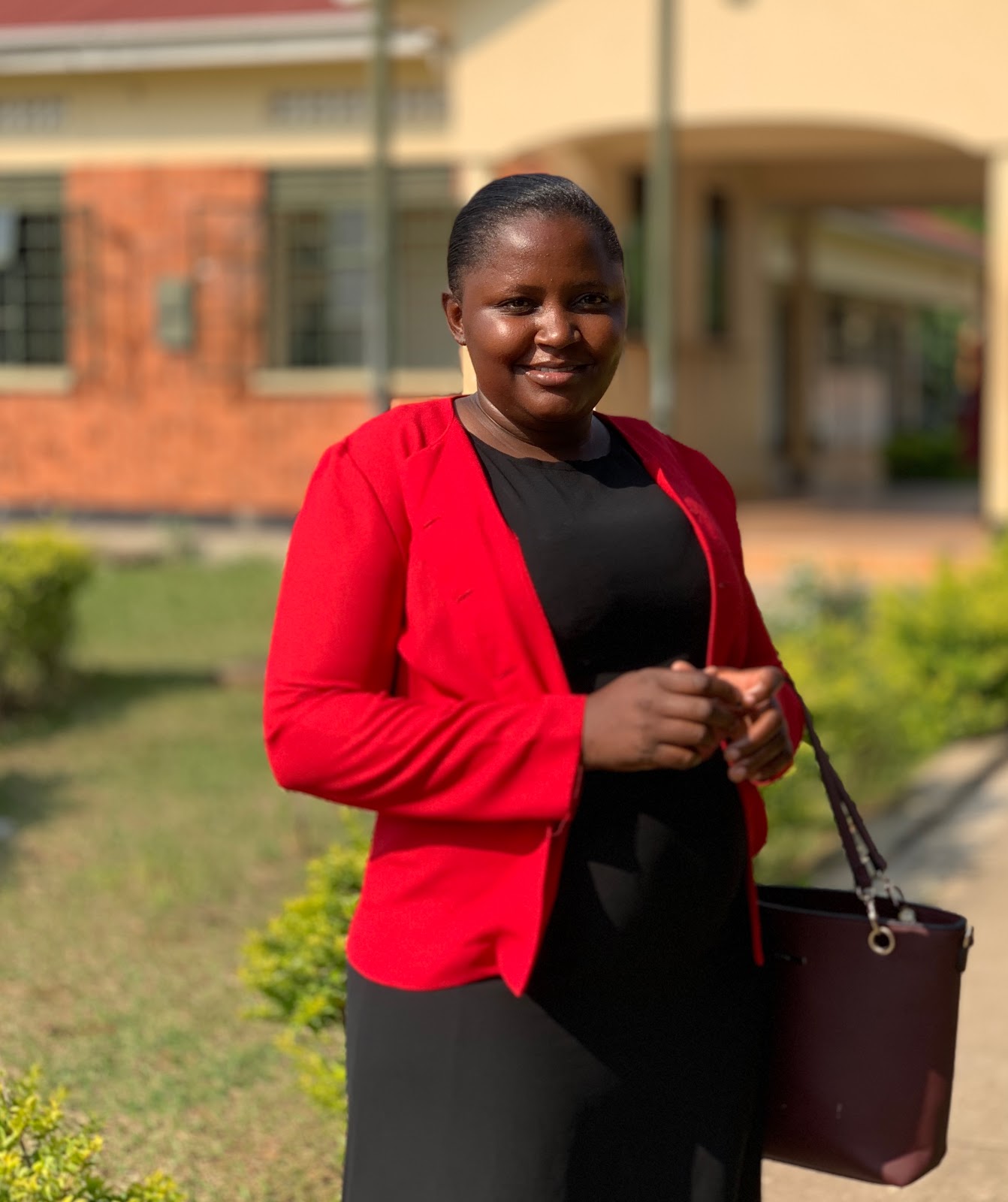
This is Rosette Kabugho, Class of 2011, now the Magistrate’s legal aid.  She organizes all the files for the main court in Bundibugyo, sits in the courtroom, answers questions, keeps track of what happens.  she is the center point of JUSTICE IN BUNDI.

This is her colleague Sadaa Muhindo, who also works as a legal aid.  
  

While we waited, a nurse-midwife Katusabe Rose came by.


Katusabe works at Nyahuka Health Center where she and her co-workers have been delivering 150 babies a month.  That’s a lot of life.

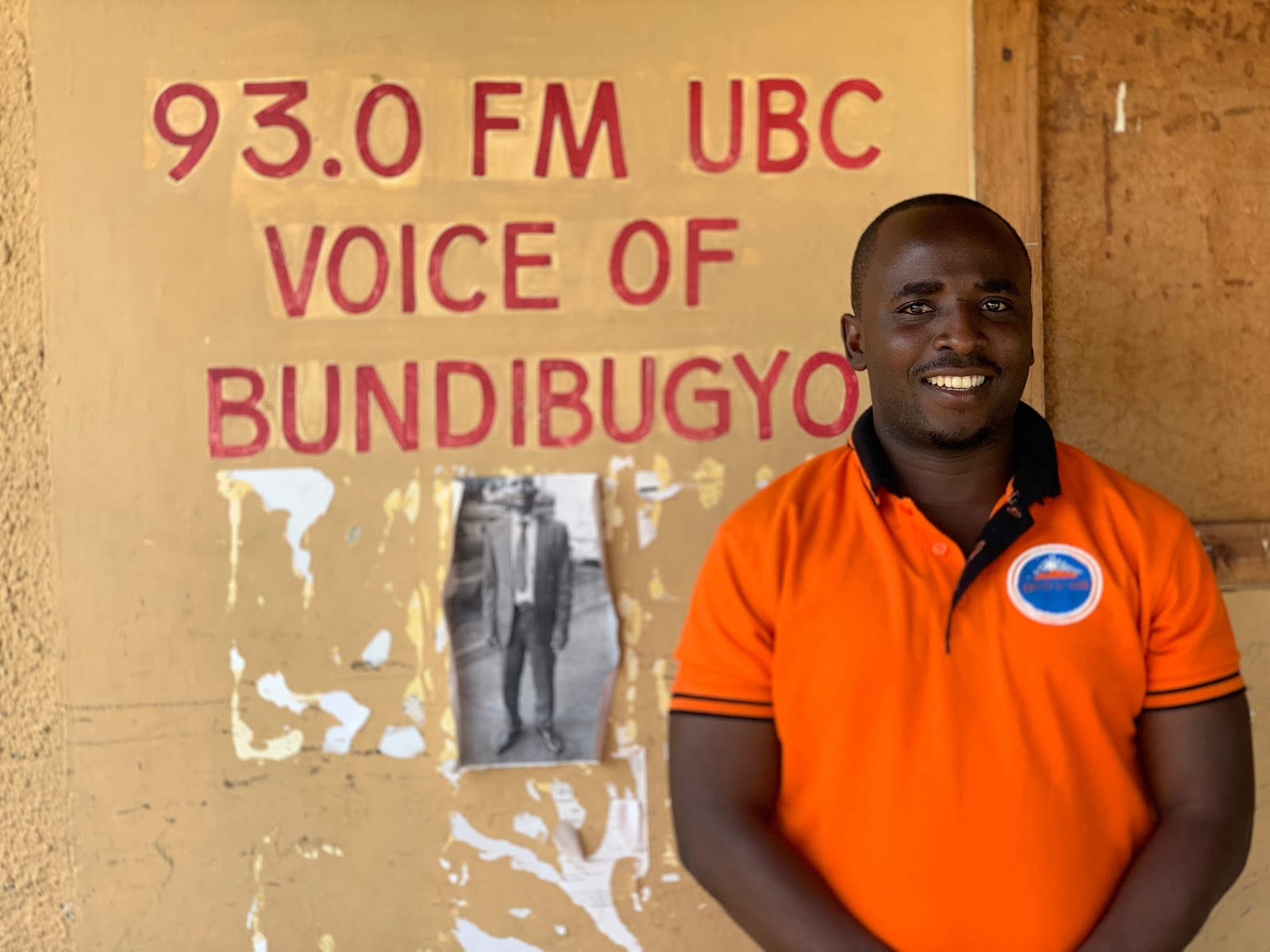
Next door to the court, we dropped in on Uganda Broadcasting Corporation’s Bundibugyo Office.


Namwaongera Geoffery and Manila Doreen are the Voice of Bundibugyo.  They broadcast from the studios of UBC, news, programming, interviews, music, public service announcements.  Both are CSB graduates as well.  Geoffery even interviewed Scott live on the air this morning!


And a few hours earlier, we had passed by the office of Stitch and Sew, an auto shop with contracts for large entities working in Uganda.  Joshua Mutegheki is putting his business degree to work!

None of the progress of CSB has come easily. Many people, teachers, administrators, donors, parents, have laid down costly parts of their lives to get us to this point. But we DO SEE THE FRUIT. We did not set out this morning to find CSB grads at work, we set out to get our own work done. But the truth is, in Bundibugyo now, if you want to accomplish anything, you’ll find CSB grads are your best means of doing so.

Back at school, here was one more grad, John Balitebiya, who studied accounting and now works as a liaison between the mission and our projects, tracking the considerable outlays of funds. This week he was tasked with spending money from our support account to replace half our wooden beds with metal-framed ones, as a fire prevention.  This is now a requirement of the government of Uganda, so he negotiated a contract and managed their production and transport.  Here he is with the first delivery.


Thanks to the many parents who have paid fees, and the many donors who have supplemented those fees to enable us to empower young people like these.  Now we are here facing the 2019 school year by faith.  Please join us in producing the next group of world changers. Please consider giving a gift to help us get a strong start to the Christ School 2019 school year which starts in a few weeks.  Follow the CSB or Serge links to give to Christ School.  Or click HERE to connect to the Serge website for a Christ School giving link.  We desperately need partners to make this work.