rotating header

Friday, July 02, 2021

On Taking Heart

 The anchor of our days here: early morning runs in the cool dark, followed by coffee and Bible reading and prayer as the kingfisher trills and the weaver birds start their ruckus. In early Matthew, Jesus says "cheer up" multiple times, to desperate people seeking healing. And our Serge founder Jack Miller was fond of repeating it, usually in the context of yes, you're a mess and so is the world, but that's not the end of the story. Cheer up, there is a force of grace so powerful that no evil can withstand it. Sometimes I try to re-read the passage in Lubwisi, and found that what my NKJV translates as "cheer up" the Lubwisi calls "ogume mutima." Mutima is heart, and Ogume is a command to grow strong, from the same word that describes the development of a child over time as transformation, tallness, muscle, wisdom. It does not sound trite at all in Lubwisi, it sounds like a call to a battle. Take heart. Summon your courage. Strengthen your soul.

Take heart, a needed word this week.

COVID infections in Uganda are spreading like wildfire, as the delta variant lit the blaze with only 1% of the country vaccinated. Every day we hear of deaths of famous people, established leaders, senior doctors. And of other health care workers on the front lines. Last night we lost our first worker at Bundibugyo Hospital, a man on the cleaning staff. Once again the marginalised pay the price. As we share dinner in a small group with a team mate, she gets a text that two friends have tested positive. Even though most people will recover well, as we have learned over and over these last 18 months, even 1% mortality feels tragic when it is 1% of a very large population based number. In our district alone, that could be 2-3 thousand people. I don't think it will be that high, we are 50% children here, and the older people may be staying home, and Ugandans are excellent with public health. We have sunshine and breeze and we live outside the walls of buildings. We also have hope.

Still, in the morning meeting, we learn of a 2 year old who died within a short time of admission the night before, with pneumonia. Which could be baseline for a district with considerable under-five mortality, or could be another harbinger of COVID worsening to come. Meanwhile this is a place with holoendemic malaria. With extreme rates of sickle cell anaemia. A place where the top killers: prematurity, neonatal sepsis, birth asphyxia, pneumonia, diarrhea, and malnutrition, show up every day, sometimes every hour. So COVID notwithstanding, the hospital is still busy with the normal patients and the normal problems. Someone stole a lightbulb and now the outpatient waiting area is dark at night. The scale batteries for weighing newborns have finally been fully drained. A misdiagnosis nearly ends the fertility of a 25 year old heading into theatre for a hysterectomy, but thankfully Scott's ultrasound shows she's bleeding from a miscarriage not fibroids. We sort through three new sets of premature twins in small, medium and large (and by large, we mean 4 pounds . . ). The smallest one is 890 grams, less than two pounds, cradled in a power outage for warmth by a surprisingly engaged dad, which gives us hope. There are calculations and fluids, negotiating longer stays, warning a mother with a child whose bone is infected that he will need weeks of antibiotics. There is teaching our interns, greeting and thanking the nurses, pulling in our nutrition team, reminding everyone of the importance of vital signs. The usual. 

So what give us heart? 

Daily rhythms, which in a crisis do become anchored life lines. God told us how to stay human and healthy, and when we listen it helps.


An intentional search for the themes of beauty and grace. Noticing that even on a morning of grief, how awesome is it that our new pharmacist chose to preach from Luke 8 instead of giving a talk on malaria meds? Seeing what we have done taken up by others. Or just noticing the brightness of Jupiter setting. 

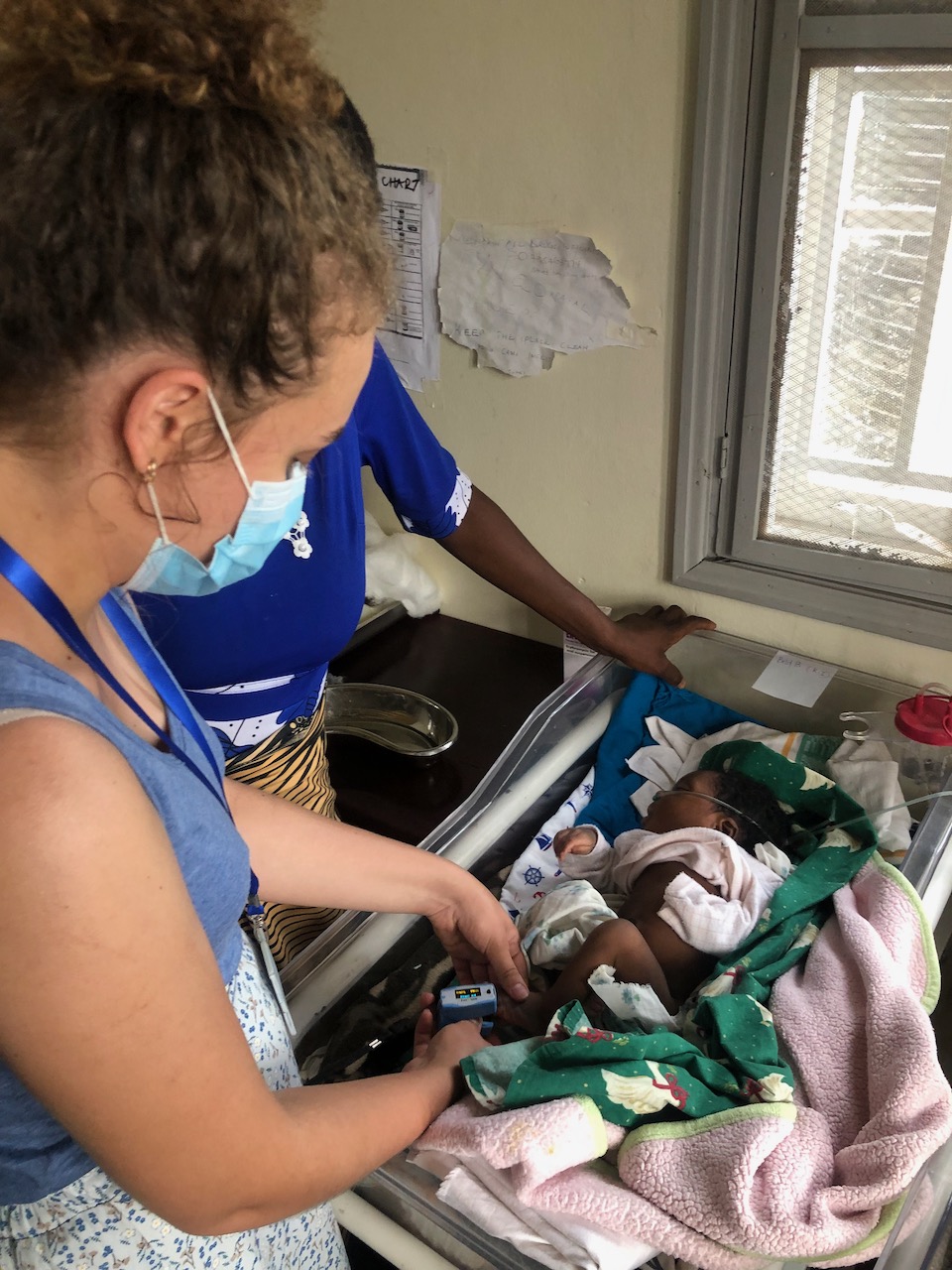
Community. Commonality. The moments when we can work in harmony with common purpose. With each other, our team, our colleagues and partners. The nurse that pulls out Dr. Marc's protocol and suggests a new antibiotic on a baby in pain. The intern that patiently jiggles the pulse oximeter until it reads, or counts breaths. The team mate that is working on clean water or teaching children, that sense of being part of something bigger, something God is doing through many. The friend that brings spinach from Fort Portal. The ever present reminders that we lean on the great cloud of witnesses who pray, who give, who care.
And lastly, remembering purpose. Today I read a reminder that we are not sent because we are anything special, quite the contrary, we are ordinary. God is extraordinary. So God plucks a few unlikely sorts and pushes us into a sojourn of discomfort in order to highlight that we are all loved. That this story has a good ending, eventually, in resurrection. That the road right now that feels dark and uphill . . . will broaden onto ways scenic and smooth. We are called to live as if that were true, by doing things that only make sense if it is. So be it.
As usual, we need to preach this to ourselves. Ogume mutima. Take heart.




Sunday, June 27, 2021

Good News? An open letter to COVID doubters

Nearly all US COVID-19 deaths now preventable.


So read the headline in the University of Minnesota's Center for Infectious Disease Research and Policy new article. The CDC released May's COVID numbers. And there was much to celebrate:

  • Daily deaths in America have fallen from several thousand to several hundred since January.
  • And almost none of those deaths are in fully vaccinated people (150 in vaccinated compared to over 18,000 in unvaccinated people in May).
If vaccines were doing nothing, then 9000 of the 18,000 deaths should have been in vaccinated people at at a time when about half of people were vaccinated. Instead, 150 were. This gives the public health researchers great hope, enough to write a headline that almost all deaths in the USA from COVID are now preventable.

But they can only be prevented if we take steps to do so.

And every day I hear from dear people, people we know, people we love, that still doubt the value of the public health recommendations. It seems that as a country, we made up our minds from the beginning whom we would listen to. But in case there is anyone who would like a few thoughts, read on. (Note this is an America-directed post, vaccines aren't an option most places.)

Are COVID vaccines safe and effective?
  1. There have been many vaccines in development (94 so far) and will continue to be, with phases of trials, rigorous testing, peer-reviewed data for publication, emergency use authorisations. A handful have full approvals in other countries. The sheer volume of effort and numbers can be overwhelming. Three are widely available and authorised for current emergency use in the USA (Pfizer, Moderna, and Johnson and Johnson). The vaccines range in efficacy in published trials and in real-world follow up, but generally a person is 80-90% less likely to get COVID with one of these vaccines than without, and 90-100% less likely to die.
  2. This is borne out in the real reduction of COVID in the places where vaccine roll out has been good. Such as the new and encouraging data for May in America.
  3. Every single medicine, vaccine, even food or cosmetics, has risks and side effects when put in our bodies. But we always have to compare the risk of a complication from a vaccine to the risk of such a complication from the disease. And so far no serious side effect has been found to be definitely associated with the vaccines, and even the rare events that have occurred after (not necessarily because of) vaccination have been dwarfed by similar events in people with the illness.
  4. 2.8 billion vaccine doses have been given in the world, so COVID vaccines are not exactly cutting edge risky unknowns any more.
So to our first question, we can answer, yes, it is in your own best interest to avail yourself of an extremely low-risk, free, effective protection.

Can't I just depend on herd immunity from other people getting vaccinated?
  1. Eventually, perhaps. In places with high vaccine coverage most diseases like measles or polio do not reach even those that refuse vaccines. Some people can ride on the steps taken by others. This should comfort the extremely rare person with an anaphylactic reaction to a vaccine.
  2. However, this coronavirus has some characteristics that might make that goal of herd protection many years away. It is a very very transmissible disease that has no precedent and therefore no background immunity. Places with low vaccination and high transmission are breeding grounds for variants. So by waiting for herd immunity, you might be part of the process of incubating more lethal forms of this illness. Sadly we see this happening before our eyes. Uganda is now experiencing a new wave of disease of the Delta variant (accounting for 95% of new cases), because other parts of the world did not lock down or take vaccines. This is happening in many countries, and will probably soon be a major problem in America too.
  3.  If that is true, it will become an endless cycle of trying to stay one step ahead on new vaccine boosters but always being defeated by the 30% or 40% of vaccine refusers who are generating variants.
So to our second question, we can answer, NO, you are making your own situation more dangerous by potentially contributing to the rapid evolution of viral variants.

Why do I need to be vaccinated if the person I am visiting is vaccinated? If the vaccines work, isn't that person protected?
  1. This is similar to the question above, but more from the perspective of individual encounters than population based data. If you are unvaccinated, whether you are symptomatic or not, you're much more likely to be carrying virus. So you should practice other public health measures, which we refer to as MOSSY: wear Masks, visit Outdoors, Sanitise your hands and surfaces, stay socially Spaced apart, and be You-centered (think of others). Or you can think of it this way: aim for 2 out of 3 between masked, outdoors, spaced. If you can be outdoors and spaced, then you could forgo masks. If you are masked and outdoors, then you can be near. If you are masked and spaced, then you could be indoors. (This advice applies to Americans, not to parts of the world with rising infection numbers).
  2. That means it is possible to do some things with uneven vaccination, like a family picnic. Shorter exposures are less risky too. But other things, like an overnight visit to spend days indoors sharing kitchens, eating together, being in close contact, are not advisable.
  3. While all the vaccines are effective, none are 100% and never will be. So, I think it is important to ask, if your grandmother or your cancer-treatment neighbour encountered infection from you  and became one of the 150 deaths in May of fully vaccinated people that got COVID anyway, can you live with that? Any one visit to any one vaccinated person is not likely to kill them. But do you want to be the unvaccinated person who happens to be the one that brings a lethal virus to a vulnerable person?
So the answer to this one is, you probably won't hurt someone else if they are vaccinated, but even the small risk you add to their life is unnecessary. This is just an appeal to take a moment to soberly ponder how you'd feel if your relative or friend was harmed by your choices.

Why can't we all just do what we think is right? It's a free country isn't it?
  1. Every country strikes a balance between personal freedoms and public safety. Some people would like to drink and drive, but as a culture we have seen that doing so robs innocent people of life, so we have decided not to allow it. You can drink to a stupor, but if you do so, you can't drive. You can smoke cigarettes, but not in public spaces where children would inhale the second hand smoke. You can build an apartment complex, but you have to follow codes intended to keep it from collapsing. We limit our "freedoms" continuously to avoid harm to others. In the same way, you can decide not to be vaccinated, but if you do so, you should consider, whether that should also obligate you to stay isolated. 
  2. So, there is a strong precedent for the interests of society to establish some guidelines to protect others. The entire book of Leviticus is filled with prohibitions on freedoms designed to help a massive group of liberated nomads walk through the desert alive. People with suspicious skin rashes had to stay away from others, even though God loves all of us.
  3. Staying away from others because of choosing against vaccination is a high and sad price to pay. And in many cases, it is also a high price to ask others to pay. Because it isn't just those who choose to not vaccinate that are affected, it is their entire circle of humanity. I think this is what makes me so so sad. When I see people in their 80s who have taken the "risk" and been vaccinated . . . . still deprived of some life-giving social interactions because some in a family, or book club, or Bible study, or friend group, or office, do not want to use the vaccine, it is hard. This issue is really dividing so many friends and family from each other. 
How can you comment on this when you aren't even in America?
  1. The view from Uganda is quite different. Here, we know that if someone gets very ill, except in very elite cases, there will not be an intensive care option. There will likely not even be oxygen. People around us would LOVE to be able to be vaccinated, but the vaccines which we received only allowed about 1% of the country to access protection. So, it's good to bear in mind that agonising over vaccine safety is largely a first-world dilemma. In the majority world, COVID is seen as a matter of life and death and many people would be incredulous to know that Americans elect to NOT be vaccinated.
  2. Because Uganda has little recourse to vaccines or to technical care, this country locked down severely in March 2020. That kept the virus mostly out, and we managed for over a year with very low infection levels, and restrictions slowly relaxed. But the world is interconnected, and before this country could vaccinate more than a limited number of essential workers, the Delta variant (which arose because other places were not following public health protocols) is now storming through. It is quite heart breaking to have a front line view of the local consequences of failed global public health.
  3. As part of an organisation based on cross-border travel, we do spend a LOT of time and energy reading, researching, pondering, praying about this pandemic. It is our sincere desire to live in loving ways to the world, to practice what we preach. So Serge has taken some firm stands on vaccination, lest we be contributing to the demise of the poor. We are thankful for that stand. But if that's not what you think about most days, please take all the above with grace! We might sound alarmist to you, but in our world we are desperately trying to protect our octogenarian mothers, our special-needs relatives, and our locally terrified hospital staff. 

In conclusion, we know that the proliferation of misinformation and the politicisation of this pandemic has caused inestimable harm.  By early 2020, many people were already choosing to either believe COVID-19 is a trivial infection exaggerated by the powers that be and the scientific establishment, so we should protect our individual freedoms at all costs while we wait for herd immunity . . . or that COVID-19 is about ten times more lethal than a bad flu to which no one is immune so that even a 1-2% mortality applied to the whole world while achieving herd immunity is unacceptable. I know that very little can be said to convince the former group to move to the latter group. Almost 4 million deaths and 200 million cases later, we are still learning and striving to do what is right and best and loving and sensible. We pray that all of us can look not only to our own interests, but also to the interests of others (Philippians 2 is a good, challenging read right now). I have to repent of anger and judgement and ask the Spirit for humility and love. And we ask for stamina to see this pandemic through. If you read this far, pray for us. And thanks.

Thursday, June 24, 2021

Good overcomes Evil, the promise that our paltry efforts are part of the all-things-shall-be-worked-out-new . . .

Do not be overcome by evil, but overcome evil with good. Rom 12:21

Morning reading, sipping coffee, pondering. Deep breath for facing the day. By 7:30 trying to sift through as many emails from overnight as possible giving quick answers before we head to the hospital at 8. There we find the usual morning staff meeting, outdoors and socially spaced, unusually well attended. The COVID - reality is sinking in like a lead balloon. This week we went from almost no cases in Bundibugyo to 5 to 10 (mostly hospital staff), including one very sick one. Colleagues told of a 40 and a 32 year old doctor who died of COVID in Kampala. Considering that we only can do a handful of tests, the fact that 70% have been positive is a bit worrisome. In the meeting we are discussing the fact that of our 18 oxygen cylinders, only 4 were refilled in Fort Portal (2 hours away) because the plant is maxed in capacity.  We have bought numerous oxygen concentrators this past year, but most seem to have mechanical issues after a few months, due to the unstable electricity or the constant use or the humid bug-dense Bundibugyo atmosphere or the fact that most health care staff have minimal experience with machines. Two were repaired this week. The pharmacist is concerned about indications for dexamethasone; if over-prescribed we will soon run out. Everyone is concerned about masks. The meeting has the feeling of a town without defenses preparing for siege. The evil of a virus, of poverty and injustice, of unequal access to vaccines and oxygen . . . As the United States trends downward with rapidly dropping rates and hopeful summer concerts and plans, Uganda trends steeply upward with sorrow and uncertainty and restrictions. Until everyone is safe, no one is safe. South America, southern Africa, India, so much suffering. How do we overcome such evil with good? We start with sharing a box of our remaining masks. 


As the meeting finishes, we get a call from our office manager John. Two days prior, the local government had informed us that the transit camp for our border with the DRC was receiving refugees crossing the Semiliki river at the rate of 100-150/day, and the total already topped twelve hundred. While refugees are the purview of UNHCR and the Office of the Prime Minister in Uganda, the response engine starts and moves slowly. Red Cross had blankets, but immediate food aid was needed. We decided to spend down some of the balance from our previous flood relief campaign, thankful that we had established an emergency relief fund. For ten thousand dollars we could serve over a thousand people with beans, posho, oil, plates, cups and jerry cans for a couple of weeks while the big guns organize their more substantial shipments. Our CSB OB's and OG's (alumni) are getting skilled at this now, and sprang into action loading up trucks in Fort Portal which required a fair amount of paperwork to move in a lockdown. They arrived at the camp this morning, so we went to confirm the donation with the camp managers.  Children swarmed around a covered play area and out in the grass. A dozen or so families had cooking fires, but most people were waiting for massive pots of porridge being prepared for all over an outdoor wood-fire range. Laundry was woven through the fences to dry. The shed-like buildings have plastic tarps stretched tightly over wooden fames for walls, and are quite dark inside with little airflow, but provide some shelter from the elements. Not very COVID safe. The latrines were labeled in Swahili with helpful male/female stick figures. We chatted with a group of men watching the trucks unload--they talked of unknown rebels, maybe ADF, attacking their village in Boga. They didn't see any recourse except to flee with their lives. We communicated in Lubwisi because the language groups are similar, but they came from a half dozen different tribes. They said they were hungry. They wanted their own rations, not group meals, but we said we had to respect the leadership established by the governance of the camp. I didn't mention that almost exactly 24 years ago we were attacked by the ADF and fled on foot and depended on the kindness of strangers to feed our kids and get transported to safety. They seemed a lot calmer than I remember feeling at the time. MONUSCO (UN), FARDC (Congo army), and UPDF (Ugandan army) all seem to be involved in trying to protect the border and the population from the ADF, though the men we spoke with only reported seeing the UN blue beret troops. There have been at least three major attacks reported in the news in the last few weeks, with up to a hundred deaths and 6,000 people displaced. We see more reassuring Ugandan military moving up and down our road than we have in quite a long time. So more evil, more war, greed, hunger, violence, loss that needs a response of good. We are not a major relief organisation, but we are grateful for donors who have invested in the emergency fund for quick action. Perhaps sacks of beans and stacks of jerry cans seem paltry, but in God's hands we trust they will do something.

Back to the hospital, in spite of COVID spiralling into crisis and refugees fleeing into the district, babies are still being born. A fourteen year old mom whose baby is dry, febrile, sick. An older mom whose baby is in respiratory distress. And so it goes. Our nurse Kacie has decided to focus in the NICU for now, for which I am grateful, though the indecipherable correlation of babies to moms to names to weights to files just about defeated both of us. Thankfully Scott and the clinical officer had helped out on the Paeds ward, so I just had to consult on a couple of very malnourished kids there. That left the last hour of the day to teach our group of new Medical Interns from Somalia about malaria, which is one of the few things that plagues Uganda MORE than Somalia. It was a reminder of how nice it is to have a group of eager-to-learn trainees, and to try and engage them. We can barely understand each other's English, but sometimes we resort to drawing things, and we seem to connect. The evil of the child mortality in their country, the lack of resource for education and training, and the little step of overcoming that with the good of an hour of investing in these young men. 


Then it's the evening, a visit or two from neighbours, preparing to feed our four university-student Serge summer interns, catching up on some Area work. The good of a local pumpkin, of thick fragrant beans. Of a blowing fan in the heat, and affectionate dogs, and a day wrapping up into quiet. 


Saturday, June 19, 2021

Beauty, Ballast, Bundibugyo and Juneteenth Independence Day 2021

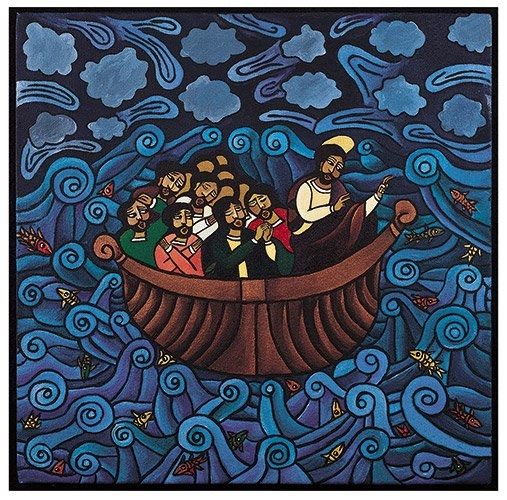
The Ballast of Beauty. This phrase skipped across my rabbit trail in a search for, I don't remember what, (but on a site for an organisation in Virginia called Coracle). Since I saw it, I can't forget it. Ballast. The weight of the word, a stone, a stability. The intentional collection of that which is real and concrete and dependable, and not just holding it but holding it in the heart, in the depth of being, so that it becomes a type of gravity in the storm. A counterbalance to all the world throws at us; a centring that keeps the course through a million trials. Picture a boat, a lake, a storm, and a man in the hold asleep who turns out to be the ultimate ballast, the cornerstone of creation. The person in whom the word of truth takes form, in whom beauty has been personified.

Laura James

Yes, beauty. Because the attention, the intentional attention, to beauty is a kind of ballast. We live in a place that has known war, poverty, fatal epidemics, injustice, hunger. And yet. We live in a place where beauty surrounds us every day. This morning I watched a thrush preening feathery orange flanks on a branch heavy with avocados, melodically welcoming light. Bright gold weavers swoop from the palms; snow dusts the craggy Rwenzori peaks. Faces beautiful with experience and hope, fabrics beautiful with colour, hairstyles beautiful with intricacy. Music, light, food, community, trees, children rolling down the grassy embankment, paintings and photos. All that beauty makes a direct soul connection to something larger. Something expansive. Something real that challenges the discouraging bombardment of problems.

Everything's goin' to be alright, the beauty says. 

And that is a ballast that does not remove us from the dark seas, but gives us a course through them.

Yesterday, after being called upon (surprise) to give a CME teaching and a Bible teaching for 40 hospital staff in our morning meeting, after working my way through a dozen-plus babies in NICU punching in numbers to calculate percentage weight gains and target feeds, after reviewing a death and finding the lab results on a baby whose brain damage I had thought was all from a tragic arm presentation and emergency took-too-long C section actually had a gram negative meningitis, just after I did a lumbar puncture on a similar very sick newborn . . . I walked into the Paediatric ward hoping to find that our new interns from the highest mortality country in Africa had been preparing for rounds. Instead I found chaos. Over the next few hours, it seemed like every minute another person was asking for attention, putting a chart in front of my face, interrupting one problem with another, and most of them deeply intractable and potentially fatal. Trying to extract a history of a mother who was in denial focusing on her seizing unconscious hypoxic child's issue as malaria because that's what another clinic told her, but when I turned his head to the side I saw a huge healing gash, and it turned out that two weeks ago someone had ?accidentally hit him with a hoe with great force TWO WEEKS ago and he'd been in trouble ever since. Then there were the twins whose grandmother's main concern was that especially one didn't produce enough stool so she was giving them enemas, but they were not pooping because they were starving. And on and on. Not trivial inconveniences, real brokenness.


Into all that, we need Beauty. 

The world is broken, the world is beautiful. Both are true. No averaging, no cancelling, no explaining, but two grasps onto two parts of paradox.

Which brings us to Juneteenth. Until everyone's free, it's not really freedom. The USA just decided to recognise June 19th as a national Independence holiday, the day that a group of enslaved people in Galvaston, TX, finally got the good news that the emancipation proclamation applied to them. The final reach of the new legal reality, even though we are still on the path to liberty and justice for all. Those Americans, or their ancestors, reached the continent on ships from Africa. Not on the deck, but in the hold. Human ballast. I just read Barracoon, the publication of Zora Neale Hurston's anthropologic account interviewing Cudjo Lewis/Oluale Kossola, the last survivor of the last ship of African human cargo shipped from Benin to Alabama. Much can be said about this book, much is a punch in the gut and a wound in the heart, but what I was left with was the humanity. Hurston manages to paint a real person, in a complexly appealing and recognisable way. And his memories of his childhood in West Africa included some cultural rites of passage details that he told as great delights, and which were so similar to Bundibugyo that I nearly gasped out loud. The transcontinental weaving of story by the ocean passages, the suffering but also the survival. And not just survival, but admirable spirit, creativity, transcendence. Remarkable.

On our first national Juneteenth, let us remember with grief the unpardonable cramming of humans into ships as ballast for the purpose of profit. But let us also recognise the ballast was of inestimable non-monetary value as beauty that has kept America and the world afloat. Beauty seen in faith, in Gospel and jazz, in painting and dancing and poetry, in theology and science and speed and skill, in determination and laughter and courage in the face of death. 

Maybe one day we'll have vaccinteenth. Because we're not done with COVID until everyone's done with COVID. Here in the land of <1% vaccine access, 18 months into the pandemic, the worst is yet to come. Uganda is seeing one of the highest rates of new infection in the world. Our president announced a school-closure limited-to-your-district lockdown less than 24 hours after we landed from Home Assignment; now 12 days later he tightened that down to the intense stay-at-home lockdown we had last year. No driving except cargo and essential medical. No gatherings. People are afraid. (Note, unlike last year, the airport is still open and vaccinated tourists are still welcome to move exclusively to tourist destinations in registered tourist vehicles and spend their tourist dollars). Freedom from enslavement and freedom from pandemics falls unevenly over the world, and once again Africans and their descendants get stuck waiting.

So as we navigate the latest storms, pray for the ballast of beauty to keep us on course, afloat, hopeful, alert.

Interns Lexi, Shione, Svitlanna, and Noah with our Serge Apprenticeship Leader Ann--beauty! They made it just hours before the new lockdown rules. Whew. And all are vaccinated. Praying for their summer. More beauty from this week below. Praying as well in the words of Amanda Gorman: For there is light, if only we're brave enough to see it, if only we're brave enough to be it.


Friday, June 04, 2021

Say, can you see? Observations on goodbye to America

 Goodbye, America

Here was our fitting closure to two months in the land of our birth: Weddington High School’s graduation ceremony. 400 kids in caps and gowns, in carefully spaced chairs on the football field as families filled the stair step metal stands on both sides. A cloudy morning, a balloon arch, moms clutching flower bouquets and congratulatory posters, grandmothers getting golf card rides from the parking lot, dads with cameras, the sound system set to cheery march tunes, the colour guard in their uniforms holding flags. This public high school has a ridiculously intense academic focus, with honours and college being the rule not the exception. It also did a superb job of including my nephew with Down syndrome, who at 21 was ageing out of his small special-needs class that met incorporated into the life of the school. Two young men were going to the Naval Academy and one to the Air Force Academy, and Micah’s colleagues were going to “Project Search”, a hospital-based program for job training. There was a valedictorian, and a class president. Micah won a focus award and was Prom King. Both paths were celebrated. A quintessential American scene. 


But the moment that brought this together: the national anthem. A graduating senior with pink hair and silver shoes and a name with cutting edge vowels stood up and climbed the stairs to the podium. Alone, with no accompaniment, she belted out the Star Spangled Banner with a gorgeous voice. And that for me captured the spirit of America. If you listen to our national song, it is not a song about power and glory. It is a song that starts with a question, as morning dawns we aren’t even sure what happened. The context is a night of battle, that did not look survivable. It’s about tenacity in the face of danger and loss; about a tattered flag fluttering in the imminence of death; about ideals we cling to even when the outcome seems uncertain. Though the song references the “hireling and slave” it took another 40 years for those to be legally free. And I think that’s the appeal of our anthem: it’s a nation in process, ideas ahead of reality, a place of struggle. But we stay in it because of hope. The questions and the atmosphere are just as valid for 2021 as they were in 1814. I know nothing about the singer at this school, but I loved the fact that she sparkled her own style and sang her own confidence with none of the extra gold cords and banners of the majority of the graduates. She embodied the future. She and the other graduates are not assured victory without passing through some dark valleys. That is life.


Yes, America can be exasperating. We are far from reaching our ideals. Our hearts grieve to see the atmosphere in politics and the church that our children bear the burden of. Misinformation, fear, self-protection, isolation. People who do not seemed as concerned that 3.5 million people died in the last year-plus of a brutal pandemic as much as they want to resist the public health initiatives that limit their freedoms, be that masks or travel restrictions or gatherings canceled or immunisations required. Legislators that want to control who votes and ignore any accountability for systemic injustice, or inject doubt to weaken our democratic process. Our anthem sings about rockets and bombs, aimed at US. We need to recover that stamina. 


But all in all, it’s still a remarkable country. Over half the population now has at least one dose of a COVID vaccine, and it shows. Deaths are plummeting, even nursing homes are now calm. I got to see my Aunt Nina through the slightly open window of her room yesterday, looking rosy cheeked and smiling. High schools are having graduations and families are gathering for meals. In the two months we were here, the leaves filled in the trees from skeletal to abundant on pace with the growth of human connection once again. We hugged without hesitation on our goodbyes, a very different feeling than our helloes.  


These two months were just as we hoped: solid time with both moms, with all kids. More outdoor adventure than we could have dreamed of. Good food and sparkling tables. Quiet mornings reading on the porch. Though my Uncle Harold sadly died at his home at age 94 last week, we were grateful to have been able to stop and visit him just a week or so before that. He was my dad’s last surviving brother, and I feel the loss of that connection deeply. Still these months were a pause that we hope gives us a second wind for a third wave. Africa has 18% of the world’s population an 1% of the COVID vaccines. Back to the rockets' red glare of uncertain days and nights, hospitals with no oxygen. We land Saturday and the President is expected to announce new restrictions on Sunday. Like everyone else, we are weary of pivoting plans, of not knowing what the next week holds, of writing and monitoring protocols to mitigate harm, of stumbling through new territory. But the vaccines give us a breathing space, and the memories of rock climbing and pizza making and polar plunges in the Buckhannon river will carry us far.


See you on the other side.


Sunday, May 09, 2021

34 years of sharpening love and courage: marriage and mothering as tools for holiness

 34 years ago today, Scott and I stood in front of our families and friends and recited 1 Cor 13. 

It was Mother's Day weekend, and flowers were hard to arrange, but in other ways a celebration of a wedding and Mother's Day appropriately intersect. Both look glorious in photos, cards, feasts and speeches, and truly those captures of beauty are true. But both also involve the paradox of choosing to loose life to gain it. Marriage and mothering, living with edges that are filed smoother by another, living with choices that are constricted and space that is unprotected, living with the constant reality of community . . . means a sort of death to unrestrained self promotion, that Jesus calls the path to life. 

Jesus says, if you want to find life, then loose your life. 

And those are paths for all humans to choose, whether biologically producing a child (which for most women in the world is quite risky) or accepting a role to make the vulnerable flourish, whether formally committing to a spouse or accepting the inconveniences of friendship and partnership.  All that God made has been declared good, and we look forward to the unbridled joy of being fulfilled in our unique image of the light and truth one day. But to get there, the path is the cross. I think mothers learn that, as do spouses. Birth itself treads so close to death; a decision to sacrifice for another bonds us in mysterious ways.

Today the two days intersect, and it has been a delight to be with 3 of 5 kids, to get messages from some of our Ugandan fostered-kid relationships, to have just spent solid times with both of our own mothers. A COVID drought has cascaded us into a month in WV/NC, much of it with my mom and a couple of weekend intersections AS a mom with Julia and Caleb. Then a week in CA with Scott's mom, at her home and a memorable drive up Route 1 to explore some quaint coastal towns and admire the majestic redwoods. And now in Utah, where Luke, Abby and Jack reside beneath a backdrop of snow-covered peaks and we can hike in the alpine scrub. They even let me do a classic mom adventure hike that was longer and steeper and more-bramble-covered than anyone anticipated.

My verse for the year was just a bit further in 1 Cor . . . 16:13-14 and I thought of it today. Watch, stand fast in the faith, be brave, be strong. Let all that you do be done in love. Those are words for a marriage and for mothering. Paying attention to the man I am walking through life with, who is kind and sure. Standing fast in faith when those I love seem to be at risk of faltering, in sickness or persecution or disappointment and loss. Being brave in a long year of separation, being strong when it's time to fight for those we love. And being willing to do all that not by forcing my way, but by accepting God's way of love.

Enjoy some photos, most of the last few days or weeks, a few from further back, of the rich fabric of being mothered, being married, and mothering others.  I am so thankful for the solid foundation our mothers Judy and Ruth have given us, for the faithfulness of my 34-year husband (and 41-year friend) Scott, and the delight of watching these amazing human beings in our life grow in their own directions with courage and heart.


Lastly, the anniversary photo from today's hike: