rotating header

Thursday, August 26, 2021

Smouldering Wicks

These COVID eons, we talk more often about burnout. This week we filled out a survey for a friend's research, which is the second Serge colleague doing such a project. I read an article this week too, about burnout amongst non-physician health care workers that identified high emotional exhaustion and depersonalisation as risk factors for quitting. 

But in that article, organisational satisfaction was protective. And the surveys have heightened awareness that along with Sabbath and spiritual rhythms, good exercise, sleep, and dietary habits, the way we smouldering wicks avoid becoming dumpster fires and then piles of ash is . . . community.


So today, a small ode to team.

We have a couple visiting this week (Dr. Jack and Regan seen by Scott above) and as Scott and I talked about what kind of cross-cultural medical situation they might choose for their life, what would be best for their family, how they would react to the bottomless swamp of malaria here, the interrupted supply chains, the intermittent power, the inadequacy of staffing, the sorrowful deaths, the immediacy of majority-world realities we'd rather not confront hour to hour . . . well, it's a lot to ask someone to embrace. But then Scott said: they won't find a better team to be on. 

So much comes down to just that: the person beside you in the trench.

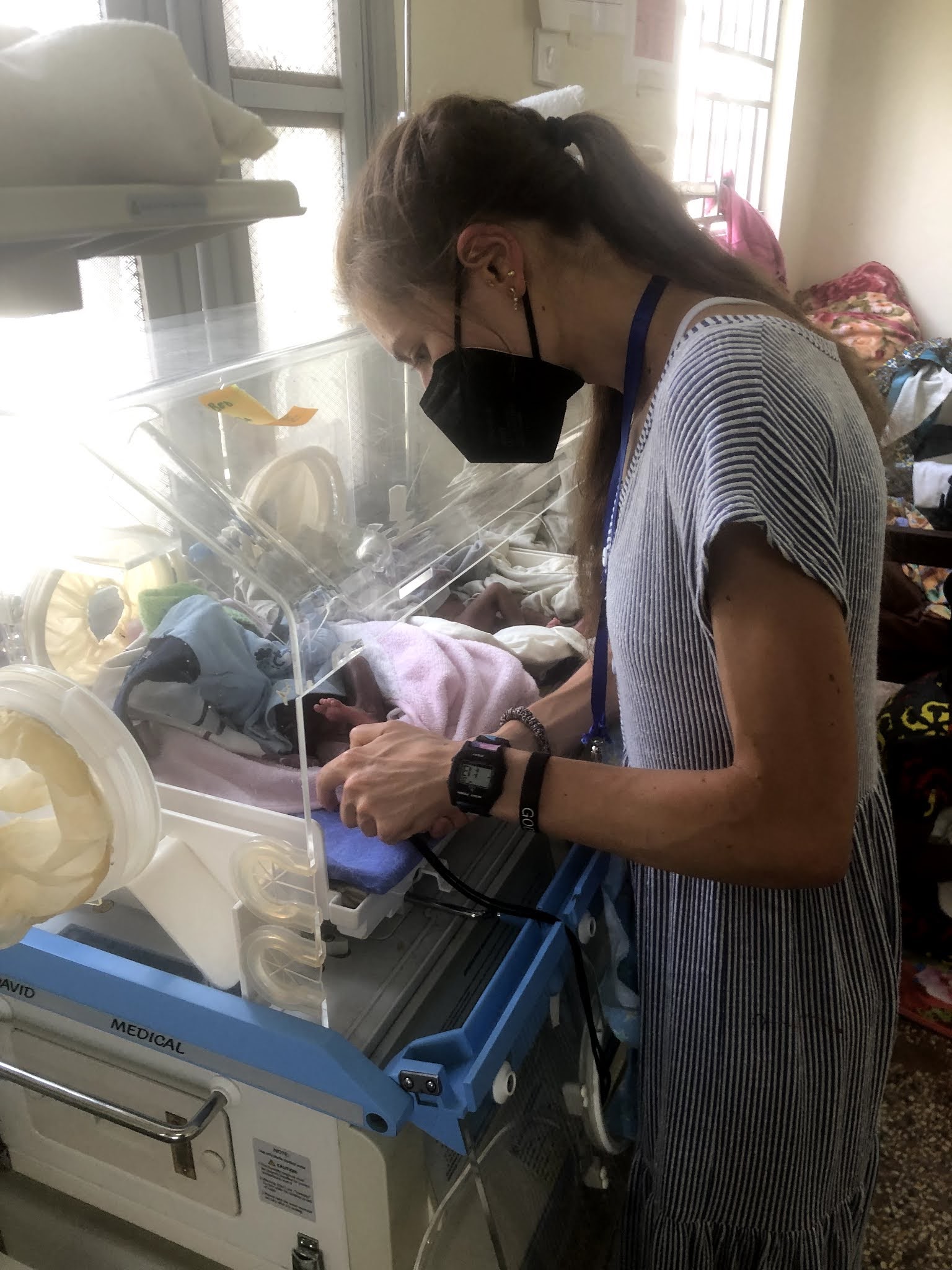
(L to R) Mike who brings together pastoral Bible depth and accounting competence, which is a perfect but rare missionary skill set. Kacie who has plunged into learning preemie care in NICU and bravely got her Ugandan nursing license. Patrick who came to lead staff development at Christ School and has weathered school being shut down more than in session so far, but redeemed the time with literacy camps and discipleship. Alexis who ended a decade mom-induced teaching break to dive into Rwenzori Mission school. Michaela who has poured her heart into making Kindergarten and 1rst grade pinnacle educational experiences. Ann who connects us all to the community with her endurance and approachableness, and pioneered an environmental education and discipleship camp this summer. Laura who agreed to trade teams from Kenya to Uganda at the 11th hour and somehow seems to be picking up Lubwisi as fast as she is coming up to speed as a middle school teacher. Josh who hikes hours every week to bring a clean water system to marginal people, and Anna who smiles like that even when her kids don't sleep and she's teaching preschool. And then the visitors, and us. We've had our stressful times negotiating COVID protocols, grieving losses, stepping on each others' toes, having to share cheese and freezer space and rides and data. But over the last couple years this team has gelled into an imperfect gaggle of humans who care about each other and the world.

And it's not just this team, but also our colleagues and neighbours. Last night the Christ School teachers were commenting on how much they appreciate their family-like support for each other, as they joined in a gift for one of the staff member's new baby, and another announced an upcoming marriage. Our nutrition team cared so well for the one who got COVID. Dr. Amon and the hospital team work incredibly hard; as Nusula the charge nurse just said in the staff meeting, we have double the normal census but no increase in deaths on the ward. Yes.

With vaccines and the airport open, we are now entering a season of "home assignments". Our Serge workers are given one year out of every five to report back to their donors, reconnect with family and culture of origin, rest and renew, update studies. We will miss the McClure family and Ann who fly out this week until January, and later the Forrests (Nov) and Dickensons (May). We want to hold onto stability; but the nature of the sojourner life is that people come and go. 

But Jesus does not. And Jesus was the very one whom the prophet Isaiah said 
"a bruised reed he will not break, 
and a smouldering wick he will not quench, 
until he brings justice to victory; 
and in his name the nations will hope."

So we keep smouldering on here, smoking glowing embers of the world as it should begin to be, dim lights that point to a new reality. Until justice wins and everyone has hope. Together.
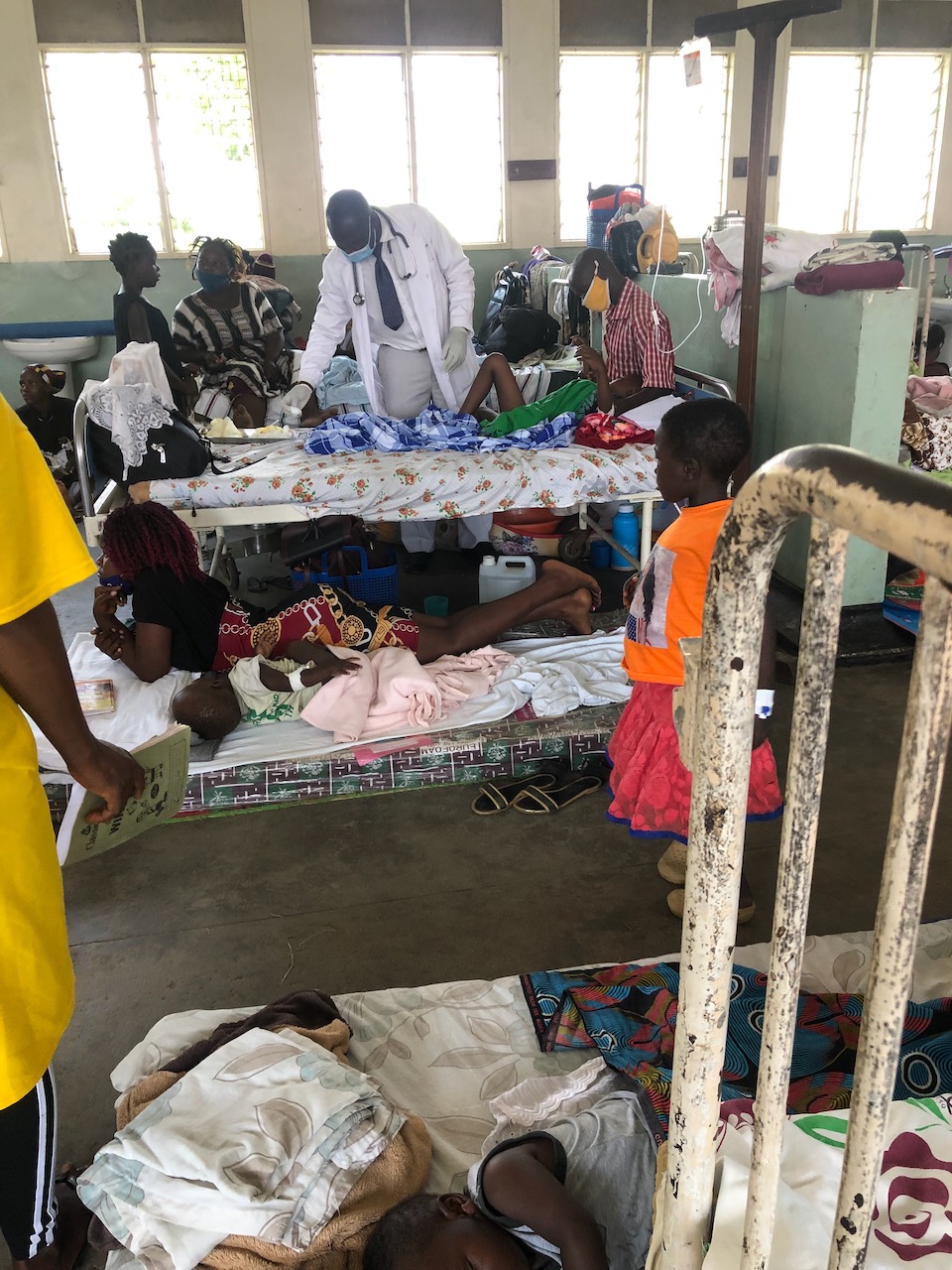
Dr. Amon on the packed paeds ward

CSB staff meeting with COVID protocols for Bible Study

Team meal on our patio

Gathering this morning to pray for the McClures as they drive out
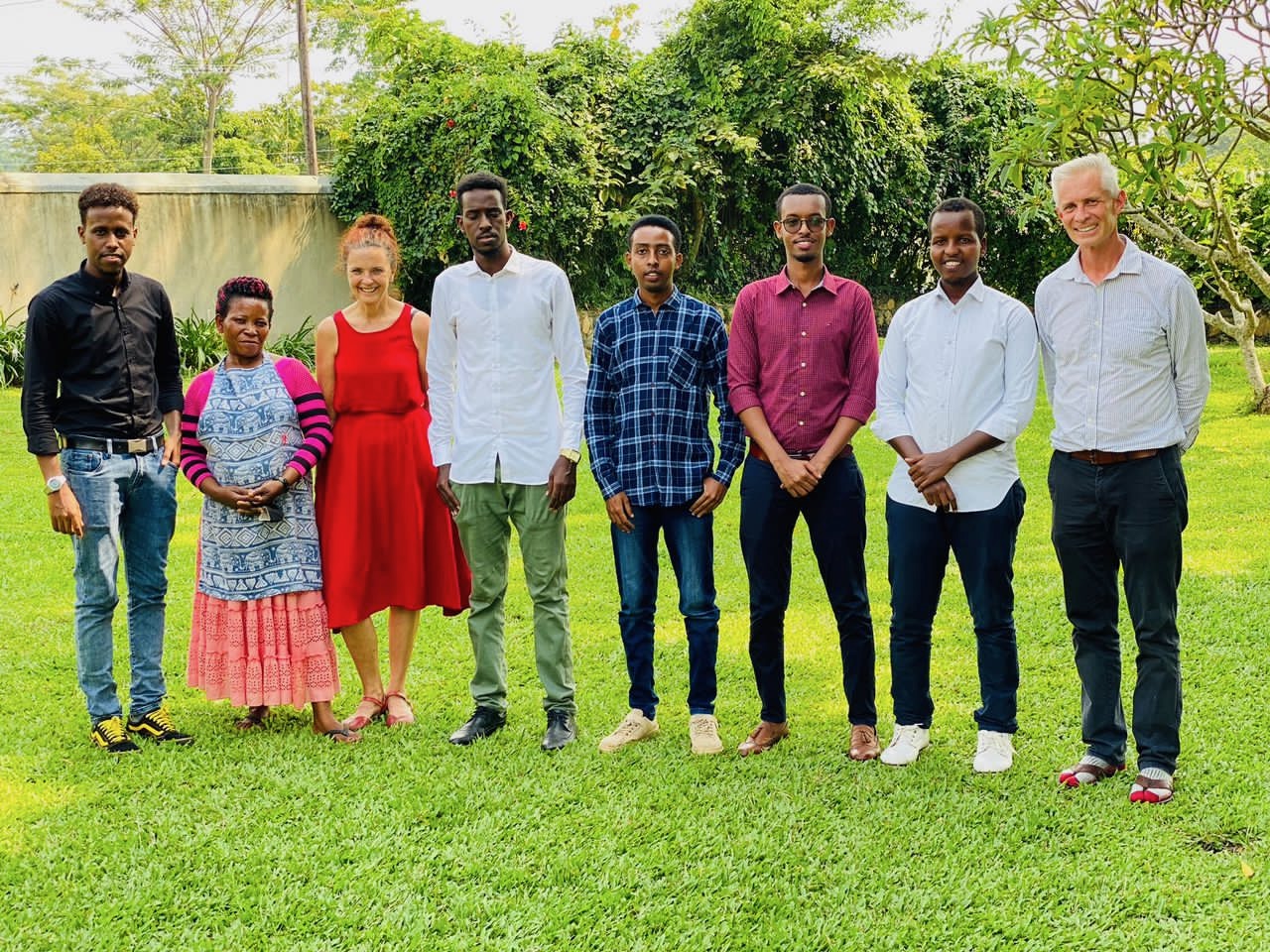
Building community with our interns

Going to miss my friend Ann!

The requisite pre-Home Assignment family photo . . . 

The NICU nursing team and intern meeting to discuss our work

Scott talking to Reuben, who has worked here even longer than we have!

Scott, Jack, Admin, Amon: hope for the hospital's future!

Beautiful Ugandan food fuels beautiful community

waving bye this morning to a core family . . . they will be back!

A sobering reminder that not everyone survives this shared vision. Dr. Jonah's grave in the Ebola memorial.


Sunday, August 22, 2021

Remembering the short, full life of Jack Shickel: 12 July to 16 August, 2021

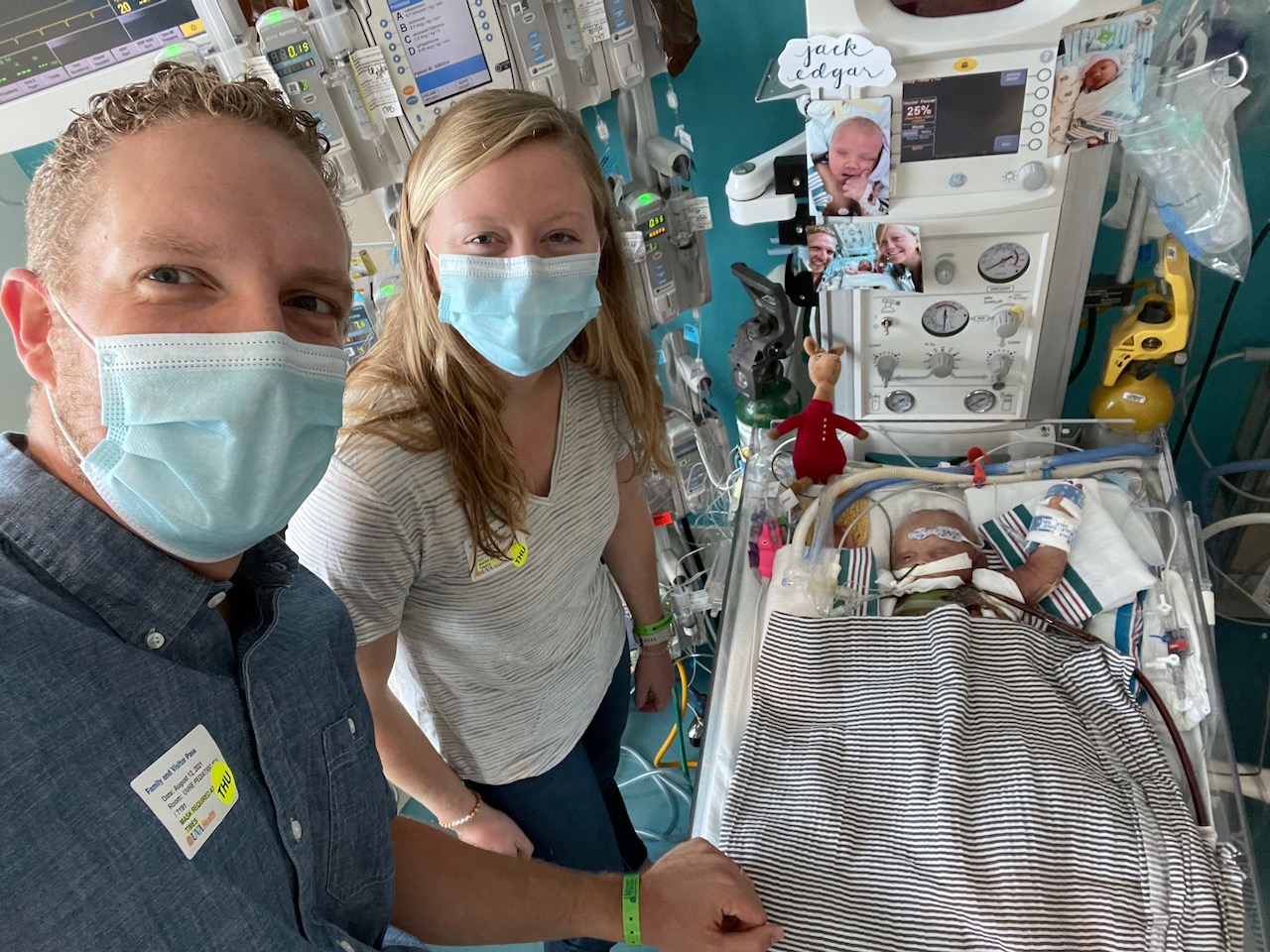
This is the tribute being read tonight at Jack's memorial service in Harrisonburg, Virginia. Jessie and Ike were members of our team from January 2019 to June 2020, working to serve malnourished children and managing the workshop, grounds, maintenance, fixing of everything, youth, sports, and team support. When they finished their 18 month term they returned to the USA where Jessie continued to work part-time for Serge remotely and part-time in nutrition while Ike joined the family business. Their longed-for pregnancy finally happened but was fraught with a series of confusing scans that ultimately showed their son had a very under-developed left side of the heart. He was delivered about a month pre-term and underwent two major heart surgeries while staying on life support at UVA. So much love and prayer and yet . . . after 35 days Jack went to be with Jesus. Jessie asked me to write something for the family and gave permission to post it here. 

Family and Friends, we gather today to grieve the loss and celebrate the life of baby Jack. Yes, we can say celebrate, because his 35 days of life were beautiful and full of love and meaning in a way that others of us take decades to realise.


In 1 Corinthians 3, we read that this life is a process of being transformed from glory to glory, to become more and more like Jesus as we look more directly on his face. Romans 8:28 is a verse we cling to in times like this, that for those who love God, God works together all things into good. Not all things are good: evil is real, our enemy harms us. But God works IN all things FOR good. Verse 29 tells us that the good which God brings is specifically the work of conforming us to the image of His son. And in his 35 days, Jack was being transformed into the image of Jesus for all of us.


Today we want to remember Jack’s life through the lens of how his specific story reflects Jesus’ story, and how that helps us see meaning and purpose in his life and our own. The parallels start in the prenatal and birth saga. Jesus’ parents were under pressure, on the move, off-balance, away from home, and even had to flee to Egypt to protect him from harm. Ike and Jessie spent the months of Jack’s gestation under a cloud of diagnoses, and when Jessie went into preterm labor they had to also flee by night to Charlottesville for a birth away from home. They did this to give Jack the best care, the best protection that this world offers, because they loved him. In the vulnerability of infancy, Jesus and Jack leaned into the care of their parents to help them, and drew out depths of sacrifice and love.


Mary and Joseph, and Jessie and Ike, no doubt found the peaceful prelude days too few, whether 30 years or 5 days. Because then the suffering began and was relentless. 

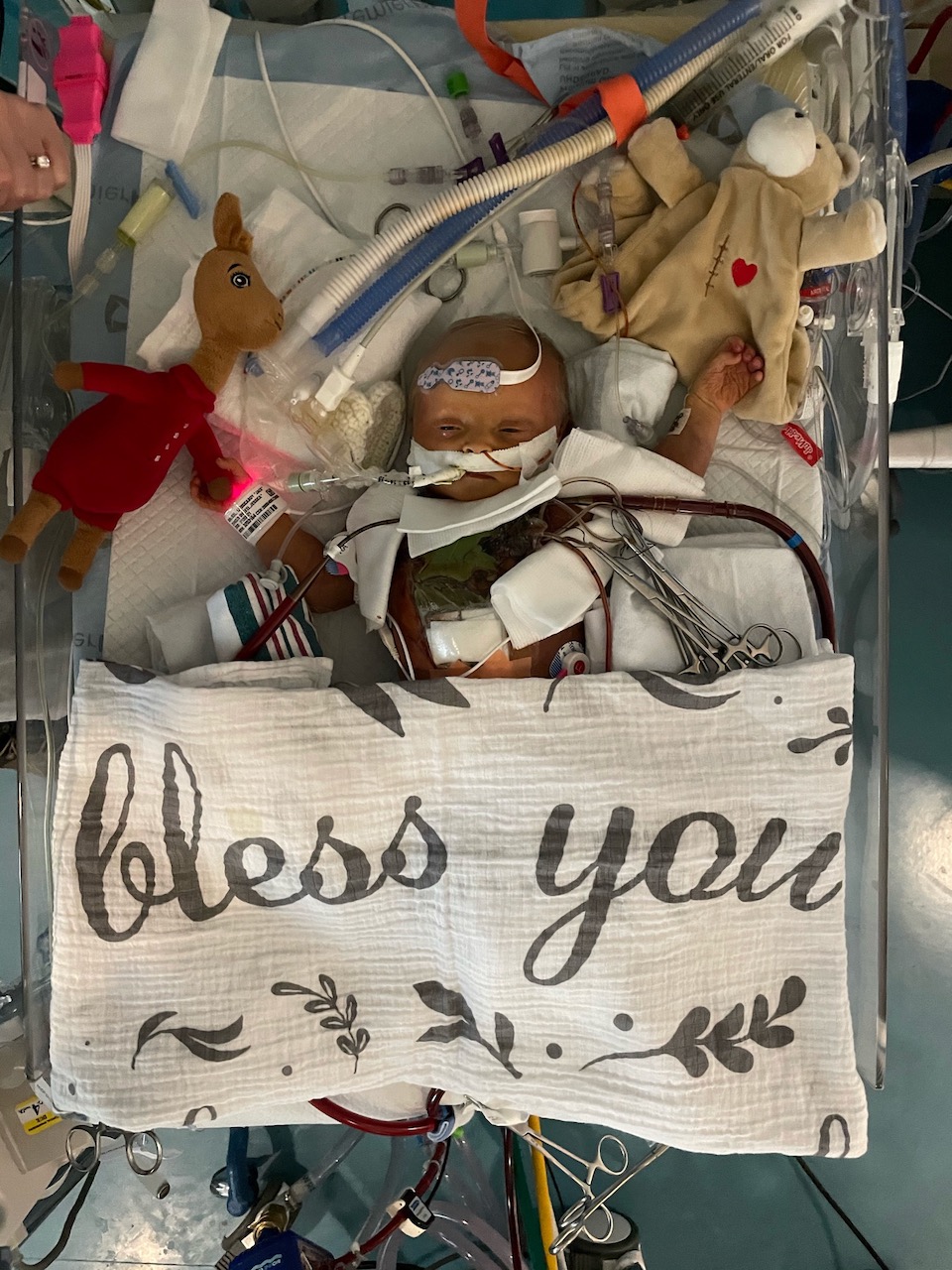
Most of us only saw Jack through photos and short video clips, but we were struck by the way Jack on his ICU bed reminded us of Jesus on the cross. Isaiah 53 describes the suffering servant as one who was bruised, crushed, marred, wounded, unable to cry out. We saw Jack with his little bruised hands, his many piercings for lines and drains, his riven chest where blood flowed out, his heart literally torn, his breath literally struggling, his cries literally silenced. His family gathered and watched but could not hold him. 

Why? Not because he deserved worse than others, but because this entire creation is under the curse of sin and evil, and he was an innocent baby caught in the crossfire of a broken world. Jack, like Jesus, was born into a place where thorns and thistles grow, where life is filled with pain and loss, and he paid the price in his body. Because of all our sin and sorrow, Jack also experienced pain. And in all those days in the ICU, he still looked on his parents with recognition and love, he still felt the touches of their presence, he still wiggled and responded to them. In his baby way, he loved and depended upon his mom and dad and family and community, and they loved him deeply and truly. 


Yes, Jack’s life seemed short, but he intensely reflected the image of Jesus through and through. The meaning, the impact of his life cannot be erased or diminished.


Jesus’ friends could not wrap their minds around victory coming through such defeat. We all feel that today. Surely if Jesus was the son of God, He could have come down from the cross. Surely if God is good and powerful, He could have saved Jack, made his heart pump perfectly, his kidneys rebound, his lungs expand, his liver function, his brain safe. 


So with Jesus and with Jack, we look directly into the face of mystery. 


This is the holy ground where God takes us all. Evil is real and terrible and so horrifying that we can’t gloss over it with platitudes. And victory comes paradoxically not by avoiding death but by entering it. Life comes THROUGH death.


Jesus died. There was no 11th hour rescue of the type we prayed for night and day for Jack for over a month. But in that apparent defeat and loss and sorrow and misery, Jesus passed THROUGH death to life. The Shickel’s last view of Jack was him wrapped in a light white cloth, bundled like Jesus for the tomb. We have not yet seen Jack’s resurrection body. But we have the eyewitness reports of those who saw Jesus’s scarred hands and side on the other side of the grave. The wounds were there, healed but reminders of the cost of redemption.


Now we are in the in-between time, where we must walk by faith with our own scars. Jessie’s and Ike’s and all the Shickels and Johnsons and Carlisles and extended family and friends, all the Jack-shaped scars that will always be part of our lives. Jack lived a full life, he loved and was loved, he walked an unflinching path of imitating Jesus, and he suffered and died. Redemption is sure, but it does not erase the reality of the last month of hopes raising and crashing, of questions and doubts and fears, of joys and connection followed by tears and separation. Jack is now face to face with Jesus, but we are here looking through the glass darkly. 


And yet. 


We do have hope. The trajectory of Jack’s life, his sweet innocence, his suffering and death, did not end there. Jessie and Ike will hold him once again. All we who are gathered here will be reunited. Love is stronger than death. The end of the story is still to come, and it is good.


Jessie and Ike, on behalf of the great cloud of witnesses who have walked with you from near and far, we close with saying that we are still in this story with you, crying out and yet holding on. We love you.


Thursday, August 05, 2021

SERGE INTERNSHIP BUNDI 2021: uncomfortable, stretching, and deeply good

 Not to brag, but one of our interns wrote in the final evaluation form: "this was the best experience of my life."

Not to brag, because this being a great internship is not about it being well-organised, fun, adventurous, insta-worthy.  The things that our summer interns reflected upon this weekend as they left were much more the hard ones. They were already en route when Uganda announced a lock-down, closing schools again and prohibiting movement between districts or even in a private car at all. COVID impacted us as it has the whole world; so this internship was not easy, but worth it.  As they head back to university, and we head back to normal days, here is really why even a couple of months of cross-cultural learning and service can disrupt life. In a good way. And I am going to frame them around a talk I heard by Bryan Stevenson (author of Just Mercy,  listen to a summary of the four points from him here. )


Seek proximity.
Until you remove yourself from the familiar and enter fully into a place that is unknown to you, until you live day in and out surrounded by some version of the same challenges that the majority world faces, it is quite difficult to authentically understand people, relate. So the pre-requisite is proximity. But proximity opens a door that you then can’t easily shut. Proximity means grappling with the unfair balances of the world—why do the kids living a stone’s throw from your door say they are hungry, seem so thirsty for attention, wear clothes that need repair, have no school or books, have to hustle for everything? Proximity, moves these questions from the theoretical to the urgent. Proximity is a prerequisite to human connection, and our interns this summer commented over and over that the experience shifted their focus from task to relationship.

Change the Narrative. Being proximal is the first step to seeing that the stories we thought were true might have nuance, might have plots that are different than we thought. When our interns helped in the NICU, and encountered young women their age with premature babies who were on the verge of death, they wanted to know these people and hear about their lives. Shoulder to shoulder one learns that a choice between pregnancy and university does not necessarily exist for most teens. That the cultural assurance in the wealthiest countries that hard work assures an easy life does not ring true when watching an old woman hoe potatoes. . . or when the young teachers who are helping with the COVID-Protocol-limited youth camps are actually available because schools are shut down, salaries cut off. A richer narrative of nuance pushes us to deeper Gospel analogies, perhaps giving the covenant and community sharper focus than courtrooms and law.

Accept discomfort. Our interns got tired. Very tired. They hiked hours to help with a remote water project. They wore suffocating masks in a humid crowded hospital room. They had an outdoor, separate toilet and cold shower. They walked to a lively outdoor market to obtain ingredients to cook for themselves and share with others, and had to negotiate as a group on clean up and varying opinions on schedules and boundaries. They were constantly in situations where they couldn’t understand the language, and they plodded along with rudimentary lessons in dialogue. They were constantly presented with needs they could not meet, problems they could not solve. They spent a day in a refugee camp with a very disorganised nutrition screening for hundreds of kids, and another loading trucks with heavy sacks of food and bouncing through the mud to remote corners of the district. They poured themselves  daily into kids, games, reading, sports, teaching for both team and neighbours. And they talked about the weight of complexity—how helping can hurt, how giving can be at times good and at times enabling, how the world looks less simple.

Hold onto hope. A two-month summer is a relatively short arc of story and experience. But they were part of a multi-decade arc in Bundibugyo, part of a multi-millennia arc of God’s work to restore the world. As they left they reflected on the signs of hope: following up patients discharged from the nutrition program and finding them healthy, hearing testimony from graduates of Christ School who came to faith and have meaningful work and family now, leading kids through summer camp programs that built their skills and connected them to God. They studied the Gospel-centered life together and reflected on their own faith. Several came through the summer feeling a sense of confirmation that this life, this work, this community, shone with the kind of meaning and potential for good that they wanted to be part of. 

Ann did make the experience well-organised, and our team did make it fun. There were pizza nights and game nights, hikes to waterfalls and mornings with cinnamon rolls and coffee. And we did end with an insta-worthy adventure, trekking chimpanzees in Kibale National Park. Because our model is Jesus, who came to be with us, who patiently used parables and miracles to challenge and change the narrative, who not only preached sacrifice but lived it on the cross, and who ended with resurrection and hope. And along the way, there were beach fish fries and evenings of feasting, weddings and mountaintops. Living with Jesus disrupts the neat life-plans then, and now. 


If you’re ready to risk it, applications open in September for summer 2022.


Monday, July 26, 2021

Where relief and development meet: A day with COVID relief packages in Bundibugyo

 If you have followed World Harvest Uganda, or Serge in Africa, for the coming-up-on-28 years we've been bearing testimony . . . you're aware that our vision is large and holistic, and our methods are long-term and slow. Christ School has been a 21 year marathon. We have teams with people finishing two and even into their third five-year terms, places where we don't just construct a hospital building but also train class after class of students and interns, or track malnourished kids over years, or plant churches that have gone on to plant other churches, teach pastors who go on to create other programs, disciple coaches who reach into slums and villages. Real understanding takes study, and that study can only happen by living alongside the language, the culture, the challenges, in real time. Real change takes trust, and trust requires relational capital that only grows with multi-year presence and investment.  In the NGO world, this is called "development"; in the Christian world it is called "incarnation". Jesus didn't beam in for a dramatic moment, he took on our bodies and walked our paths.


But sometimes, a response to a crisis means that we shift into "relief" mode.
A war sends people on the run into camps, and we might do immunisations or nutrition screening or supplements for kids. A landslide knocks down a swath of homes, and we might buy mattresses and cooking pots to get people back on their feet. Ebola or Covid shut down an area, and we might help fill a financial gap to sustain health centres. In the last few years in Bundibugyo, our spending is about 5% relief and 95% development, which is appropriate to our Kingdom purposes. Pushing on for the long term change that makes the community more resilient and capable of crisis response, but ready to respond to the overwhelming situations that arise. Jesus spent most days walking and talking with disciples, instilling a love-God love-neighbour ethos to change their ways and hearts. But the Gospels are full of dramatic miracles too. Not every blind person in the Palestinian area was remarkably healed or every hungry person fed in those years, but the ones who were pointed out the nature of the world to come, the reality we are made for and long for and press on to inhabit.

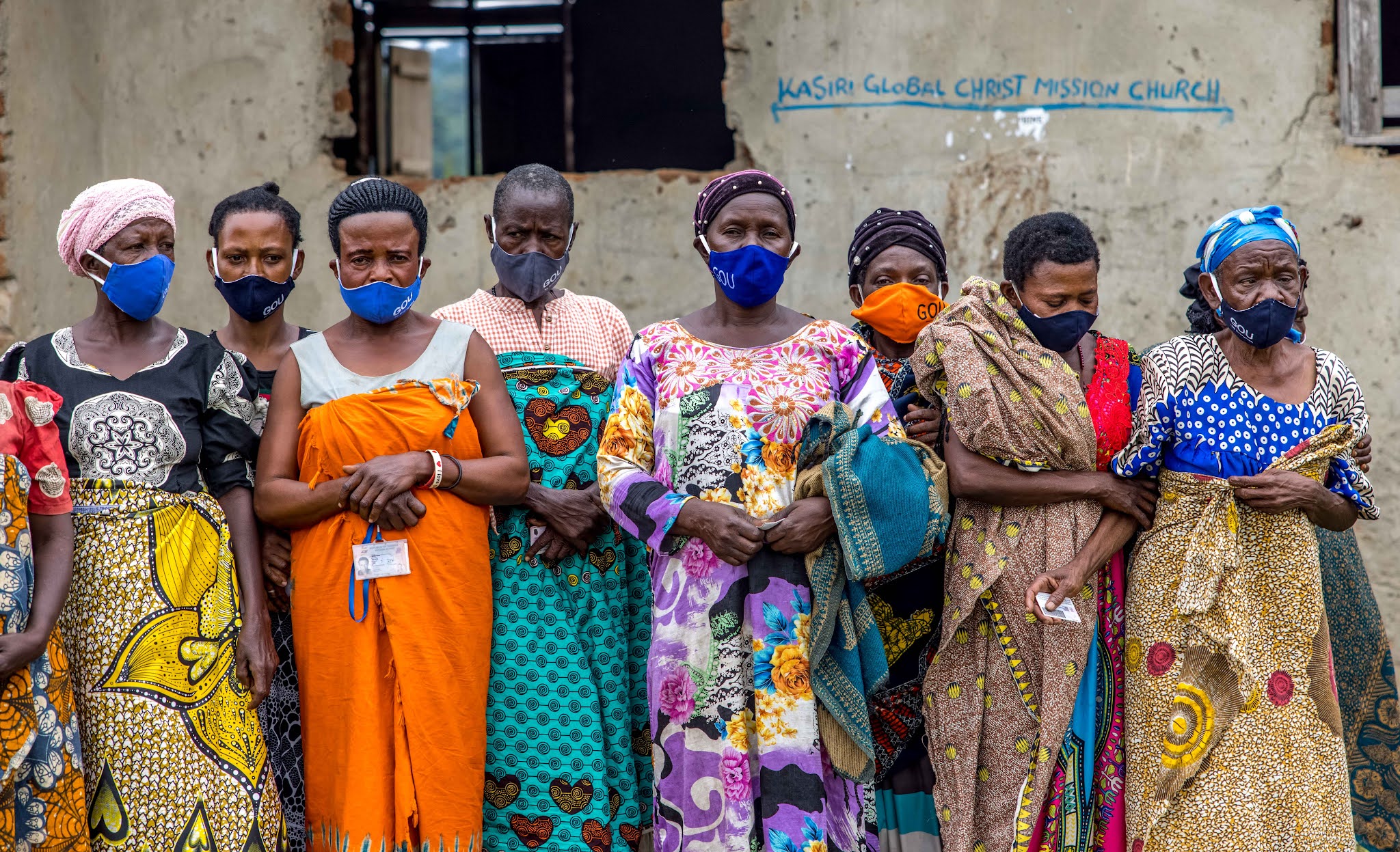
So . . . when we went to formally greet the new post-election District government this month, both the LC5 (locally elected governor) and the RDC (centrally appointed representative) asked us to respond to the economic distress of the COVID lockdown in our District. They noted that we had provided quick immediate help when Congolese refugees started filling our local transit centre, so reasoned we should also help our Ugandan neighbours (equality is a very very very strong value). We can't do anything meaningful for 260,000 people, but they proposed a list of registered community groups for the vulnerable, and we agreed to fund a small relief package for one group of up to 30 families per sub-county and township. That's 25 x 30 or 750 families, scattered across the whole district. Some were widows' groups, some disabled, some the unemployed boda drivers (as I saw in a political cartoon, the boda (motorcycle taxi) driver is an essential worker both for most of the health care and commerce in this country but also for providing for his own children), some people living with HIV/AIDS. With the government's leave to transport and gather small groups under COVID protocols, we could proceed in a time where churches, schools, and even driving are prohibited. 

Thanks to donors, even a last-minute two churches who spontaneously wrote and asked how they could help in this COVID time, with the balance of what was raised last year for floods and not fully spent on refugees . . we came up with a budget of about 100,000 USH per family ($28) to purchase, transport, and distribute a 25-kg (55 pound) sack of rice, a 5-kg (11 pounds) sack of beans, 1-kg (2 pounds) of salt, and a crisp 5,000 USH note to help as needed (hauling the goods home on a motorcycle boda, or buying cooking oil or firewood). Over the weekend our administrator John Balitebia supervised the purchase and importation of this food while sending out trusted mission colleagues (Christ School grads who stay active as alumni) to verify each group and prepare them, and yesterday his team of 5 trucks, each with a trained crew of distributors, reached every corner of this district. 

This entire exercise was beautiful on so many levels. First, it was an open door to show God's love sprinkled into hard-to-reach places with word and deed. These recipients were just a sample of the people on the margins rarely tallied in COVID impacts, who have found the austerity of this time to be a heavy burden. Each distributing team shared a short message to the waiting crowd. I listened to one, and the "preacher" was a former CSB student from a different religious background, an orphan, who met Jesus through the discipleship of the school, and gave his own testimony while pointing out that God is a God of seeing and presence, who reaches into the resources of people far away to recognise those who are suffering, and has brought them this food. So the whole thing was a lovely picture of the Gospel right there. 


But secondly, as we have done this a handful of times over the last few years, our World Harvest Uganda team has become quite trustworthy and efficient.
John is competent with a spreadsheet and a plan, and others who are mostly all CSB alumni know how to mobilise in the community, check the facts, arrange the trucks, control the crowd, preach and distribute. We instigate and observe basically, while the young generation who were toddlers when we came, who grew up with our kids, who played and learned math facts and Bible stories in our yard and around the mission, who came to Christ School, whom the teaching staff invested in with skills and personal discipleship, whom many have helped with scholarships . . . do the work. And do it well. 


So in the end, relief and development meet.
The long arc of decades of development means that the relief work can be done by local people who know the villages, speak the language, and have the capacity and integrity to carry on with the service.

We pray that the rice and beans fill hungry stomachs, and the experience of hearing and seeing God's love fills tired souls. We are all tired of this pandemic. But that doesn't matter, troubles don't end when we're tired of them. God asks us to stay in the fray, to keep at the margins with service and stamina. Thanks to donors who in their own weariness see that the suffering, like the vaccines and oxygen supply, is not justly spread over the world. Some pockets are harder than others. Thanks.

If you would like to contribute to the Uganda Emergency Relief Fund--CLICK HERE


Sunday, July 25, 2021

The Flaw of the Excluded Middle

 Such is the title of an article written nearly 40 years ago in a missiology journal by Professor Paul Hiebert, a theologian and anthropologist who was one of Scott's professors at Trinity. He draws upon his childhood and early work in India to make us aware of our own blind spots culturally, which is one of the values of getting out of your limited experience and into the messy diversity of the world. The article argues that somewhere in the 1800's our Western culture embraced dualism, drawing a sharp divide between a secular scientific palpable visible reality (body) and a religious unseen invisible reality (soul). In the process, we lost sight of the "middle", the spiritual powers, ancestors, demons, saints, magic, that most cultures across most of time had taken for granted as real.
As cross-cultural workers, we need to understand the world views we move in. And in our culture here, the "excluded middle" is the most important reality of all. Sure there is a creator God and an afterlife. Sure, there is a tangible cause and effect world with mosquitoes that bring malaria, and injections that can cure it. But in the middle lies the question of why my child is bitten and not yours, with whether my crop will bring enough money to buy the injection or not, with who might be manipulating spirits and charms to bring me harm. A theology of a God who saves souls, and a science that creates pills, without explanations of how humans live together in a broken world, falls flat.

Interestingly, Christians through most of history have not forgotten this middle. 

Take the reality of sin and evil for instance. The puritans and the Anglicans talk about the a triple layer that is somewhat parallel to Hiebert's scheme. The devil reminds us that we have a spiritual enemy that opposes God. The world reminds us that we live in a broken system since the Fall, where thorns and thistles grow, drought and heat oppress, life is a terminal condition as Kate Bowler says, it is more difficult for some people than others to get a good education, and spiritual forces interact. And the flesh reminds us that our own center is awry, we choose greed and lust and hate, immediate gratification and security, self over neighbour, comfort over holiness almost every time.


As Americans, we can learn from other cultures to look back at Scripture with fresher eyes. When Jesus was faced with a man blind from birth, the religious establishment wanted to narrow the cause down to someone's personal sin (the flesh). Was it his, or his parents? Neither, Jesus said. This was a broken-world issue that became an opportunity for Jesus to show the nature of the Kingdom, a place of healing and sight. Jesus refused to be forced into reductionist world views, and so should we. Almost every time we encounter an evil, we can find many layers of cause and meaning. The preemie admitted Wednesday by Kacie, born too early, as his mom walked the path to the hospital in labor, the first twin falling out onto the dirt of the road and later dying, this one surviving, mom only 17, and already the child from her first pregnancy and the first twin from her second pregnancy dead. Who sinned? Hard to pinpoint that, but within the story there could likely be a predatory man who got her pregnant, or a school head teacher that took her parents' fees but failed to give her the skills to continue on.  But there is also a vast social and spiritual reality that expects teens to have babies, that doesn't plan for delivery, that spends money on other priorities, that applauds billionaires playing with rockets while accepting as inevitable the high infant mortality of this continent. There is a malevolent evil that opposes the life that God brings, that whispers lies. 

These are important questions, because as God's people we are called to a holistic proclamation of the Kingdom. Personal, individual repentance and change. Yes, many stories of that in the Bible and this is a core way that reality shifts, one person at a time. But the prophets also called out the courts and the Kings, the money changers and the hypocrites. Jesus also turned over the tables in the temple where a system of charging the poor for sacrifices had led to barriers to worship, where the gentiles had been unfairly excluded. And we fast and pray against capital-E Evil, the spiritual forces of darkness we read about in Ephesians 6, the principalities and powers that seek to control this world against the good will of God. Here in Bundibugyo, we preach and teach, invite kids to learn truth, train teachers and pastors, so that individuals can have new life. We also shore up a wobbly health system, sit on committees, plan school curriculum and nutrition outreaches, develop literacy programs, work on a community level for public good. And we pray and testify to the power of Jesus over every spiritual force that is harmful. 

The church in most places and most times has done the same. If the American church today approached the evil of the after-effects of centuries of enslavement in the same way we've approached abortion, think where we could be? For abortion, Christians go beyond individual choices one by one, we campaign and vote and take the abortion struggle to courts, attempt to change laws, work to provide options for health care and adoption, etc. Very much a systemic approach. And we continue to pray. So the same energy and breadth needs to go into all our work for justice!

Here's a glimpse of what's happening around Bundibugyo with our team over the last few days, which I think gives us hope that people of faith can work on micro and medium and macro levels to testify to God's goodness:

First, read this post by the McClures about their exciting data from the literacy work. They have built on earlier work to train teachers to teach children to read, and are trying to seed that out into more schools. Since schools are shut, we have small Kwegha Camps (outdoor, masks, spaced) going on this summer too.


Our kids went to learn about basket-weaving (Kacie is the field trip planner extraordinaire) and our interns about pottery making (thanks Ann). These are ways we celebrate the beauty of Bundibugyo, the skills of our community, put ourselves in a learning posture, and support indigenous arts.


We continue to try and support the medical care of this district, Scott in maternity and buying electricity for the oxygen concentrators, me in NICU and Paeds seeing baby after baby. The wards are crowded and sometimes desperate, the improvements are multi-layered one-patient-at-a-time, teaching and improving systems for all, and prayer-based.

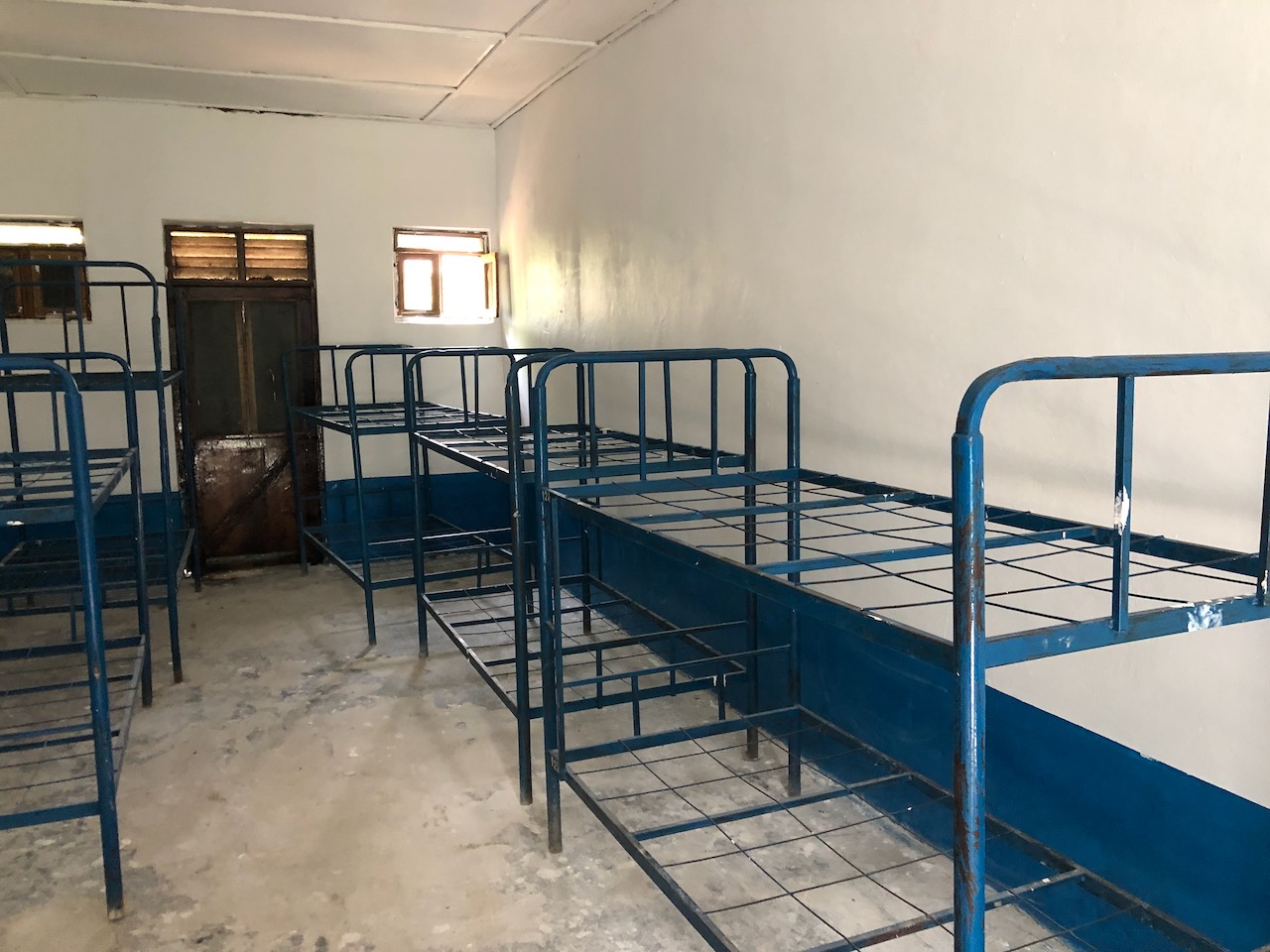
Scott also spends time on projects like the new chapel, and most recently organising paint for the girls' dorms, trying to take advantage of the down time. 
BEFORE/AFTER


But we also try to redeem the opportunity to paint!

And this weekend John was helping us prepare to distribute relief packages to 750 needy families identified by our district government, more on that collaboration later.

Meanwhile our interns went with our nutrition team to follow up some kids who had been discharged, and confirm they are still growing. So encouraging to see the way 12 weeks of gnut and soya paste, plus education, prayer, encouragement, can change the trajectory of a life!


And we continue to meet together, to encourage one another, to pray, to celebrate. This is our 6th week with Sunday morning sermons from around the continent, to learn to see Scripture from African view points with our interns. Today we celebrated Svitlana's birthday with a coffee cake too!


Keep praying with us, keep addressing the communal and systemic steep uphill climbs our neighbours face, keep working one by one too for everyone to live in the love of Jesus.