rotating header

Sunday, December 18, 2022

Wounds that Heal, pouring out the soul, and Advent week 4

 After a LOT of hopeful Isaiah build up to the coming promised one as light, a descendent of the the best king ever, a shepherd who seeks out the wandering and makes a road through the wilderness, a righter of wrongs . . . chapter 53 must have slammed into expectations pretty jarringly. Because the glorious one we are holding on to see is presented there as an unattractive, weak, victimised person. Even lambs for the sacrifice sound too fluffy and pure for the describers in chapter 53. The messiah would not be a winner. He would not be a superhero. He would be scarred and depleted and killed. 

The followers in the first century didn't get this any better than we do. Perhaps Mary and Joseph began to grasp the very dangerous outsider path they had entered when they were homeless for giving birth, and fleeing from murderous soldiers. 

But Isaiah 53's lamb's wounds are not punitive. They are restorative. The one who comes and pours out His soul does so with cosmic consequence, the beginning of a reversal of all that is harmful, painful, sad, wrong, despairing. His suffering is our healing.

This Advent season, as all Advent seasons, that is good news. The ADF attacked Ntoroko crossing the Semliki river about 50km north of us, a group of 40-ish rebels, on Tuesday. The Ugandan army responded quickly and definitively and we're already back to calm, but a stark reminder of the stakes of warfare all around us. A day later a family came to describe the life-threatening birth disabilities of their newly born baby and we went to examine him, pray, and refer him for emergency surgery at one of the two medical centers in the country that can handle it. That evening we got a threatening letter from the lawyers representing the family that unjustly reclaimed land the mission bought decades ago. Every day desperate people are asking for money for preparing for Christmas. Insecurity, illness, injustice, poverty . . . these four hardships are not just words, they are the fabric of everyday life all around us. 

Into that world, the lamb who was despised and rejected and killed but in the process re-set the path of the universe to all-things-new . . . is good news indeed. Something worth watching for, Advent and always.

And as we are left to keep slogging through the already-but-not-yet of His having come but still to come and bring this process to completion . . . nothing brings us more Christmas hope than a visit from one of our kids. So I'll throw in a few photos this week that point to the very healing that Christmas begins, the making right of all the separation and sorrow of the world! 


Saturday, December 10, 2022

Righting the wrongs and bringing us home: Advent week 3

 From the 700 year old prophecies of Isaiah to the birth-night proclamations of angels, "do not be afraid" seems to be one of the primary messages we need to hear. Given smouldering lethal virae and intractable conflicts and sorrowful losses all around us, it DOES seem to be a message that bears repeating. Along with, do not give up. It's been one of those stretches so far in December where the world weighs heavily.

But what strikes me most about these fear-not messages is that I want the dependent phrase to be a reassuring explanation of "don't be afraid because nothing bad will happen, this won't hurt, you won't suffer, you're safe".  But almost every time, in the subsequent phrase the only reassurance given is "for I am with you, you are mine, I'm in this story."

We need to hear that.

Our team is studying Isaiah, and a major theme is that God's presence is a reckoning, a judgement, a righting of all that is wrong. That's what Mary celebrated in her magnificat, the poem declaring that her child would actively topple the powers that be, the oppressive system that marred their lives. Which Isaiah points to too: the blind will see, the tears will be dried, death will be no more (chapter 35 for instance). A deep change in the universe that results in some immediate visible evidences but also sets in motion a transformation yet to be seen. Some of that happened in communities in occupied Palestine during Jesus' life, as a result of his presence. I know that God passionately wants to heal the world but from my human perspective, I have to imagine that Jesus in the flesh personally threatened by Herod's soldiers, personally fleeing from danger to Egypt, personally working to feed the family, personally asked by the blind and lame to fix their problems, must have felt compelled on a new level. After Lazarus died, he wept. There's no substitute for incarnation in seeing the wrong and feeling it and personally wanting to make it right, which is the essence of our chosen life. Many organisations send money, send experts for a week or a month, establish parameters for a project. And we see the good of those things, this week for instance the way that has driven maternal and neonatal death reviews that generates data and awareness. But being personally present, knowing the particular pregnant mother and her dreams and fears because we live here, that's the Serge path that we walk . . . 

Which to be honest has been a doozy this December. 

To embrace the value of reckoning, you have to be immersed in the reality of not-right, to live at the unraveling fray. In the last few hours, an acquaintance whose wife died of a chronic terminal disease, a friend we've worked with closely now weeping because her daughter was not promoted to the next class of the school she wants to attend in spite of passing grades (everyone did so well that her decent results still put her near the bottom) leaving this family with few options, another very old friend here with a major financial ask for his kid's educational support, another with a devastating eye injury from a fight that broke out at a burial, another being chased off the family land.  All people we've known for years, decades even. It's been a couple of weeks of pummelling sorrows. They sound hard when typed out; knowing the people and confronting the wrongs face to face is even heavier. And our little dog, Nyota, who followed us on a run six years ago as a lost puppy in Kenya, died Sunday night. She'd been dwindling from causes unknown, and didn't respond to treatments the local vet and we all tried. Minor compared to the human consequences of disintegrating creation, but a grief nonetheless. And as leaders, we have also had to carry the hard choices of balancing budgets, determining salaries, anticipating taxes, wrestling through murky systems, deciding on limits that disappoint and hurt people we care about. And the heft of all the above is happening within a few miles, so when added to the hard choices and sacrifices of our entire Area of workers in Serge ... we feel our powerlessness to fix just about anything.

Budget Meeting days at CSB, agonising on how to remain accessible to the poor and just to our staff.


Final Sunday with just Senior Six (A level completing students) sharing testimonies and worship.

Departing students post-last-exam this week

Lots of end-of-year contract, report, analysis, planning time in the World Harvest Uganda office with John.

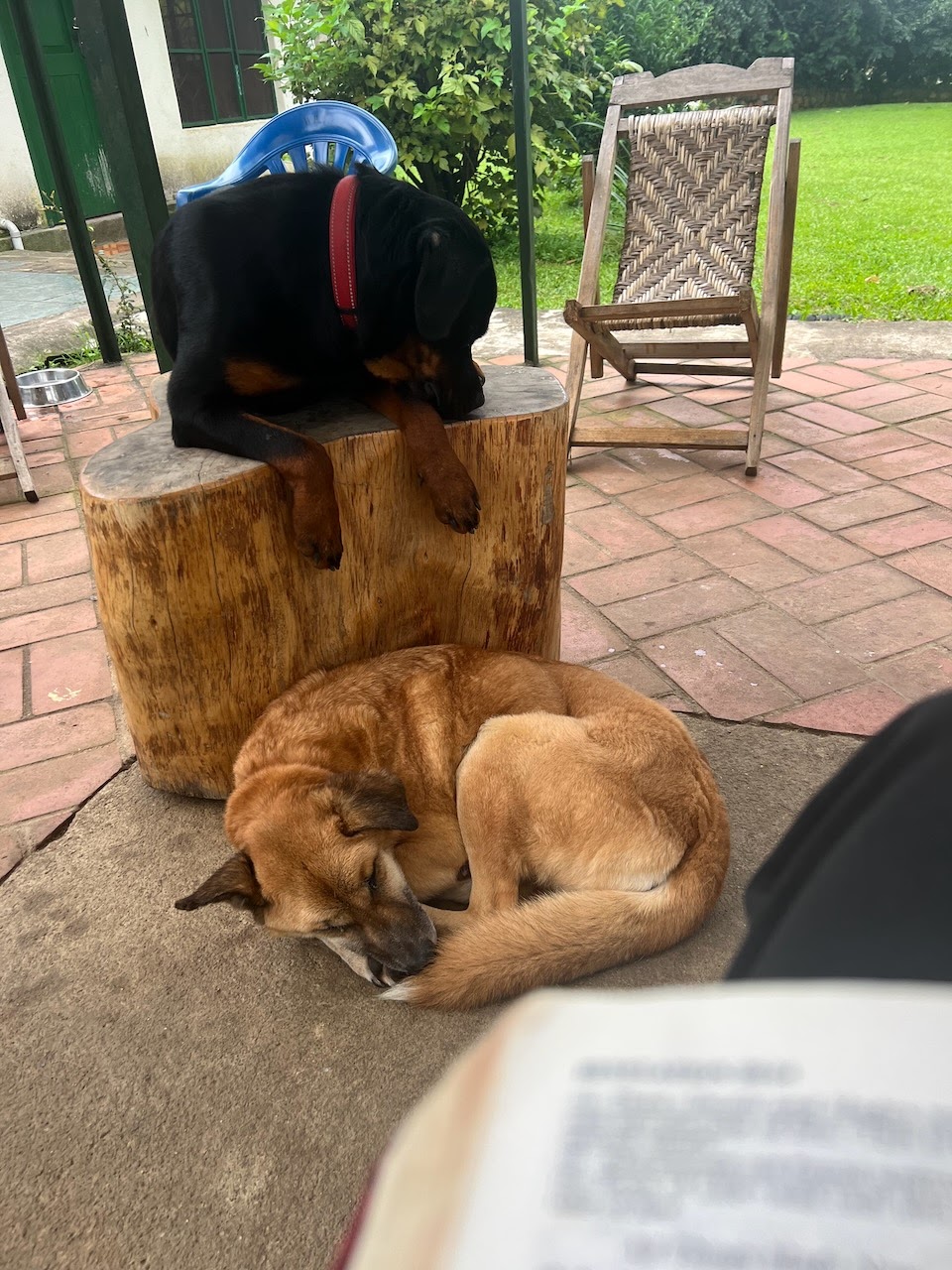
About a week ago, Lindi (on log table) and Nyota (on floor) keeping my company during my morning Bible reading and prayer time. They have been a faithful consistent presence. 

A few days before she died, Nyota was not in pain but we wept many times over her.

Our mission kids wrote us the sweetest notes about Nyota. It meant a lot.

I was the "mystery reader" for 1rst and 2nd grade at Rwenzori Mission School this week.


 Two above phots are the last day of RMS, yesterday, celebrating Christmas spirit but getting work wrapped up too. We still need a classroom assistant for February to May 2023 and a new teacher to join by August.. . . (if you have any Christmas wishes to spare throw that one in for us).

Advent in Bundibugyo makes the longing for the wrongs to be put right starkly center-stage. Every hard story makes that longing sharper, and the proximity and duration of living in the mess shatters any illusion that it's a bit removed or that it's solvable by us. We need the Messiah to finish what He started, to lay waste to evil . . .  and to transform the wasteland into a garden.

Because the reckoning is just the beginning of the promised work. The all-things-new that we wait for is actually a homecoming. The imagery of the highway in Isaiah 35 implies it is going somewhere. It is going home. Advent leads to Christmas. The wrongs put right are not just a means of making the world more orderly, it's a process of making the world more homey. Redeeming the creation--including us--into a place of beauty and thriving. I think that's what twinkle lights and greenery and colourful ornaments preview. A home we are invited to return to that is where we truly want to live.

Home is a complex concept for many of us, straddling places and interlocking circles of families, always leaving something out until the final promises of Revelation 21 come true. As hard and sad as the last two weeks have been, they also make the promise of home one that we want to draw people into here and now, and one that we want to cling to for ourselves. Only one of our five can come home to Bundi this Christmas, but we can't wait to pick him up in less than 48 hours now at the airport. And this week I found my heart deeply thankful that the other four could be together, which truly seemed more comforting and important than any more of them coming here. Also super thankful that both of our sisters manage once again to enfold our moms into their family celebrations, since we can't this year. And that we can keep our hearts and doors open to team family who miss theirs. 

Wrongs made right, and the road to home. These are two of the lenses for understanding the Christmas story, given by Isaiah, celebrated in the Gospels, and treasured here in 21rst century East/Central Africa.

This is 15 years ago, just before Dr. Jonah died of Ebola on Dec 4 2007. Another wrong that we long to see made right, the end of Ebola and the restoration of his family and justice and mercy in Bundibugyo.


Saturday, December 03, 2022

Advent 2: the labor of planting a fragile branch in this earth

We have a mulberry bush just by the door, thanks to Lesley Stevens who lived in this house for a few years. I am grateful to her quite often, as we search the branches for a dark, ripe berry to snack or to freeze for adding to smoothies . . . the tropics are amazing for fruit and we have bananas, papaya, mangos, even avocados in our yard, but berries are harder to grow in the heat, so those handfuls bring us a lot of joy. On Thursdays when the kids come for pizza, they often scour the branches for berries to add to their own "desert pizza" creations. More joy. So, this being Uganda, a month or two ago when Scott had trimmed the bush back, I took a half dozen branches and stuck them in the ground down by the clothesline. Literally a branch shoved into the grassy dirt, but equatorial rain and sun and abundance means several of them seem to be alive, sending down roots and growing their own leaves. Recently we picked our first two berries from the transplanted branches. 

The mulberry bush by the door

A day with a good harvest!

one of the branches, bearing fruit

That's the image of the branch in Isaiah. The promised one does not appear with a flash of alien super-hero power, he comes as an embryo, made of the same substance as us. An idea, a concept, an unseen truth that became flesh. A small fragile piece of humanity connected to long lineages, literally stuck into our earth to grow. Mystery of God, for the first time, visible and palpable to humans. Fullness of grace, transplanted. 

A flashing miracle of sudden presence might have sounded like a more sure bet than the painful labor of giving birth two millennia ago, or even now. Isaiah 11 speaks poetically and confidently of the branch, but for the word to become flesh and dwell amongst us the picture in Isaiah 26 is more realistic: trouble visits, a woman in labor cries out, the time draws near and the sharp pains are upon her. Giving birth, literally, but also a metaphor for the deeply personal costly effort that Jesus' presence required of Mary and requires of us. In chapter 26, the gruelling process is entered with hope but no guarantee that the outcome will be more than wind. That's faith's exhausting toll.

Because this has been a week of labor, searing sorrows that we hope bring forth more than we can see. We're struggling to balance the budgets, to conclude the calendar year, to plan for 2023, writing and signing contracts with a dozen mission and several dozen Christ School employees. Negotiating, listening, trying. Having hard conversations with a few that wrench the heart. Personal and virtual meetings, hard stories to pray for and carry across the six countries in our Area of supervision. Determined to trust God's story even when we can't see around the corner of how God will provide, determined to push everything an inch closer to goodness even though a thousand forces seem to push in the opposite direction, determined to not give up but to let some things go with open hands. Juggling paperwork and rules and taxes and details. And weeping over our little dog Nyota that followed us home one traumatic morning six-plus years ago, and now seems to be dwindling towards death in spite of treating for everything locally treatable. It's been a lot.

But the message of Advent is that in the pain of these labours, the Word enters our reality. In the struggle of faith, God is enfleshed. 

A 23 year labor of love that God let us see beautiful results from this week: the staff of Christ School  on the last day of school (still have some exams, but last full day for staff) after a prayer walk to THANK God for the miracles and mercies of 2022, 


Sunday, November 27, 2022

Advent 2022: the paradox of walking in darkness to see light

 We all want to see the glorious sparkling lights, not exactly something we have to be talked into. As we turn the corner from Thanksgiving to Christmas, today marks the Sunday where Advent begins. Even yesterday we put up a couple little strands of partially functional much-used Christmas lights, which we rush to unplug every time the power goes our so our batteries don't bottom out. Still, 'tis the season of anticipation of what is coming, of waiting and hoping for good. Like a traveler scanning a web site brochure, or a shopper reading on-line reviews, those originally waiting in Advent had ancient prophecies to pin their expectations to. The entire nation of Israel after the defeat of exile held their collective breath for a change in the plot. And Isaiah the prophet wrote repeatedly to give them glimpses of the coming reality. Including, in chapter 9, a great light.

Bring it on.

But, Isaiah says, the light shines on people living in darkness, in gloom, in the land of the shadow of death. 

Chapter 9 speaks of yokes, burdens, rods, battles, blood, oppression. Not sure that sounds so Christmas-y. Unless, of course, you happen to be living in a land battling Ebola, or in one of our border countries with drought, famine, rebel warfare, displacement, intractable poverty, injustice. In the real world, in other words. Where the shadow of death is undeniable. And where Christmas comes as shockingly good news. 

Advent wreath waiting to be lit

It's raining here, mud and gloom feel palpable, particularly as electricity flickers on and off, and the water line remains interrupted. But this is the exact place and time for a strand of Christmas lights, for unreasonable faith to shine into the narrative. 

 We have the privilege of living in 2022 so that we can look back on both the anticipatory darkness of centuries of longing, and the light that shone in Palestine. We can read pictures of what-would-come painted for the ancients in Isaiah 9:1-7 and 49:5-6 . . . and the picture of what did come in the testimony of John 1:1-9. And yet, at the same time we must acknowledge that shadows remain in our own era and hold onto a hope for the light to come (Rev 21:22-25). Because the darkness is not a sign that the light has been defeated. It's a sign we're in the right place to wait for it.

Waiting for light, example 1 of 4 in last day  .. Miss Michaela, beloved teacher, has to go for a couple months to raise more support and see her USA family. Dark times for first grade. But the light on the horizon is that she agreed to come back for another 2 years!!!

Example 2: baby with a life-changing disability, but hope on the horizon as we refer for surgery and care.

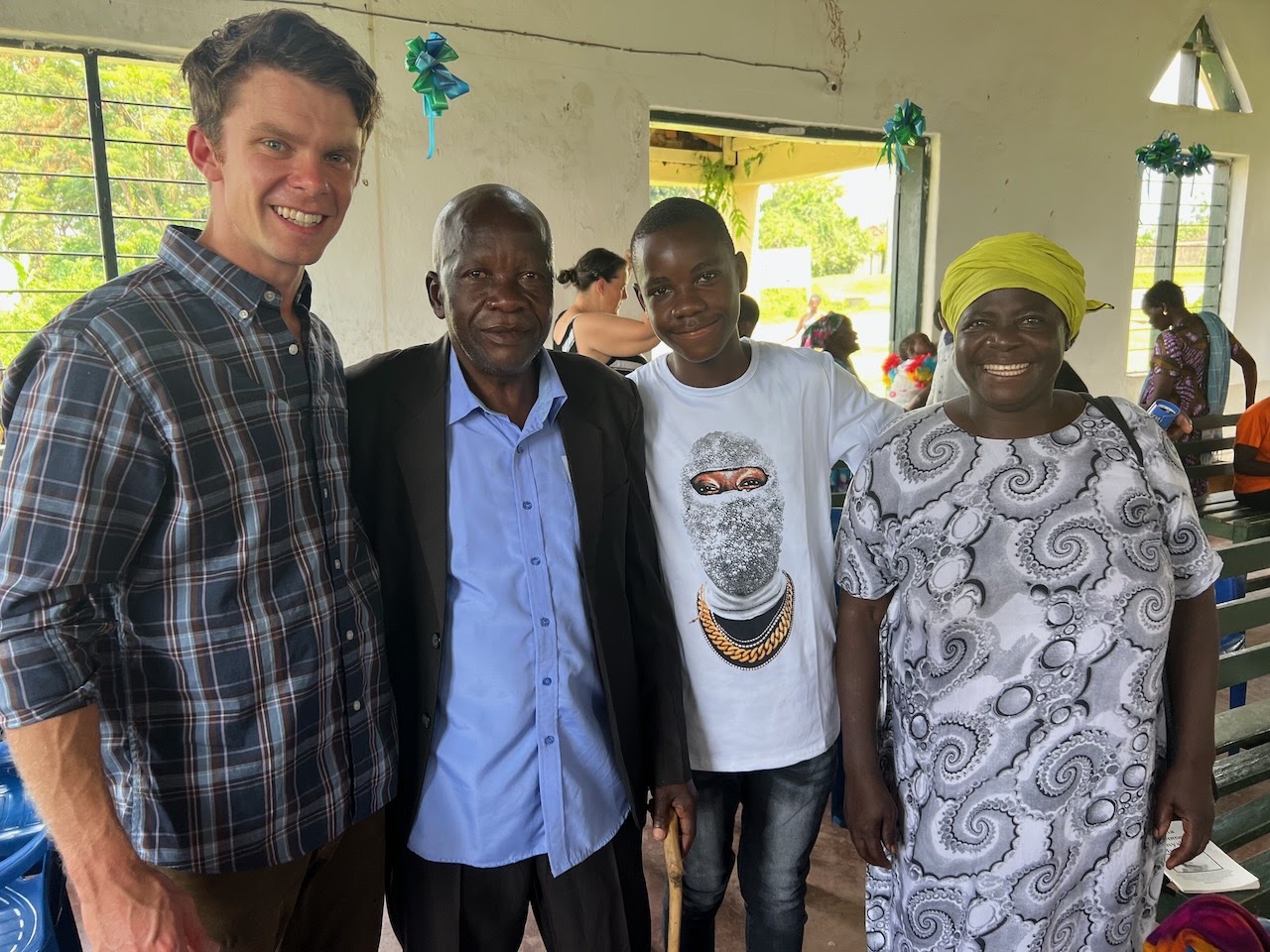
Example 3: Melen (far right) has known more than the shadow of death, she felt the weight of it most achingly during Ebola (a week from today we will reach the 15th anniversary of Dr. Jonah's death). But she smiles with hope that the son she was pregnant with at the time will pass his exams finishing primary school well enough to keep on the path to be a doctor like his dad.

Christ School, perhaps the place we smack into the darkness most often and yet the place where the hope of change and hope rests. Today the Senior Six class had their last regular Sunday preaching service, and Scott spoke from John 13. As we say goodbye to them like Jesus did to his disciples, we not only preach leading with a servant-disposition . . . we demonstrate it as Jesus did by washing their feet (Madame Topista, deputy head teacher; Scott, Chairman of the Board; Peter Bwambale, head teacher, and Patrick, Director of development; in front of the 33 graduates)


Wednesday, November 23, 2022

Thank you for Surviving: Thanksgiving in the context of risk, celebrating with community

Thanksgiving, an American holiday but a universal foundation for life. Reaching the 4th Thursday in November outside of American culture means that we have zero advertising promotion of turkeys or parades or time off or football or pumpkin or pilgrims. Instead we have another day in a country that is reeling from Ebola and struggling to address poverty and hunger and unemployment, that is rapidly attempting to organise and modernise and educate and cultivate. Except for the Ebola (in those days it was small pox and a dozen other plagues)  . . . not so different from the 1621 harvest-time feast. Thanksgiving comes into the context of risk, and thanksgiving calls out a communal celebration.

In Uganda, webhale kwejuna, thank you for managing to survive, is the traditional greeting to a new mother. Because childbirth is risky. And that captures the spirit of this holiday. In agrarian societies at the mercy of rain and weather, making it through to the next harvest is never guaranteed, the hungriest times being just before the food is replenished. And for the early Europeans attempting to colonise North America, the terrain, the defensive inhabitants with their suspicion and resistance (well founded, as it turns out), the impending cold of winter, the dangers of the voyage . . . all added up to a sharp awareness of the fragility of life. Just as childbearing brings dangerous hours into a woman's life, so that on the other side we note even survival with thankfulness. And while Thanksgiving in the USA was intermittently emphasised for the first century of the country, it became a more universal national holiday when? In the Civil War, 1863, in the context of the worst days of our history. That's when we needed to give thanks.

In Uganda, many greetings start with webhale, with calling out thanks, because we need to see life communally, to draw each other into truth. Being thankful takes discipline, intention, awareness. I suspect that's why the leaders of the pilgrim and indigenous American communities saw the importance of marking the day, and that's why the Psalms and the whole Bible have to keep enjoining us to taste and see. Hardship slams into us and grabs centre stage; it is a choice to instead lay out a table, sing and eat and celebrate. Reaching that point alone is nearly impossible, but in community we get a new and nuanced view of our situation, a reality check that we are part of a family.

So the context and celebration of thanksgiving, Biblically as well as historically, is that in the proximate inevitability of suffering we open our eyes to the undercurrent of good by gathering together to name the blessings.

I'm thankful for my family and my team, and for surviving 2022. And thankful to be reminded, today and this week, of the truth that love is stronger than death, that good overcomes evil in the end. So let us leave you with two Thanksgivings, two older community members who had been blinded by cataracts. It's a good story because it began in the context of risk and sorrow, probably fifteen or more years ago when a young man who had been friends with our kids graduated CSB and earned a University admission and Scott was filling out what he thought was a cursory health exam form . . and discovered that this kid had rare severe glaucoma-based vision loss. Thanks to a missionary short term ophthalmologist, connections to the eye hospital in the capital, generous donors and many trips, he's had multiple surgeries and some preservation of the limited vision he still had. He struggles. But he knows how to travel to the eye hospital. So when the CSB gate guard was about to lose his job this month because he was losing his vision (being blind makes security a bit of a difficult career), Scott had the idea to send him to Kampala with this young man at his next regular follow up, to see if he could also be helped. And that seemed like a golden opportunity to send the grandmother of our next-door neighbour too, with her granddaughter to help her. The four of them arranged seats on the early morning bus, for everyone but the glaucoma-guide their first time out to the big city 8 hours away. There were complications and setbacks, uncertainties and mercies. God opened the door to both the old man and the old woman getting immediate surgery. They returned able to see. Both came to visit in the last two days to say "thank you". Her comment: that much money could have bought land, I can't believe it was spent on me, God is good. His comment: I can walk alone, I can read the Bible, I can do everything. Scott recognised they were each like the 10th leper in Jesus' story--healed, and not taking it for granted, but giving thanks. A tragedy of glaucoma nearly destroying one young man's vision, still wrong and sad. But a redemption in his suffering bringing life-changing sight to two others.


So, praying we can be like that. Having our eyes opened to the goodness of God (the song and artist from the UVA memorial for the murdered student athletes this week, a powerful statement of intentional awareness of truth on the darkest day). And celebrating with our community. And in spite of all the valley of the shadow of death, finding a table laid. Not an escape (in the presence of enemies after all) but a declaration of faith that even on the hardest bleakest paths, God brings good.

Thursday, November 17, 2022

Malawi, stories, and rain at the frayed edge of grace

A week ago we pulled out of our gate in the early morning, to drive across Uganda through rainy season profligate green to the international airport. . . and this morning we drove out of Lilongwe, capital of Malawi, to their international airport to head back, past dusty plowed thirsty fields. Out of rainy season into dry season and back again. The rains on our continent make the same north to south sweep this time of year. 

Rainy Uganda above, to dry Malawi below


Over 100 years ago, Scottish presbyterians and South Africa Dutch Reformed missionaries followed the call and example of David Livingstone into the interior, and an innovative risk-taking Malawian leader in Nkhoma saw that these Europeans had guns, and decided to invite them to his area. His tribe could handle wild animals and vagaries of climate, but he thought the firepower would be very useful in protecting his people from hostile neighbouring tribes who also took captives to sell to coastal slavers from abroad. The missionaries noted that Nkhoma, at over 4000 feet, provided a healthier less malarious climate for survival than the lower lakeshore. So they accepted the invitation. Still, at the end of the first year, the tensions of cross-cultural collaboration and suspicion were high. On Nov 27, 1889 a crowd surrounded Rev. Murray. The rains were desperately needed and late. If he really had a connection to God, he should pray for the rain. They gave the missionaries 24 hours, until sunset on the 28th . . . and if no rains had come, they would take that as a sign that these foreigners displeased the spirits and should be sacrificed. Those men prayed, and prayed some more, through the night of the 27th and day of the 28th.


A half hour before sunset, the skies opened and rain poured down.


And so lives were spared and land was granted to the church to begin a collaboration that translated the Bible, built numerous schools and churches, and established a hospital and nursing school and teachers’ college and eventually a University. The synod leaders over the decades transitioned from foreigners to Malawians, as did most of the church, school, and hospital staff. Family after family came and went from various corners of the country and the globe, moving into the solid brick houses with their tropical verandas and tenuous water systems. Thousands and thousands of treatments and surgeries and lessons and projects later, here we are in 2022. So much good. And yet, Malawi remains, like most of this continent, near the basement of any development index. The Kingdom comes, but in the slow way that a mustard seed grows, good but not enough for twenty million people the thrive. Yet.


A bit like the old missionaries, were were responding to invitation and going to establish collaboration, though this time we pray with less colonial hubris and certainly no firearms, but the ongoing heart to bless our neighbours. 


Arrival photos, Daniel and Bethany in front of their house


A year ago the Robbins family moved to Malawi. They had served a short term in the area as school teachers shortly after their marriage over a decade ago, and after finishing graduate training and working in the USA and having three kids then joining Serge and completing needed PhD coursework to qualify for seminary professorship and counsellor training to engage with safe-house programs for abused kids (a lot happens in a decade). . . they were ready to move to Nkhoma. We had intended to make a respectful visit as Serge leaders pre-move to Nkhoma in 2020 but . . Covid . . then when travel eased a little in 2021 but . . . injury . . . so this trip was long overdue. Though many others have served and lived in Nkhoma over the years, we don’t assume our welcome or right to insert ourselves. We need the clarity of the synod leadership inviting us organisationally, and so we primarily went to sign an “MOU” (memorandum of understanding) together (THANKS to advance work by the Brotherton-Streets). 


With Rev. Vasco in his office for the signing


This is the Area Director side of our job, and quite delightful. The primary meeting was fun for sure, Malawians have a warm humour, and Rev. Vasco graciously signed with Scott while saying : yes, now we have the papers, but more importantly we already have the trust with Daniel and Bethany.  They have worked hard, and God’s abundant grace at the fray, has enabled them to already establish relational connection that is more important than any document. And that’s the real joy of such a visit, not accomplishing paperwork but witnessing redemption. Getting a front row view of the Robbins and others as they grapple with poverty and broken systems and find the places where their particular resins can seal the cracks. 


Because in our era, even a century on, there is still work to be done. Daniel teaches in the seminary faculty of the University, which invests in deep theological training over 4-5 years so that church leaders fan out over the country with not only a degree but a spiritual resilience, and also invests in broader diploma-level 2-3 year enrolments so that secondary schools receive teachers with competence. Bethany not only homeschools her kids (and she’s one of those dream homeschoolers who uses the flexibility to stimulate creative, problem solving, real thought about the way the world works) but also mentors counsellors locally and at distance, particularly those working in the hardest heartbreaking areas of abusive trauma in childhood. Non-Serge missionaries are also on station, establishing family medicine and surgical residency training, providing medical care to the marginalised. We toured the hospital and met with some of the doctors and professors and pastors and friends. 

We loved being students again for a morning's dive into a Scripture passage as Professor Robbins drew out observations and analysis, then challenged us to examine trinitarian relationships in the context of voluntary submission. . . significant for understanding God but also human relationships. Wow.


Our role as outsiders now is to come alongside people who are the primary sealers of the broken pieces, people who were born and raised here. Like Rev. M who is preparing a thesis examining the Hebrew concept of “anavim”, a word in the Psalms that comfortable people assume to mean internal moral poverty . . . but perhaps the people who wrote it in ancient Palestine and the people who read it in 2022 Malawi see a richer (and more accurate) both-and meaning of spiritual and physical, internal and external need. Or Professor H who is juggling the finances and administration of the entire University while raising his family, or his wife E who brings quality improvement projects into the nursing care at the hospital. These people and their children are the future of Malawi, and yet God continually sprinkles in people from afar too. People who have benefited from a life that allowed for development of their skills and passions and who are now willing to be the seed of similar blessing and training in a new location, people who have access to tell the stories and channel the resources which are not fairly distributed in our world.

H, his son, M, and Robbins fam having stimulating discussions over fruit and eggs from M's chickens


That’s why we are in Malawi, new to Serge though not new to the centuries of Africans who have laboured and lived and loved here. To listen to statistics and witness the reality that Malawians endure. To willingly encounter the sorrows that harm so that we can be a tiny drop of the grace God rains down. 


On our final evening last night, I walked out on the porch to sit and read as the light faded, a moment of rest before our early morning return flight. It was about half an hour before sunset again, in mid-November, and the parched heat of dry season radiated back up from the dusty floor as it does after months of sun and wind. Gradually I noticed an unfamiliar sound and sensation. 


Raindrops. 


The tentative beginning of the annual deluge had arrived.


PS The team would love to have more help. Priorities are seminary professors and family medicine doctors, or nursing professors or teachers or counsellors. . . . mostly people with the humility to listen to and learn from our partners, and the faith to try new things in hard places.


We can testify it's a fun crowd to spend a birthday with!

Nkhoma mountain, Malawi. May God's Kingdom come here in all it's healing, refreshing beauty.