Since we landed in Bundibugyo in the midst of an unsettled moment between the two tribes here, Scott took the opportunity to preach at Christ School and at Bundimulinga using the parable of the Good Samaritan. A timely story about loving your neighbor, inheriting the kingdom by acting mercifully towards a perceived enemy who is in need. Tribalism, as he pointed out, is a reality of the human heart all over the world. None of us can overcome the tendency to divide, to prefer our own kin, to sacrifice an enemy for the preservation of our own land and family.
Yet as one of the RVA teachers preached this passage a few weeks ago, the Gospel reality of the story is that we are not the noble foreign risk-taking Samaritan. We aren't even the busy stuffy purity focused priest or Levite. We are the man in the ditch, unable to love our neighbor, desperate and broken and failing. It is only the compassion of Jesus that pulls us out; he pays the cost of our healing so we are alive and free and able to love neighbors who are enemies. Peace between the Babwisi/Baamba and the Bakonjo can only come from those who have already been pulled out of the ditch by grace, and empowered to extend that grace to others.
This was a powerful and timely message for this day.
So two services, dozens of hand-clapping energetic praise songs in three or four languages, a hundred handshakes, and six hours later ....we felt well churched. Isingoma and christine gave us a tour of the new biogas project which turns human waste into methane gas that can be piped into a large burner for cooking. We had lunch with Scott Ickes and his college student intern Tim, visited our old cows and played with the Johnson's dogs, welcomed three more young American mission visitors (this team is doing an incredible job of hospitality with 11 visitors hosted by 3 long term folks), walked down to nyahuka for dinner with Melen (who is a legendary cook and a true friend), and hung out with the interns a bit.
These days are a full, full, rich platter of steaming matoke and firm hugs. I can't believe how many people ask specifically about each of our children by name, how many stop and exclaim when they see us, genuinely happy. Or how beautiful it was to hug two of the girls who grew up with Julia at church today. Or to laugh with the wiry old ironer who loves to joke with Scott in Swahili. Or to see a woman who started coming to church after the nutrition program rescued her malnourished twins, still there four years later, with her boys. Or the way the younger people now lead the service and worship.
Yes, there is change. The road is a massive leveling scar through town, with rumbling trucks and loaders and backhoes at work every day. Electric lights shine in the dark night now. The music at both services included microphones and speakers. Some of the kids had praise-dancing moves that were more MTN than traditional. But I'm more struck by how much is the same, how many people are so familiar, how right it feels to be back.
Sunday, June 30, 2013


Saturday, June 29, 2013
For such a time
Oh Bundibugyo how we love and mourn for you.
The rain pours down weeping and cleansing. Today the market was quiet, the shops boarded up, the atmosphere a bit tense. The cultural king of the Bakonjo tribe wanted to come for a symbolic visit. The Bakonjo are a majority in neighboring Kasese district, but a minority here. Years ago the Baamba/Babwisi and the Bakonjo united to fight against domination by the Batoro, a larger and wealthier tribe based in fort portal whom the British favored and used as sub-rulers. The rebellion was known as the Rwenzululu movement. The Bakonjo got Kasese district and the Baamba/Babwisi got Bundibugyo. In more recent years the government decided to recognize cultural kings so the Bakonjo organized their kingdom, also based in Kasese. In the last year or so the Baamba /Babwisi have also begun to organize. All of this is supposed to preserve culture and language and tradition, not start wars.
However, whenever people feel their land rights could be threatened, their livelihood and home, they react. Today's planned visit was interpreted as a ploy by the Bakonjo to take the district from the Baamba/Babwisi. The government stepped in with police surrounding the Kings palace and stopping him from leaving on his trip. Tear gas was used to quell his angry supporters. Here in bundibugyo people waited to see what would happen. Nothing did.
The tribal tension is usually defrayed by the struggle to survive, the proximity of neighbors, the inermarriages. But it is there. When news of the potential visit leaked last week, some men tried to burn the Alpha primary school started by Melen, wife of the late Dr. Jonah, and also a Mukonjo. We saw the charred wooden wall, a minor blemish and a testament to the miraculous intervention of angels. They found empty bottles of petrol and two minor smoked areas but the fire did not catch and something scared the men away. Another Mukonjo friend told us he lost his job this week, because his employer is a Mubwis. Hard to really know.
Thankfully the day passed without incident in this area.
However just to remind us that the forces of evil will resist change for good, we had a long visit this evening with another friend, a young man in his last week of five years of medical school on the Kule sponsorship fund who was unjustly accused of cheating when another student disturbed an exam. The university decided to dismiss him. He came to us and wept, something I have rarely seen a man do here. Please pray for a miracle to allow this case to be appealed. We believe in this guy, and Bundibugyo needs him. As we have learned with Jonah and Travis, it is painfully dangerously difficult to get a doctor to serve here.
Dinner with six young men whom we have supported and parented and sponsored most of the if lives was a welcome respite. They told of demon possessed classmates being rescued, of football matches and friends and projects and exams, of murders and triumphs. We greeted dozens and dozens of people up and down the road, resurrecting long dormant phrases. And had sweet prayer time with new team mates. The sheer volume of relationship and interaction is sometimes draining but we are glad to be here. Scott will preach tomorrow about the Good Samaritan and tribal relations. Pray for him.
The rain pours down weeping and cleansing. Today the market was quiet, the shops boarded up, the atmosphere a bit tense. The cultural king of the Bakonjo tribe wanted to come for a symbolic visit. The Bakonjo are a majority in neighboring Kasese district, but a minority here. Years ago the Baamba/Babwisi and the Bakonjo united to fight against domination by the Batoro, a larger and wealthier tribe based in fort portal whom the British favored and used as sub-rulers. The rebellion was known as the Rwenzululu movement. The Bakonjo got Kasese district and the Baamba/Babwisi got Bundibugyo. In more recent years the government decided to recognize cultural kings so the Bakonjo organized their kingdom, also based in Kasese. In the last year or so the Baamba /Babwisi have also begun to organize. All of this is supposed to preserve culture and language and tradition, not start wars.
However, whenever people feel their land rights could be threatened, their livelihood and home, they react. Today's planned visit was interpreted as a ploy by the Bakonjo to take the district from the Baamba/Babwisi. The government stepped in with police surrounding the Kings palace and stopping him from leaving on his trip. Tear gas was used to quell his angry supporters. Here in bundibugyo people waited to see what would happen. Nothing did.
The tribal tension is usually defrayed by the struggle to survive, the proximity of neighbors, the inermarriages. But it is there. When news of the potential visit leaked last week, some men tried to burn the Alpha primary school started by Melen, wife of the late Dr. Jonah, and also a Mukonjo. We saw the charred wooden wall, a minor blemish and a testament to the miraculous intervention of angels. They found empty bottles of petrol and two minor smoked areas but the fire did not catch and something scared the men away. Another Mukonjo friend told us he lost his job this week, because his employer is a Mubwis. Hard to really know.
Thankfully the day passed without incident in this area.
However just to remind us that the forces of evil will resist change for good, we had a long visit this evening with another friend, a young man in his last week of five years of medical school on the Kule sponsorship fund who was unjustly accused of cheating when another student disturbed an exam. The university decided to dismiss him. He came to us and wept, something I have rarely seen a man do here. Please pray for a miracle to allow this case to be appealed. We believe in this guy, and Bundibugyo needs him. As we have learned with Jonah and Travis, it is painfully dangerously difficult to get a doctor to serve here.
Dinner with six young men whom we have supported and parented and sponsored most of the if lives was a welcome respite. They told of demon possessed classmates being rescued, of football matches and friends and projects and exams, of murders and triumphs. We greeted dozens and dozens of people up and down the road, resurrecting long dormant phrases. And had sweet prayer time with new team mates. The sheer volume of relationship and interaction is sometimes draining but we are glad to be here. Scott will preach tomorrow about the Good Samaritan and tribal relations. Pray for him.
Friday, June 28, 2013
Home
The doors of the Kenya airways flight opened into the humidity and sunshine of a Ugandan afternoon and we sensed a home coming. After the wan winter of Kenya with its muted dust and misty sunless days, Uganda was a riot of color and heat. Dense green foliage shading from banana to mango leaves. Red earth. Painted signs. The deferent friendliness of the taxi driver and helpful unhurried kindness of the young lady running the guest house. The buzzing swarms of boda taxis. The sweat. It is hard to explain, but Uganda was our home for so long, there is a way that every aspect we see gives us a sigh, a relaxing into the world being right again.
Last evening as we arrived we met up with a young man, now 21, whom we met at age 1 as our neighbor when we moved here. He spent a good bit of his life in our home and yard, and after his father died we supported him through school. Now he is enrolled in an accounting program in Kampala. Boys have their stages, and you should stick with then and see them through. What a joy to hear his thankfulness, his commitment, the way hardship has refined gold.
Today we helped Josh load his truck then headed out of the city, cruising along across the country, remembering each tree and turn on the well travelled path. Great conversation with Josh, a lunch meeting with Pat in Fort Portal, and then the NEW ROAD.
Until Scott can download pictures there is no way to describe the transformation. What was once a hellish jarring mud sucking bolt-shaking strenuous path is now a broad smooth paved gentle highway. The sheer scale of the construction is mind boggling. It is disorienting. Surreal.
And just this week the construction reached the mission, our old home. Our kitubbe where our kids and other spent hours of play and kids club and where we greeted visitors is gone. The hedge is gone and half the soccer field. Mounds of earth, smoothed and graded lanes, and a half dozen massive pieces of machinery took their place. Scott and I walked around, greeting many friends, gawking at the change, pulling dusty Lubwisi from far back in our brains, remembering names.
The insects throb in the warm night air, the echoes of a team meal and surprise bday cake drift away, and we prepare to tuck under a mosquito net. It's good to be home.
Last evening as we arrived we met up with a young man, now 21, whom we met at age 1 as our neighbor when we moved here. He spent a good bit of his life in our home and yard, and after his father died we supported him through school. Now he is enrolled in an accounting program in Kampala. Boys have their stages, and you should stick with then and see them through. What a joy to hear his thankfulness, his commitment, the way hardship has refined gold.
Today we helped Josh load his truck then headed out of the city, cruising along across the country, remembering each tree and turn on the well travelled path. Great conversation with Josh, a lunch meeting with Pat in Fort Portal, and then the NEW ROAD.
Until Scott can download pictures there is no way to describe the transformation. What was once a hellish jarring mud sucking bolt-shaking strenuous path is now a broad smooth paved gentle highway. The sheer scale of the construction is mind boggling. It is disorienting. Surreal.
And just this week the construction reached the mission, our old home. Our kitubbe where our kids and other spent hours of play and kids club and where we greeted visitors is gone. The hedge is gone and half the soccer field. Mounds of earth, smoothed and graded lanes, and a half dozen massive pieces of machinery took their place. Scott and I walked around, greeting many friends, gawking at the change, pulling dusty Lubwisi from far back in our brains, remembering names.
The insects throb in the warm night air, the echoes of a team meal and surprise bday cake drift away, and we prepare to tuck under a mosquito net. It's good to be home.
Wednesday, June 26, 2013


This is a desperate plea for prayer as we head to Uganda today for a week. Since Travis' diagnosis of cancer and need for chemotherapy, our team there has been small and besieged. We are going to hopefully encourage them for a week. In the meantime we've had some hard news from our students, and we know many needy and difficult conversations await us in the next few days with people. PLEASE PRAY for grace to flow through us to those we love. For supernatural wisdom as we listen and respond in love.
Pray also for our kids, home with Luke as they begin exams, and Anna Linhart who will watch over the flock!
Thanks.
Sunday, June 16, 2013
The boys are back
Luke and Caleb are home. One week ago this evening we drove in the darkness to Nairobi and elbowed our positions in the jostling crowd of taxi drivers thronging the arrivals door, straining when it opened for any glimpse of our boys. Then, there they were, in the flesh. Joy.
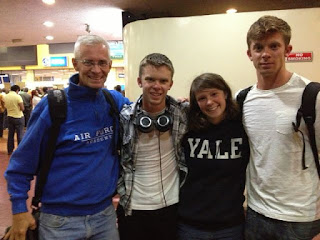

Since then our days have been full and good. Luke was joined by Millie from his African Studies program at Yale; together they are working this summer on a research project examining the geographical distribution of spina bifida cases in relationship to malaria prevalence. So their first week involved some orientation, rounds, lectures, meetings, setting up computer programs and data sheets, meeting people.
Caleb has only nine days in Kijabe, plus three at the coast with friends from his graduating class to help a family who are working there. He arrived quite ill with amoebic dysentery, compliments of a five-day trip to Morocco with Luke on the way. They had a blast hiking up the tallest mountain in North Africa . . only Caleb had to ride a donkey down to preserve his knee. Anyway as they sampled snails and schwarma and mint tea and churros, Caleb swallowed too many bugs. So his first few days were spent getting tested and examined and taking drugs and resting, while we tried to keep up with the rest of work and life. He's much better now.
Here are all four kids in the yard this morning after church:
 And here is basically what we've done this week: watched games (my favorite relaxation pastime), made nice dinners, talked, listened, ate, talked some more.


Since then our days have been full and good. Luke was joined by Millie from his African Studies program at Yale; together they are working this summer on a research project examining the geographical distribution of spina bifida cases in relationship to malaria prevalence. So their first week involved some orientation, rounds, lectures, meetings, setting up computer programs and data sheets, meeting people.
Caleb has only nine days in Kijabe, plus three at the coast with friends from his graduating class to help a family who are working there. He arrived quite ill with amoebic dysentery, compliments of a five-day trip to Morocco with Luke on the way. They had a blast hiking up the tallest mountain in North Africa . . only Caleb had to ride a donkey down to preserve his knee. Anyway as they sampled snails and schwarma and mint tea and churros, Caleb swallowed too many bugs. So his first few days were spent getting tested and examined and taking drugs and resting, while we tried to keep up with the rest of work and life. He's much better now.
Here are all four kids in the yard this morning after church:


Best times ever: listening to Caleb play guitar and soaking in some vitamin D.

Dinner at the Maras with our team!

This was a father's day grill-out in the bush . .

Jack's U15 Rugby 7's team entered a tournament with 14 teams (about 150 boys) and won the second-tier top prize, plus Jack was named one of the two MVP's for the whole tournament (voted by the Kenyan referees as I understand it).


Julia and Acacia's Volleyball Tournament was actually canceled due to the lack of other teams showing up, but they played a fun morning of 2 on 2 games.


Riley and Jane with their new pet bunnies.


Pizza party number two, with Letchfords and Newtons.
So it has been a full week, with fires and movies and card games at night, baking and eating and walking in the days. And the precious moments of touching, hugging, hearing, seeing these boys. Millie has also been a delight, and I like having 8 at the table. But there is still a sense of lurking sorrow, the inevitability of this all ending that I try to ignore in my heart. And the tension of wishing Caleb's days were not work-days and school-days for the rest of us. The sword that pierces the mother's heart, even in joy.
Friday, June 07, 2013
A Tale of Two Six-year-olds
Back at Kijabe, back home, and back to work. Back to reality. OK, Spain and Portugal are one reality, for some of the world: pastel-painted buildings, ancient churches, hot fresh grilled salmon and chewy calamari, salty olives and frigid water. A thousand hugs, too many conversations to complete. Worship and community and exposition and challenge.
But for much of the world, reality is quite different. And so I will tell you the story of two boys on my ward this week.
The first I will call Torit, because that's his home town in South Sudan. He was playing with his friends three weeks ago when they inadvertently tripped a landmine. A landmine left by whom, I don't know, it could be the LRA crossing over from Uganda, the Sudanese army when it was fighting the SPLA (Sudan People's Liberation Army) or vice versa. Because of violence and hatred that preceded his birth, Torit's play area was a death trap. The three friends died, and his leg was shattered. You can read about the state of orthopedic surgical services in South Sudan here from Mike Mara's trip last week. Torit's leg was amputated, but then infection set in, and an NGO staffed by Kenyans decided to fly him to Kijabe for rescue. So there he was, my first patient on our rounds, in our Paeds HDU, diminutive and dark and scared. I quickly realized that the woman sitting by his bed was not his mother, she was assigned by the NGO to accompany him. She didn't speak his language and knew nothing about his family. So this kid that has lost his leg and his friends is now in a foreign country without his parents and no one to talk to. And his family, who agonized through the injury and horrific surgery released him into the hands of strangers hoping for his survival. And all we can do is prod and measure, administer antibiotics, and smile and try to engage him to play with this incongruously pink plastic truck that the chaplain's department gave him. And hope this is a scar on his leg and his soul that will heal with time and love.
The second grew up only 60 or so kilometers away, in Narok, and since his name starts with "I" I'll call him Isaac. My first evening back, I got an urgent call from the nursing staff asking me to help the MO intern who was in casualty. I rushed over to find the intern with another six-year-old boy, his head bobbing with grunting breaths, his face obscured by a green oxygen mask, his frail body wrapped in a plaid wool blanket with a stick-thin arm protruding. I pulled it back to listen to his chest, and he took off his mask to complain ninasikiya baridi, I'm cold. Good, at least he was alert enough to be verbal. He was emaciated, 11 kg, his entire skin dotted with the hypopigmented scars of an old rash, his bones jutting out. A concerned father, stepmother, and little sister hovered close by. AIDS. I was sure of it. The rest of the family looked healthy, though his mother had died some years ago of "malaria". How could they let him get to this point of starvation, I wondered? His potassium level was 1.2. He was hours from death. When the HIV test came back positive, I took his dad into a private room to break the news, expecting either denial or anger or grief. I was wrong. I met relief. Thank you doctor for telling us what is wrong at last, he said. He had taken the boy to so many hospitals. So many diagnoses. One said he was diabetic. Another diagnosed typhoid. A third told them Isaac was allergic to protein, so for the last year he had eaten only vegetables and water. For the last month the boy had intractable diarrhea. In desperation that morning the family took him to a church in Nairobi for prayer. The pastor prayed, and then told them: God has shown me that your son needs to go to Kijabe Hospital, and the doctor there will tell you what is wrong and start treatment. Wow. It is not uncommon for Kenyan pastors to confuse faith with a refusal of medical care, but this one was spot on. And less than two weeks prior, the entire family (those who were well enough to go) went to a wedding where EVERYONE was offered HIV tests, and they were all negative. So perhaps only the mother who died was infected, passing the virus to Isaac, or perhaps he became infected from a blood transfusion he had three years ago. Far from being a family that was denying him care, they had really done their best. We took Isaac up to the ICU. His chances of survival are slim, but we pray that the same God who led him to the right pastor and the right casualty department will preserve his life for another decade, or two or three. Refeeding a starving person is a dangerous business. His body will not be able to handle much. It is going to be touch and go for a long time.
This is a tale of two six year old boys. It is also the tale of two fathers, unable to protect their sons from the ravages of this broken world. Two mothers with aching hearts, separated from their beloved sons, one by death and one by a medical evacuation. It is the tale of two countries with failing medical systems, unable to offer the basics that could have saved both lives at the beginning of their problems. It is the tale of too many children everywhere, who are victims of an evil beyond their control, beyond their choices.
This is also a tale of rescue, and of Kijabe, and why it is a privilege to work here. And the tale of a God who sees each six-year-old's story. This was the Psalm that I happened to read this morning:
The LORD looks from heaven;
He sees all the sons of men.
From the place of His dwelling he looks
On all the inhabitants of the earth;
He fashions their hearts individually;
He considers all their works.
(Psalm 32). Every individual uniquely fashioned, every heart and work seen and understood.
Which reminded me of this video produced by a friend who was working here, Beth. It is stunning and redemptive conclusion to the tale of two patients, to the tale of our world.
But for much of the world, reality is quite different. And so I will tell you the story of two boys on my ward this week.
The first I will call Torit, because that's his home town in South Sudan. He was playing with his friends three weeks ago when they inadvertently tripped a landmine. A landmine left by whom, I don't know, it could be the LRA crossing over from Uganda, the Sudanese army when it was fighting the SPLA (Sudan People's Liberation Army) or vice versa. Because of violence and hatred that preceded his birth, Torit's play area was a death trap. The three friends died, and his leg was shattered. You can read about the state of orthopedic surgical services in South Sudan here from Mike Mara's trip last week. Torit's leg was amputated, but then infection set in, and an NGO staffed by Kenyans decided to fly him to Kijabe for rescue. So there he was, my first patient on our rounds, in our Paeds HDU, diminutive and dark and scared. I quickly realized that the woman sitting by his bed was not his mother, she was assigned by the NGO to accompany him. She didn't speak his language and knew nothing about his family. So this kid that has lost his leg and his friends is now in a foreign country without his parents and no one to talk to. And his family, who agonized through the injury and horrific surgery released him into the hands of strangers hoping for his survival. And all we can do is prod and measure, administer antibiotics, and smile and try to engage him to play with this incongruously pink plastic truck that the chaplain's department gave him. And hope this is a scar on his leg and his soul that will heal with time and love.
The second grew up only 60 or so kilometers away, in Narok, and since his name starts with "I" I'll call him Isaac. My first evening back, I got an urgent call from the nursing staff asking me to help the MO intern who was in casualty. I rushed over to find the intern with another six-year-old boy, his head bobbing with grunting breaths, his face obscured by a green oxygen mask, his frail body wrapped in a plaid wool blanket with a stick-thin arm protruding. I pulled it back to listen to his chest, and he took off his mask to complain ninasikiya baridi, I'm cold. Good, at least he was alert enough to be verbal. He was emaciated, 11 kg, his entire skin dotted with the hypopigmented scars of an old rash, his bones jutting out. A concerned father, stepmother, and little sister hovered close by. AIDS. I was sure of it. The rest of the family looked healthy, though his mother had died some years ago of "malaria". How could they let him get to this point of starvation, I wondered? His potassium level was 1.2. He was hours from death. When the HIV test came back positive, I took his dad into a private room to break the news, expecting either denial or anger or grief. I was wrong. I met relief. Thank you doctor for telling us what is wrong at last, he said. He had taken the boy to so many hospitals. So many diagnoses. One said he was diabetic. Another diagnosed typhoid. A third told them Isaac was allergic to protein, so for the last year he had eaten only vegetables and water. For the last month the boy had intractable diarrhea. In desperation that morning the family took him to a church in Nairobi for prayer. The pastor prayed, and then told them: God has shown me that your son needs to go to Kijabe Hospital, and the doctor there will tell you what is wrong and start treatment. Wow. It is not uncommon for Kenyan pastors to confuse faith with a refusal of medical care, but this one was spot on. And less than two weeks prior, the entire family (those who were well enough to go) went to a wedding where EVERYONE was offered HIV tests, and they were all negative. So perhaps only the mother who died was infected, passing the virus to Isaac, or perhaps he became infected from a blood transfusion he had three years ago. Far from being a family that was denying him care, they had really done their best. We took Isaac up to the ICU. His chances of survival are slim, but we pray that the same God who led him to the right pastor and the right casualty department will preserve his life for another decade, or two or three. Refeeding a starving person is a dangerous business. His body will not be able to handle much. It is going to be touch and go for a long time.
This is a tale of two six year old boys. It is also the tale of two fathers, unable to protect their sons from the ravages of this broken world. Two mothers with aching hearts, separated from their beloved sons, one by death and one by a medical evacuation. It is the tale of two countries with failing medical systems, unable to offer the basics that could have saved both lives at the beginning of their problems. It is the tale of too many children everywhere, who are victims of an evil beyond their control, beyond their choices.
This is also a tale of rescue, and of Kijabe, and why it is a privilege to work here. And the tale of a God who sees each six-year-old's story. This was the Psalm that I happened to read this morning:
The LORD looks from heaven;
He sees all the sons of men.
From the place of His dwelling he looks
On all the inhabitants of the earth;
He fashions their hearts individually;
He considers all their works.
(Psalm 32). Every individual uniquely fashioned, every heart and work seen and understood.
Which reminded me of this video produced by a friend who was working here, Beth. It is stunning and redemptive conclusion to the tale of two patients, to the tale of our world.
Monday, May 27, 2013
Spain, mostly safe and sound . . .
A quick post from our "company conference" on the Spanish coast. Hundreds of people, hugs, name-tags, memories. Rocking worship. Exposition. Seminars. Bustle. Meals. Ocean breeze and freezing cold water. The buzz of conversation, the murmur of prayer. New babies, and honoring our founding mother Rose Marie. Family feel.
But as with anything that has world-impact-potential, not without struggle. The biggest one for me is being here fragmented as a family. It's the first time to come without LUke and Caleb. Their absence is an ache, an off-balance unsettled missing of something. I didn't realize how hard it would be. And until a few hours ago, we had only Julia with us, having left Jack in Kenya for two extra days.
We let Jack stay behind for RVA's major Rugby event of the year, the Blackrock tournament. He had a blast and scored the winning try in quarter-finals and set up the winning try of finals, so a great day for him, really fun. His JV team won the lower tier of this varsity tournament, and the Varsity team came in second in the top tier. All well and good except that he then had to travel alone, through Dubai and Portugal to get to Spain. And unbeknownst to us, Portugal has some stringent requirements about minors. So when he showed up at the airport in the dark of night in Nairobi, dropped off by a taxi and all alone, the airline refused to check him in. Thankfully he pulled out his emergency phone numbers, someone found us here in Spain, Scott emailed letters and scanned passports. Then we checked back and he was still stuck because (surprise) the printer was down and the airline was struggling to print the documents . . but finally he was allowed through. The rest of the trip went well. After that stressful beginning I had planned to take the hour drive with Rachel (Matt's new wife) to meet him at the airport.
Only at lunch, ironically a time set aside for all the medical people in WHM to eat together, I started feeling really peculiar. Had I not been eating with a bunch of doctors including one world-famous toxicologist I might not have every known that I was having a classic food poisoning reaction to bacterial overgrowth in poorly refrigerated dark fish, called scombroid reaction. Evidently the bacteria makes histamine. Here is a medical text on exactly how I felt:
"Signs and symptoms of scombroid toxicity usually begin within an hour of eating contaminated fish. The symptoms resemble and IgE-mediated allergic reaction. The patient may suddenly experience flushing, a sensation of warmth, and erythematous rash, palpitations, and significant tachycardia. The rash often is especially prominent on the upper torso and face. Headache, blurred vision, respiratory distress, and dizziness have also been described."
"Signs and symptoms of scombroid toxicity usually begin within an hour of eating contaminated fish. The symptoms resemble and IgE-mediated allergic reaction. The patient may suddenly experience flushing, a sensation of warmth, and erythematous rash, palpitations, and significant tachycardia. The rash often is especially prominent on the upper torso and face. Headache, blurred vision, respiratory distress, and dizziness have also been described."
So after a nice slug of benadryl and ibuprofen I passed out for the afternoon, missed the airport run, and Jack had to figure out who Rachel was (which he did when he asked her for a pen to write down the number the WHM people gave him when he called again feeling slightly abandoned on arrival, and as he wrote the number they realized they were looking for each other . . ).
Still have a seminar to help teach, and lots of great conversations ahead, reunions and thought. But all this reminds me that it's a battle. Our speaker gave us the story of Gideon, fearful and flawed, to remind us that God uses the weak. That's us, for sure, limping in and dependent.
Friday, May 24, 2013
There are Days . . .
. . when I briefly consider whether I can go on. When the stress and sadness of working on the edge of life just seems like too much, when the losses accumulate and threaten to overwhelm. This week it was Tuesday afternoon. I nearly missed a monthly meeting for the Bethany Kids department (Paediatric surgery and Neurosurgery), we were receiving one admission after the other, two babies who had become dangerously jaundiced and infected and dehydrated at home, another born prematurely with a spinal cord defect. In between examining and evaluating and supervising the inerns' orders, I was shuttling between nurses and departments trying to sort our overflowing wards in such a way that the limited oxygen could reach everyone who was struggling to breathe. I had a student sick with what looked like it could have been a serious, life-threatening illness (it wasn't, she's fine, but missionary kids are targets of spiritual attack and I carry that burden heavily). I was on call so trying to catch up on critically ill patients for the evening, including a little girl who was deteriorating after brain surgery to remove a tumor and a baby who was being ventilated because of damage his lungs sustained at birth. Miscommunication with a surgical service had frustrated me. And never far from my mind and heart, thoughts about my own child who was stuck in a dorm room for two weeks with not much to do or look forward to after a friend canceled a planned visit. And a foster-son who was going through a serious struggle, all over a scratchy hard-to-follow phone line. Scott was already gone all week to WHM leadership meetings in Spain. So all the responsibility of home was also on my shoulders, for food and homework and communication and dogs and laundry. Oh, and of course, a minor bacterial infection just for good measure, leaving me nauseated and weary.
On days like that I don't really look forward to the conference which starts tomorrow, the triennial all-fields meeting of World Harvest. Sure the break from the relentless pace of work and need sounds appealing, and the location should be lovely. But after two decades in this business, I'm supposed to be one of those senior sorts of people who will overflow grace and peace and love to others, who will fly in ready to minister. Who will listen with wisdom and have just the right insight. Who has this whole messy work/life/family/ministry balance in relative equilibrium, as an example and encouragement to others.
Instead of being someone who walked the short dirt path from home to hospital with tears dripping down and stomach in a knot, whose prayer disciplines have weakened, whose stretched heart keeps reaching a breaking point.
But then the Spirit reminded me: ministry from weakness is a core value of our mission. One of those little phrases that sounds pious and humble, but feels completely out of control in real life. That it's OK to come to the conference worn out and wobbly, and to enter into conversations with nothing much to impart.
Because we're there to impart Jesus. Only. And that's enough.
 |
| (Baby Bina, our tiniest preemie yet, 580 grams/25 weeks and still fighting strong at 2 weeks old.) |
On days like that I don't really look forward to the conference which starts tomorrow, the triennial all-fields meeting of World Harvest. Sure the break from the relentless pace of work and need sounds appealing, and the location should be lovely. But after two decades in this business, I'm supposed to be one of those senior sorts of people who will overflow grace and peace and love to others, who will fly in ready to minister. Who will listen with wisdom and have just the right insight. Who has this whole messy work/life/family/ministry balance in relative equilibrium, as an example and encouragement to others.
Instead of being someone who walked the short dirt path from home to hospital with tears dripping down and stomach in a knot, whose prayer disciplines have weakened, whose stretched heart keeps reaching a breaking point.
But then the Spirit reminded me: ministry from weakness is a core value of our mission. One of those little phrases that sounds pious and humble, but feels completely out of control in real life. That it's OK to come to the conference worn out and wobbly, and to enter into conversations with nothing much to impart.
Because we're there to impart Jesus. Only. And that's enough.
Matchmaker, matchmaker
Matchmaking, it seems to me, would be a noble profession. Seeing need and opportunity and finding win-win mutually beneficial arrangements with the potential for long lives of blessing.
This week I felt a little thrill of matchmaking. No, not for a marriage, though I do believe this is a love story. Love that brings people out of their homes at dawn and into a chaotic ward full of children whose brains are being compressed by too much fluid, whose spinal cords are damaged and exposed, who often can't walk, need help to go to the bathroom, appear disproportionate and a bit unsettling. Kijabe hospital has become a mecca for the neurologically disabled. We had a surgeon here, Dr. Bransford, whose heart for special-needs children launched all kinds of surgical programs. And we have one now, Dr. Albright, who with his nurse-practitioner wife has brought a lifetime of academic experience to bear in the epicenter of spina bifida and hydrocephalus. If you build it, they will come, and the most challenging kids from all over Kenya find their way to Kijabe day by day. Dr. Albright does more surgery here in a month than he did in the States in a year. On my call this week I admitted three newborns with spina bifida, and heard three more were also seen. That's one day, 6 new cases of a very complicated condition.


When I first came to Kijabe, I quickly realized how much I leaned on the excellent care of our two Clinical Officers (like PA's), Bob and Lillian. And I noticed how busy the neurosurgical service was, and thought a CO would be a great benefit to them. But nothing comes quickly at Kijabe, and this idea had to go through proper channels of approval. When the 2012 CO intern class finished in November, we got the hospital to hire one for Paediatrics. Thanks to insight and advice from Dr. Erika, we chose Veronica because she had demonstrated a real heart for the babies. It wasn't easy to pull this off. Veronica could have made nearly double her salary elsewhere, and Kenyans experience significant family pressure to obtain a more secure and higher-paying job. But she felt God drawing her to KH, so she signed on. She received neonatal training in December, and then began a 4-month training and work period with us in the Nursery while our regular CO was on maternity leave, with the plan that at the end of that time we would release Veronica to work with the Neurosurgery team.
This week the Neurosurgery team confirmed that they want her to stay on long-term, and she confirmed she wants to do that. Hooray. I know this will bless the children. I can be standing in nursery and watch staff go right by me to bring their issues to the CO, who is considered more approachable. I have time after time seen Veronica find out more back story, minister to Moms spiritually, go the extra mile to ensure that needs are met. A team needs skilled surgeons but also compassionate hands-on language-fluent primary care members.
That evening I was so happy, that Veronica might make the lives of the way-too-busy and dedicated Albrights a little better with her work, that they might teach her some specialized and excellent medicine, that mothers and babies would be cared for well, that nurses would have a better way to communicate with the surgical team.
A small joy of matchmaking that will, I hope, bear much fruit.
This week I felt a little thrill of matchmaking. No, not for a marriage, though I do believe this is a love story. Love that brings people out of their homes at dawn and into a chaotic ward full of children whose brains are being compressed by too much fluid, whose spinal cords are damaged and exposed, who often can't walk, need help to go to the bathroom, appear disproportionate and a bit unsettling. Kijabe hospital has become a mecca for the neurologically disabled. We had a surgeon here, Dr. Bransford, whose heart for special-needs children launched all kinds of surgical programs. And we have one now, Dr. Albright, who with his nurse-practitioner wife has brought a lifetime of academic experience to bear in the epicenter of spina bifida and hydrocephalus. If you build it, they will come, and the most challenging kids from all over Kenya find their way to Kijabe day by day. Dr. Albright does more surgery here in a month than he did in the States in a year. On my call this week I admitted three newborns with spina bifida, and heard three more were also seen. That's one day, 6 new cases of a very complicated condition.


When I first came to Kijabe, I quickly realized how much I leaned on the excellent care of our two Clinical Officers (like PA's), Bob and Lillian. And I noticed how busy the neurosurgical service was, and thought a CO would be a great benefit to them. But nothing comes quickly at Kijabe, and this idea had to go through proper channels of approval. When the 2012 CO intern class finished in November, we got the hospital to hire one for Paediatrics. Thanks to insight and advice from Dr. Erika, we chose Veronica because she had demonstrated a real heart for the babies. It wasn't easy to pull this off. Veronica could have made nearly double her salary elsewhere, and Kenyans experience significant family pressure to obtain a more secure and higher-paying job. But she felt God drawing her to KH, so she signed on. She received neonatal training in December, and then began a 4-month training and work period with us in the Nursery while our regular CO was on maternity leave, with the plan that at the end of that time we would release Veronica to work with the Neurosurgery team.
This week the Neurosurgery team confirmed that they want her to stay on long-term, and she confirmed she wants to do that. Hooray. I know this will bless the children. I can be standing in nursery and watch staff go right by me to bring their issues to the CO, who is considered more approachable. I have time after time seen Veronica find out more back story, minister to Moms spiritually, go the extra mile to ensure that needs are met. A team needs skilled surgeons but also compassionate hands-on language-fluent primary care members.
That evening I was so happy, that Veronica might make the lives of the way-too-busy and dedicated Albrights a little better with her work, that they might teach her some specialized and excellent medicine, that mothers and babies would be cared for well, that nurses would have a better way to communicate with the surgical team.
A small joy of matchmaking that will, I hope, bear much fruit.
Sunday, May 19, 2013
Shadow

For the last few months, we have lived in the fog and sog of a cloud here at Kijabe. Rain, and more rain. Deep sucking mud. Grey skies. Dim. Cold. Pounding on the roof at night, dripping into the door, washing down the hillsides. The thing about living in gloom is that after a while it seems normal to trudge through a muted background.
Much of the last couple years has been foggy for me, too. Too much parting. Too much just trying to make it through another call, another rounds, another admission, another resuscitation. Another death. This past week it was the frail baby in heart failure who no longer moved or responded. After a tearful discussion with his parents about the reality of his impending death, I disconnected him from his monitors and dressed him and wrapped him in a blanket for his mom to hold. ( I offered to snap a photo for her memories, and a kind RVA teacher printed it for her to take home the next day.)

Then one day this week, the sun returned. I looked down and saw shadow. And it occurred to me that those rainy months did not have much shadow, because shadow is created by light and matter. When all is dark and gloomy, you can't really tell the boundaries, there is either no shadow or all shadow. But when light comes, the shadow is apparent.
Even the shadow of death is a shadow because of the bright reality of life.
So here at Kijabe, where death is too-often present, I am wrestling with that shadow and looking beyond it. The valley of the shadow of death is a part of the journey, but it is only in shadow because there is a ridge, a peak, of glory that we are ascending towards. Glory that is dawning over gloom, until all the shadow is swallowed up in victory.
Subscribe to:
Posts (Atom)