rotating header

Sunday, September 30, 2012

A Rhythm of Respite


Sunday, early church, then a flock of RVA/Kijabe station ladies headed to the tea farm in Tigoni for a lesson in Kenyan history and agriculture arranged by Kate D to raise money for forest preservation.  The farm's owner, Fiona, told stories of her grandfather who came to Kenya more than a hundred years ago, and made it his home.  We learned about tea bushes and plucking leaves and the 24-hour branch-to-tea-bag process which ensures freshness, about oxidation and sorting and politics and regional specialties and the advantages of high-altitude cool-weather slow-growth.  When we had toured the fields and a patch of indigenous forest, our hostess served us lunch in the lovely gardens complete with more tea and an amazing lemon mousse.  The fun thing is that we now have an actual WHM team:  Bethany, Anna, Ann and Jane, Acacia and me (Julia decided to stay home at the last minute because of her heavy load of commitments in the coming week).

This has been a weekend of respite in the midst of heavy work (strike still on !!!), political uncertainties (a grenade thrown into a Nairobi church again today!!), missing Luke and Caleb (deeply and frequently !!), and the slow resettling transition back to life in Africa after my summer retreat (embarrassingly drove on the right (as in not left) side of the road on a rutted empty patch today until two equally slowly moving vehicles headed right towards me and Bethany politely suggested I switch sides, never did that before !!).  The rhythm of Sabbath is a rhythm of faith. One that says another day of a bit more study, a bit more cleaning, a bit more exercise or cooking or seeing patients, is not going to make everything OK.  That even with loose ends and need, God says to pause.

So Friday evening Scott and I drove out to watch the football and tennis teams play at Greensteds and then have a real date, a fireside dinner for two and overnight in a tasteful luxurious banda overlooking Lake Elementatia.  Yesterday I made some really good special food and we had a group of kids over to watch a movie.  Today the tea.

Tomorrow it is back to preemies and clinic and ICU protocols and the stress of crowding too many patients into our limited space and hearts.

But for tonight I'm thankful for the respite this weekend has offered.

Tuesday, September 25, 2012

Wabuchire

Midnight. A full day. Off to a good start I can barely remember, happy dogs out for a quick morning jog, the clouded dawn suffusing Longonot and Mt. Margaret with light down in the valley. An hour of Swahili, most of which I now understand but find it extremely painful to extract any spontaneous sentences from my tongue. Rounds in the steamy nursery, constant ringing alarms, the lusty crying of the few term babies, the hot bubble of the incubators, the eerie blue glow of the bilirubin lights. I've brought some articles to read and share with Bob (we never manage), and I try to be patient with the new CO intern who is barely grasping a few basics, teaching as we go along.

Until noon, when an OB nurse bursts in to say we're needed in Labor and Delivery. A mother transferred in from another hospital seizing, her 9th pregnancy but first hospital visit, vague dates, and a decision to induce delivery to save her life. Only what she delivers turns out to be larger than expected, a viable-sized infant. Or just barely so. 700 grams, 26 weeks, a baby who would likely survive in a few places in the world, most surely die in most, and have about a 1 in 3 chance in our nursery. 1 in 3 is significant enough to try hard, but low enough to accept our limitations. And so ensues 9 hours of rising and falling hope. We resuscitate and gently stimulate breathing, provide fluids, warm, start medicine. Twice I go to tell the mother that the baby is dying (to which she says, and I quote, that's OK we don't need this one), and come back to find the baby breathing again. It is uncomfortable to invest in a baby that probably has no chance of life, but I'm not sure the chance is zero, so I go on, even though the mother professes not to care. Finally tonight, while another hopeless baby was trying to die (one with severe un-fix-able anomalies and overwhelming infection) and two new preterm twins were being born, she succumbed to her stiff unready lungs and exhausting struggle to live. A 9 hour life, and I was there from start to finish.

These strike days are like this. The evening is dominated by a mother of twins, also a referral, in labor, bulging belly, agonizing and panting. ONly hours go by and she still hasn't delivered her 33-week twins. When the intern decides to take her for a c-section the first pops out naturally, a boy, bottom-first, with the most alarming chest-wall retractions as he struggles to breathe. By the time we have him stabilized and on CPAP the OB team has decided baby #2 is stuck transverse and they whisk the mother off for a C/S, pulling out a slippery smaller sister who also struggles slightly but revives. (Worst case scenario a la JD: a vaginal birth followed by a C/s, so the mom is sore everywhere). Once they are tucked into their snuggly shared incubator (another strike effect, we're out of space) another referred newborn arrives with her huge spongy head and open spinal defect, her paralyzed stumpy legs and blinking eyes. I work on writing up her paperwork to help the swamped MO intern.

And then one last check in ICU, where the baby with the diaphragmatic hernia rests post-op. And where a feisty toddler whose esophagus was damaged in a failed intubation attempt in Eastern Congo after an allergic reaction to malaria meds has just had a reconstruction of that vital piece of her body. Her dad with his rounded face and trace French accent feels familiar. He's sought care from Butembo, to Mbarara, to Mulago in Kampala, to Kigali, to Goma, and finally all the way to Nairobi, a medical tour of east-central Africa. For six months he's been carting this child from hospital to hospital looking for care. Until he reached Kijabe with her. We talked about familiar towns in Eastern Congo, and then I greeted him in Lukonjo. His face just lit up. I used my half-dozen Lukonjo words and made this peripatetic parent feel happily at ease. The power of a familiar word in the right tongue never ceases to amaze me. He was lonely for his home and the language reminded him he'd go back there eventually. Wabuchire, and wasinge for reading if you got this far.

Home to a last-mintue physics problem (if this ball falls and this one's thrown and the tower is 15 feet hight how many seconds before they meet . . ) and preparing to teach tomorrow. It's been a long day from intubation and writing orders and teaching and a death vigil. 4th call night in 7 days. A day redeemed by the joy of connection from a simple few words. Wasinge, I am thankful to now put it behind me (until the next call).

Monday, September 24, 2012

A new week rolls in


 Baby A is grateful for your help, though he doesn't really know it yet.  His mom agreed for his photo to be posted to thank those who contribute to Kijabe Hospital's Needy Children's Fund.  Like some of our recent visiting docs.  (If you've forgotten how email me drs.myhre@gmail.com).  Baby A was born with a cleft lip and palate, a completely fixable problem if he doesn't starve to death before he's old and big enough for surgery.  His confused and upset father took one look and abandoned him to his mother, who is dependent upon her brothers now for support.  Those uncles have been kind but are not quite able and committed to cover all his hospital costs.  He's been with us several weeks surviving a serious infection and trying to gain some weight.  We're praying he can go home soon.  He's a least-of-these speck of wrinkly skin and hunger.

The fund has also facilitated echocardiograms for some babies with severe heart problems this week, and on the weekend allowed me to help a mom get home who had spent so many days waiting to raise the last hundred dollars of her bill (the small part not covered by insurance or what her family had given) that he ran out of his seizure medicine and started to convulse again.  Kijabe hospital is the hospital-of-choice for so many Kenyans these days of strike.  We're a hundred times more functional than the rest of the public health care system, and much less expensive than the private Nairobi hospitals.  So we get referrals from both.  In many cases we give care that is just as excellent or perhaps better than our more trendy and pricey counterparts in the city.  A recent ICU patient's family told Scott (after their relative survived a situation with about a 10% chance of making it through):  we would always come here, it's not all STERILE like _______ (fill in name of "best" hospital in Kenya).  Hmm.  Not being too sterile is not always a plus, but we're glad we had these happy customers.

This weekend a similar family requested transfer from their super-duper ICU to ours, because they were out of money (cost ratio 20:1).  Super-duper ICU didn't see the diagnosis right away in this newborn's xray:  not sure I would either . . .
But if you look very very closely, there is a bubble over the left chest that should not be there.  It's bowel, which has popped up through the diaphragm.  Not a huge problem in utero where the baby doesn't need to breath or eat, but rather bothersome after birth.  In case you can't see it still, here's the gastrograffin study outlining the bowel with contrast:
(It shouldn't be up by the heart).  This baby had a good amount of lung development and with the expert care of our paediatric surgeons today we have great hopes that he will be able to survive, which is certainly not the norm in Kenya for this problem.

Because the strike has packed our casualty and outpatient areas, the new Maternal and Child Health clinic building which was due to open in October had a rushed prayer-speeches-hand-over today, so that the area could begin to be used.  A few of us from the Paeds team, the engineers who did this work, the executive director and the chaplains gathered to recognize this milestone.  Looking forward to seeing patients in this bright clean new functional area rather than scrambling for a corner in the midst of the onslaught.

We can't fix all the problems, sadly.  One of our other admits in the last few days was a baby born at home with a mid-facial cleft, a huge gaping hole in his face where his nose and lip should be.  Sadly this is associated with a malformation of his brain (holoprosencephaly), probably his heart, and his kidneys and other organs.  He will not be able to survive long, but we are working to pull him through his current meningitis and jaundice to hopefully reach a point where he can be held and fed and loved and taken home.
Thankfully Kijabe has a palliative care team who will help us provide comfort and improvement and hope and support even when we can't provide a cure.  They work with the mother, us doctors, the nursing staff, the chaplains, and as a team we try to make a plan.

Lastly, there are the babies who should survive but don't due to the frustrating realities of life in Africa at this moment.  Like the 25-week preemie who was essentially dead on arrival this weekend.  If only the clinic where her mom presented Friday with labor pains had recognized them and prescribed rest and fluids instead of letting her go back to work Saturday.  If only they had made it to a hospital with a doctor in the midst of the strike on Saturday when her labor progressed.  If only there had been an ambulance available to get her to Kijabe faster.  If only she had been kept warm and breathing on the way.  I ran to the hospital when the nurses called, but even after intubating and drugs and lots of resuscitation, her little heart never picked up.  She was gone, and her parents wanted me to take photos of her and of them, looking so peaceful, for their memory.  Until they meet her again, perfect and whole, in Heaven.

Which is a good thing about this job.  I meet so many Heavenly citizens-to-be.  I look forward to eternal conversation over very good coffee from some Africa, or perhaps a whole Africa-like planetary system, with some of my current patients who are the weak and wounded and sorrowful in this life, but destined to rule and shine in the life to come.  So I'll close with a photo of the nearest-thing-on-earth cup of coffee Scott and I had on Friday.  This is one of those piled-up call weeks (tomorrow will be the 4th night in 7 days), which made that moment all the more precious as a taste of what is not-yet but promised:


Sunday, September 23, 2012

Red, White, Green

Our kids' school is preparing for "Spiritual Emphasis Week" with a journal from the group "Live Dead" (live with a short i, the present tense verb), which promotes self-sacrificing team ministry to the neediest in East Africa and North Africa.  One of the entries describes the Celtic conception of martyrdom, dating back to the time of St. Patrick.

Red martyrdom, the most obvious, when blood is spilled, life lost.  Though this martyrdom is the most obvious yet most rare, many Christians around the world still face this threat for their faith, for standing against evil and getting in its way.  Dr. Jonah spilled blood because his faith led him into a path of danger.  I read that one of our current WHM missionaries is sick once again, who serves in a difficult city where forces of evil thrive on human trafficking.  Here in Kenya I talked to a local missionary whose environmental activism, which is based on his belief in God, leads him into paths of danger as he crosses the economic interests of those who destroy.  Execution, imprisonment, illness, suffering, identifying with the poor, being in the wrong place at the wrong time, these are the color red.

White martyrdom, the horizon, the desert, the withdrawal from the familiar, the sacrifice of comfort and family to serve Jesus, is a calling for more Christians.  For some it is the asceticism of fasting to pursue spiritual awakening.  For many it is the departure from an expected path, from the direction of least resistance, to move towards need.  The inconvenience of countries with flooded roads and intermittent electricity, the daily wear of misunderstanding, the grating intrusion of rodents and insects and noise and heat.  Or the more subtle sorrow of missing milestones with family, of being far away when illness or discouragement engulfs loved ones.  This is the searing white reality of missions.

But the third martyrdom caught my attention, because it is not one we often recognize.  The green martyrdom represents the loss of personal autonomy, the rough sanctifying scrape of living in community.  Evidently the transformation of Ireland rested largely on the welcoming, productive, holy, inviting, stable enclaves of monasteries where believers in Jesus kept bees and transcribed Scripture.  And as anyone who has lived in close community soon learns, it's not all honey and beer and harmonious chants at sunset.   Living in community calls for a loss of privacy, a loss of choice, a loss of cushion and protection from our true selves.  In community we are called to lay down our lives over and over.  This is green, because it bears the beautiful fruit of our own Christlikeness and the drawing in of the wandering needy.

This concept really got me thinking about our mission teams.  I think we soberly count the red and white costs.  We expect discomfort and loneliness.  But then we expect our team community to be an unending source of encouragement and support.  When community itself shapes up as a form of martyrdom, we squirm or scream.  Something must be wrong.

But perhaps the Celtic believers got it right.  We are sanctified in collaboration with our fellow saints.  Even those whom we don't think we need are God's chosen instruments for our own good and His glory.

Our new community of saints at Kijabe has been a source of strength for us, of friendship and spiritual wisdom and practical help.  It is also a much more diffuse community than that of Bundibugyo, or Mundri, or soon Kibuye.  Life is easier to live (groceries, lights, water, phones, medical services, schooling, English, so many things); and the options for relationship are MANY; and therefore we are less pressured, less thrown upon each other for survival.  Which can be a relief, but is also probably a loss in spiritual terms.

But as of this weekend, we have a little WHM-Kijabe team again.  Miss Anna is teaching 6th grade this year at RVA, which was her original direction before a 3-year detour that took her to Bundibugyo.  Miss Bethany came for just one term to fill in for a counselor on HMA.  And the Mara family just arrived Thursday night, the beginning of long-term service.  Mike is an orthopedic surgeon; Ann works with justice issues and they both raise two lovely children.  Saturday night we made tacos and talked, in between calls to the hospital.  We're looking forward to the green days ahead, even if they require some sacrifice as yet unseen.

Thursday, September 20, 2012

Burdens

These are some burdens I have witnessed this week:  
--A child paralyzed by a fall from a tree, now bed-ridden, admitted with pressure sores.  Hard to imagine going from a healthy active 7 year old to complete confinement in one's body.  
--A woman who brought her large-headed newborn to our hospital, the premier neurosurgical service in Africa (and possibly elsewhere as well), hoping for a surgical cure.  He arrived extremely dehydrated and dangerously close to death, and our doctors and nurses pulled him back from that brink and got him feeding and stable.  But then we did an ultrasound of that boggy bulging head and discovered nothing but water.  There was no brain above the stem.  Enough to suck and cry and make primitive motions, but not enough to see or hear or talk or sit or live.  We sat with the chaplain and prayed for her as quiet tears fell down her cheeks, facing this shocking inevitability about her son.  
--A three-year-old hit by a motorcycle, who will probably die today.
--A baby who is sleepy and twitchy, his little brain having been starved for oxygen because his umbilical cord slipped out in the birth process before he did, and his mother had to bounce from two other hospitals until he reached ours to find working doctors and an emergency C-section.
--A mother of a tiny premature baby who has braved 50 days in intensive care.  He's grown into a cute little person who is beginning to feed and squirm and hold onto life.  But she has problems at home she won't disclose, so she's begging to leave with him, even though he's not fully ready.  Putting us in a difficult position of not wanting to ruin her life, and not wanting to risk ending his.
--A lovely couple with their floppy 1 1/2 year old looking for answers, this precious boy smiles with delight but can't sit or stand alone, or talk other than grunts.  Both husband and wife in the exam room, articulate, puzzled, hoping we'll have the magic shot or pill.
--A 9 day old whose body succumbed to overwhelming infection, the powerful bacteria multiplying and growing and consuming him from the inside out.  We lost the battle slowly over a number of days.
--Then there are the burdens of our own kids and other MK's, sometimes homesick, sometimes coughing, sometimes staying up too late and getting up to early to meet expectations, sometimes struggling to know and be in a world that is complicated.

Jesus said His yoke was easy and His burden was light.  That can only be because He is the one upholding all these precious sufferers.  I certainly can't.  This world is so broken and yet so beautiful, flowers and courage and sunlight in spite of all the sorrows above.  


Tuesday, September 18, 2012

Exchange of Thanks

Because I am taking care of this bundle of cuteness, I am not in Virginia.  Because I am not in Virginia, my injured mother is being cared for by others.  So as I slog through another day of doctors-on-strike-in-Kenya craziness (literally counting babies several times a day with nurses to make sure they're all accounted for because there are so many . . .) I want to shout-out a thanks to LORI, RITA, and VICTORIA, who are selflessly coming to her house to help with bandage-changes twice a day.  These are all women my age (vaguely) or younger (actually) with their own families and homes and work who are dropping everything for some time period every day to do what I can not.  I am grateful.

Monday, September 17, 2012

Strike 2, you're about to be out

Well, I felt about out today. This second major Kenyan doctor strike is hitting us hard, but one thing we are thankful for is that we're not totally abandoned.  Our Kenyan interns are in a difficult position, required to strike by their colleagues but also wanting to help us out because they're caring people.  So they worked out an arrangement to cover some extra night/weekend call hours.  Daytimes, however, it's me and the clinical officers, and today was a MONDAY in all caps.  

28 or 29 babies in the nursery when I left tonight, I kind of lost count, but am pretty sure they were all taken care of.  We had six admissions (which is a lot for a smallish intensive care unit) today.  Our competent clinical officer ended up going to the C-section delivery of the sickest one, and I did the intern-level work to admit the rest.  Well, 4 of the 5.  The 5th one I looked over and decided didn't need admission in the context of this crowding.  One good thing, I had to spit out some Swahili because everyone is too busy to help me.  Even the nurses were pushed to the limit.  I did three lumbar punctures and almost a fourth they brought me until I realized that baby was waiting for something else . . . It was just one of those Mondays where a lot of details had to be mopped up from a weekend where coverage is lighter.  Our OB service is one of the few left in the area providing safe C-sections, so the moms are pouring in.  We have several babies with serious infections from other hospitals, whom we are trying to keep isolated from our pristine majority.  Several with surgical problems who have come for our great surgeons but are too sick to be operated upon, so land in our pediatric care.  Two babies with cleft lips/palate who could not feed and became severely malnourished.  A delightful preemie who beat the odds of a 27-week delivery (he tested at 25 weeks) and now on hospital day 49 is cute as can be, but his mom is in tears about stress in her life and family and had to be begged not to abscond quite yet.  Many are improving, a few are struggling, and all require more thought and focus than I can give to so many sick ones.  We lost three kids on our services in the last few days.  Two died from severe congenital heart defects (again, transferred from other hospitals).  One was a normal 9-day-old whose frighteningly lethal bacterial infection just escalated in spite of antibiotics until his brain was full of pus.  THAT is hard, a preventable and treatable illness in many places, but too virulent for our resources.

Meanwhile in Kenya researchers have found a brand new species of mosquito that caries malaria parasites and bites earlier in the day, making it potentially a significant contributor to human illness.  Countries all around us are erupting in violence.  People we know are in risky places.  Kenya just recovered vests stuffed with explosives being prepared for suicide bombings in a neighborhood where our friends work.  The doctors and teachers are both on strike.  Elections set for next March are feared to be another stimulus for tribal violence.  I am a way-behind-in-planning mom who is still trying to book something for our mid-term weekend and something for a 3-day break between Christmas and airline tickets for Caleb . . . and so far striking out on all of that, which is frustrating.  

So in all of this, I have to rejoice that thanks to cell phones and internet I booked Luke and airline ticket to come home for Christmas (he usually does it himself but the best-price site only accepted credit cards and he only uses a debit card).  YEAHHH.  And I have to rejoice that my mom who is 76 and who loves to ride ATV's in West Virginia survived a potentially serious accident when she flipped backwards on a steep hill and came away with bruises and stitches but no broken bones or internal injuries, and her passenger was completely unharmed.  Miraculous.  And I have to rejoice in many other things I'm sure though most of them aren't coming to mind right this minute.

Because life is so often this way, a hard sprint of a day and then 11 pm catching up with the parts of our hearts that are scattered abroad.


Sunday, September 16, 2012

Muslims worship who?


I (Scott) sat in a meeting a few weeks ago and heard a chaplain make reference to "some of our patients who are worshipping their little gods in our courtyard."  It surprised me and, unfortunately I think, revealed a prevailing view of many Christians who believe that Muslims worship a "little god" or an "idol."  

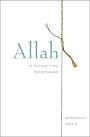
In light of the current raging fire of protests against America sweeping across the Middle East, I've begun to re-read a book I just finished a couple of months ago: Allah, A Christian Response by Miroslav Volf.  Volf is currently a Professor of Systematic Theology at the Yale Divinity School.  Having grown up in the  former Yugoslavia, he experienced first-hand, a bitter war between Muslims and Christians.  In his dedication of the book he says this: 

To my father, a Pentecostal minister who admired Muslims 
and taught me as a boy that they worship the same God we do.

Volf says that the goal of his book "is to explore how Christian and Muslim convictions about God bear on their ability to live together in a single world" (p.12).  

In the end of his first chapter he has a section which he calls "Hot and Spicy."  Here he lays out a number of theses which he realizes are sure to rile the feathers of a lot of people who have fixed ideas about the religion of Islam and the relationship between Islam and Christianity.  The first of his theses is plain and unambiguous:

Christians and Muslims worship one and the same God, the only God.  
They understand God's character partly differently,
 but the object of their worship is the same.  
I reject the idea 
that Muslims worship a different God
 than do Jews and Christians.

This is a fascinating book.  Like Volf, I venture publicly into this inflammatory topic with great trepidation. Volf does say early on that he leaves "the question of salvation and eternal destiny aside.  To use technical terms, the book is not an exercise in soteriology (the doctrine of salvation), but political theology" (p.12).  

While some may doubt whether Volf is a Christian, he makes explicit statements about his faith:  "What matters is not whether you are Christian or Muslim or anything else: instead, what matters is whether you love God with all your heart and whether you trust and obey Jesus Christ, the Word of God and Lamb of God.  I reject making religious belonging and religious labels more significant than allegiance to the one true God" (p.14). 

And his final "hot and spicy" thesis has relevance for some of the current debate in this election season:  "To give allegiance to the one God who enjoins humans to be loving and just to all, as Muslims and Christians do, means to embrace pluralism as a political project--the right of all religious people to articulate their views in public and the impartiality of the state with respect to all religions.  I reject the idea that monotheism, properly understood, fosters violence and totalitarian rule" (p. 15). 

So, I implore those of you with any interest at all (and those of you who are Americans should be interested in light of the current Muslim protests against all things American) to grapple with Volf.   You may not end up agreeing with him, but he's studied the Quran, dialogued with Islamic theologians, and sought to find common ground for discourse and peace.   Personally, I think he should be nominated for the Nobel Peace Prize --and not because he's conjured up some fiction to appease Christians and Muslims, but because he's perceived and articulated some real truth in one of the most incendiary issues of our age.

Friday, September 14, 2012

Benediction


As the hands and feet of God,
we put our faith to work in service to the world,
trusting in the One who has helped us,
named us,
and called us
to lead us to those in need.
Let us love as God loves:
with hands ready to get dirty,
with feet ready to walk far,
with eyes ready to see hardship,
with hearts ready to receive.
Let us love as God loves:
with lives ready to serve.


(This is the benediction for this week's devotions on this site.  A fitting prayer for our days at Kijabe, and yours wherever you are).

Benediction


As the hands and feet of God,
we put our faith to work in service to the world,
trusting in the One who has helped us,
named us,
and called us
to lead us to those in need.
Let us love as God loves:
with hands ready to get dirty,
with feet ready to walk far,
with eyes ready to see hardship,
with hearts ready to receive.
Let us love as God loves:
with lives ready to serve.


(This is the benediction for this week's devotions on this site.  A fitting prayer for our days at Kijabe, and yours wherever you are).