rotating header

Sunday, August 23, 2015

College Drop-Offs and Clouded Glory

A hazy sun burns through wispy clouds as we  drive north though Carolina pines and tobacco fields, away from two of our children.   ‘Tis the season of college drop-offs, an American ritual.  Parents have scoured the shelves of Target and Bed, Bath, and Beyond for pencils and pillows and microwaves, loaded station-wagons and U-haul trailers with couches and bikes, heaved boxes and suitcases up stairways, attended receptions and given hugs.  The grand launching of a generation.


I think of the dozen kids we sent to school in Uganda.  Everything they owned fit into a small bag, the most expensive back-to-school item was a mattress, the school-approved list of packing items included toilet paper and drinking water, and they boarded public buses to brave the big city on their own.  I felt some of the same guilt and angst, wondering if they would be OK. 

But now it’s my baby, which takes the whole good-bye thing to a new level.

Don’t get me wrong, Duke is a rare combination of elite opportunity, southern graciousness, and generous aid.  Leaving two kids at the SAME school gives us courage for both.  The web of missionary connections stretches to include some fantastically supportive people in Durham.  We have spent the week shaking hands with professors, absorbing information and atmosphere, sampling cuisine including corn-on-the-cob, shrimp and grits, hushpuppies, barbecue, iced tea . .  . but we had to say goodbye nonetheless.  Had to give hugs with quiet tears. Had to walk away.

And though I know that my youngest two think this is NOT a good thing, and though my own heart questions it, I know the deep Truth that IT IS GOOD.

I know that the doors God opened to put them here had a purpose; there are fingerprints of the divine all over this, glimpses of providence.  I know that these are two young adults, ages 17 and 18, who will shine.  They will be curious learners, they will forge connections between problems and possibilities that we could not, they will be answers to other parents’ prayers as voices of reason and faith in other kids’ lives, they will grow in their bond with each other and find community.

I also know that to do all of that, we need to get out of the way. 


It will not seem that way when they are sick, or injured, or struggling in a class, or confused about how to buy textbooks or use health insurance or budget food money.  It will not seem that way when their dorm friends are throwing up after drinking binges, or when they don’t have a place to go for a holiday (not this year since we’re in the USA!), or when they wake up feeling that pit of lonely.  It will not seem that way as they make the transition not only from home to college, but from Africa to America, jumping too many times across major cultural gaps.

But right now let us stand on the foundational truth that it is.  


And let us stand there because we see the same pattern in God’s loving, parental shepherding of our own souls.  We want presence, assurance, and help, and yet what we encounter is often a sense of distance.  We want independence with an escape clause, we want next-door rescue at any time.  Which in a sense God gives, but the Throne is obscured by clouds, the King seems perpetually on a journey, the earth-melting power of God remains veiled.  God hides the reality enough to call out our faith and action.  If Jesus walked tangibly through our days, what need for our paltry efforts to teach and heal?  So he gives us the space to draw out our gifts and our courage.

I hope that is what we are doing this morning, driving north.  Giving space that will be filled with the glory of two souls-in-the forming.  Following the example of God-Our-Father, with the same ache of longing for reunion.  Holding onto love by prayer.


Tuesday, July 14, 2015

Jack Preacher

The RVA Sunday Worship Service this past week was led by the Class of 2015.  They call it "Senior Sunday.

The Seniors lead the 700 attendees in worship, prayer, and biblical teaching.  Jack was one of three senior guys who preached "sermonettes" - 10 minute pieces of teaching and encouragement.

Click here to watch Jack's 10 minutes on Fear and Isaiah 43.
 https://vimeo.com/133425741


Sunday, July 05, 2015

Dr. Seuss, margin, sorrow, and who's writing this story?

Two weeks ago I came off my last night of call, and entered into the transition zone. One of the things I have learned from my 30-something-year-old colleagues is the value of margin.  Scott actually negotiated finishing at Kijabe June 1rst so he could focus on his AD leadership job, and travel to Uganda.  I asked to finish June 21rst as one of our regular short-term docs arrived, so we could clean and sort and say farewells well and pack and plan.  Margin, sounds wise, right?


But that night I got sick, and we've been reeling from a series of punches ever since.  It took me two rounds of antibiotics after initial improvement and relapse to emerge from the first sickness, and then we both got slammed with a flu-like virus (fevers, chills, aches, and head-exploding congestion) this past week.  Meanwhile Scott had surgery on his eye, Jack had surgery to remove four impacted wisdom teeth, and this weekend Luke seriously injured his knee playing soccer in Rwanda and is heading to Kijabe tomorrow for diagnosis and care.  Scott threw his back out a week ago as well.  In short we're a sorry bunch, limping through days of cleaning and packing and sorting at a very slow pace.  Not what I expected this time to look like.

It's making me a little suspicious of margin.  You give yourself some space that looks wise, and suddenly it gets filled with things you don't choose.

In fact a lot about this ending here is not unfolding the way I would have written the story.  Jack's last Rugby game was not the triumph we hoped to watch, and though he scored a try he didn't have the ending we would have loved to see.  We got to go to his end-of year sports banquet, and in spite of being only one of two senior boys that played all three of the most competitive sports, and one of 3 or 4 who had played the most varsity seasons in their RVA career (7 for him, 7 or 8 for the others) he didn't get any recognitions (though he had a good attitude and was happy for his friends).  We would not have chosen to leave for furlough with two of four countries we supervise in complete political meltdown with teams evacuated, and the other two under threat.  Contingencies and grief abound.  Then our hearts ache for Luke right now, with his bruised and swollen and painful knee that reminds us of Caleb's.  Our plan had been to hike the Rwenzoris after graduation.  Sort of like margin, a TCK-guru Dave Pollock advised us when our kids were very small to grab those transition times between one place and the next, and do something memorable as a family.  Take a few days on the way from here to there.  We are grateful that we have been able to do that a number of times.   This year now is looking challenging.  We set out one week before flying to the US for our furlough when all of us but Caleb could do the climb, but now we can't.  And we have been trying to get a week in the US in early August when all six of us could overlap, but due to an Air Force change of rules Caleb's leave has been hard to arrange and short, so even with Luke skipping two days of class and Caleb begging for a 96-hour pass it may be that we wrest only 24-48 hours all together.  While we've had wonderful closure with our departments and friends, there have been some disappointing sorrows in the last two weeks too.  And even the good stuff is emotionally draining.  Sorting photos and books and handmade pottery.  Hosting the last Caring community, last Thursday Lunch, last Sunday school; the Lower Station farewell for graduates, the Serge team grad appreciation lunch.  Attending the RVA staff appreciation tea.  Good stuff, but sad.


In the midst of all this angst, I had a birthday.  This was June 25, before this last knee disaster and in between major illnesses.  Luke flew up for the weekend from Rwanda as a surprise, and kick-started our packing.  The whole day was full of team and fellowship, and as we prayed together after our team dinner it popped into my head why "53 years" sounded familiar.  It was my Grinch birthday!

"Why for 53 years he'd put up with it now.  He must stop this Christmas from coming, but how?"

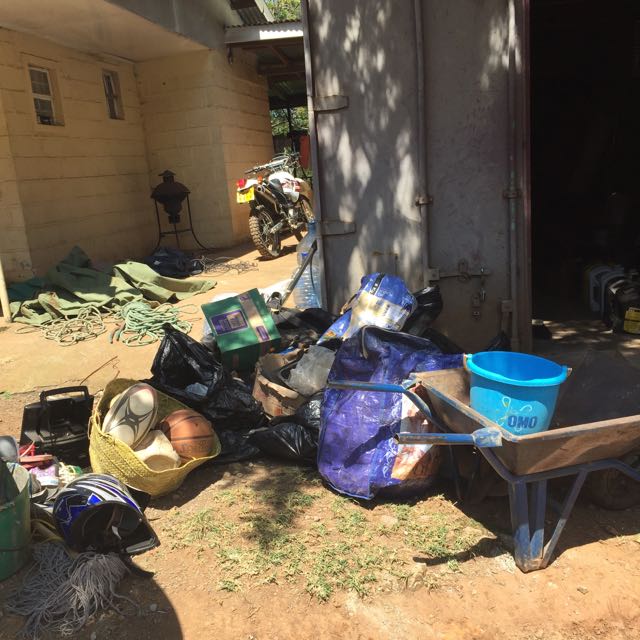
Now anyone who knows me knows I am the antithesis of the Grinch when it comes to Christmas.  I'm all for tinsel, noise, parties, special events, music, cookies, the whole shebang.  It's my favorite time of year.  But I do wonder if 53 is a risky time for Grinchiness in general.  As I look at some disappointments and losses my kids face, I don't like it.  I would choose to wreck my own knee if I could save Luke's. I don't like packing or transition.  I don't like not knowing how the year in the States will unfold, or what God is calling us to do next.  We have a list of potential places to serve in Africa in 2016, but we are waiting for the way to be clear.  I don't like letting go of most of our possessions, paring down to the essentials (well, I DO like decluttering when it's done, but the process is hard).  I can see myself as that old self-pitying Grinch, plotting on how to make everything work out my way.

But when the Grinch's plans were unsuccessful, his heart grew two sizes.

Transition, loss, disappointment, lack of control, the unknown: this is the stuff of heart-expansion.

Pray for us this year, that God would grow our hearts.  That we would trust His goodness with our kids even when knees blow.  That we would trust his authorship of our story, even when we don't know what's going to be written on the next page.  That as we move through goodbyes and sorrow, our hearts would not shrink into stone but soften and blossom.  That 53 years would lead to love.

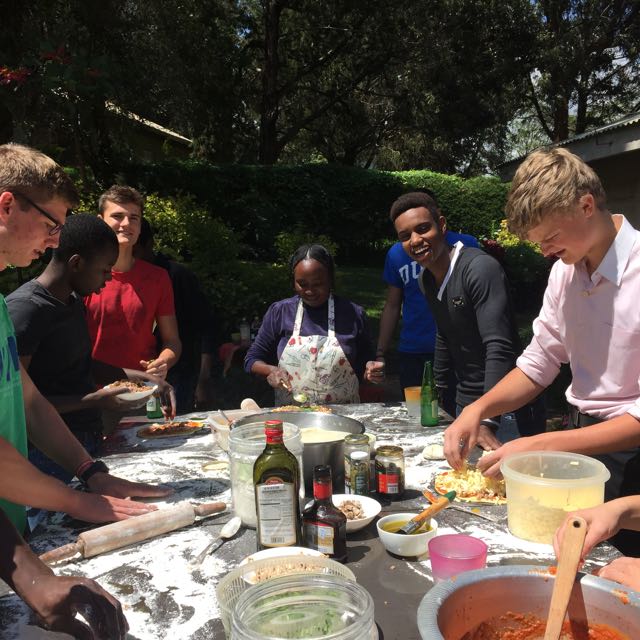
(Here are some photos of closure and celebration . . )


Tuesday, June 23, 2015

Advice for Young Doctors, Gleaned from Goodbyes

This morning's farewell was a breakfast party (complete with chocolate cake, above, as all breakfasts should be) with our Paeds team, including nursing staff from the BKKH floor, the Family Clinic, the nursery, the ICU . . the many places around the hospital where Paeds patients are seen.  I am grateful for the steady pace of closure, the ebenezer-opportunities to reflect on God's grace, to be thankful for friends, to say goodbyes in the truest sense of "God Be With Ye".

As I reflect on what people say at these events, I realize that the things I tend to think make a great doctor, and the things which truly do, are two different lists.  Not one person in now four parties has mentioned a dramatic story or clever diagnosis.  A certain level of competence is essential, but brilliance is overrated.  I remember the baby who was dead post-exchange transfusion, and nothing brought him to life until I pushed calcium, and he literally resurrected, and a year later I saw him in clinic a normal toddler.  Or the infant born with such severe swelling (hydrops) she looked inhuman, and after a long ICU stay being told "this is the last chest tube we have", and praying, and against extreme odds she survived and mom sent me pictures on her first birthday.  That kind of wonder.  But those are like peaks of mountains, rarely seen, and not commonly traversed; occasionally beautiful, but not where most of us live.

So here are the basic essentials that nurses and trainees and administrators and colleagues notice and remember:

1.  Come when you're called.  It's that simple.  Keep your pager by your bed, keep your phone ringer turned up, and answer.  When someone wants you to see a patient, show up.  Don't make excuses.  Don't complain.  Don't make people feel bad for calling you, even if it was silly.  Just show up.  It's probably the #1 thing I've heard in the last two weeks.  Your nursing colleagues want to know you have their back, you won't leave them to manage alone.

2.  Listen to the nurse.  You might be covering 50 kids on four services scattered all over, she (or he, but mostly she here) is watching 2 or 8 or 10 closely within arm's reach.  She notices when breathing changes, or feeds aren't actually going so well.  If you're thinking of making a change in management, ask her what she thinks, and take her opinion seriously.  She knows if the endotracheal tube is still necessary because lung secretions are too thick.  If she tells you the patient is worse, listen.

3.  Be clear and definitive in a crisis.  When the kid is coding, then everyone needs the confidence of a leader who assigns roles by name, who orders the sequence of treatment, who has a plan and communicates it.  Listen 95% of the time, but when someone is dying, be ready to take action and responsibility.

4.  Stay organized.  Keep up with the details.  Your team wants to know that you're paying attention.

5.  Let your heart shine through.  People are watching, and they take encouragement when you sit and counsel a family, when you pray, when you go an extra step and care.  You can't fix every problem, you can't even fix most of them.  But you can show compassion for every patient.  Be willing to raise funds for those who can't pay.  Be willing to weep sometimes over a poignant sorrow. Invest in relationships around you.

Medical school is fascinating, but most of the above I learned from my parents long before.  Come, and listen.  Take charge in chaos.  Pay attention.  Be kind.

These are the characteristics of a doctor that nurses want to work with, and that is who you want to be.

If any students or trainees are reading this, let me end with the testimony I shared this morning.  There's nothing like goodbyes to make you realize the treasure you've been given.  This was the prayer guide for my mom's prayer group this week:

Give them a strong sense of purpose so that they are led to the right occupation and are always in the job or position that is Your will for their life.  Speak to them about what they were created to do, so that they never wander from job to job without a purpose.  Help them find great purpose in every job they do.

And as I prayed it, I realized how it had been answered for me.  This job, being a missionary doctor, is what I was created to do.  It's impossibly straining and wonderfully fun, both at the same time.  Hang in there, because this is the best job in the world, and so worth it.

Sunday, June 21, 2015

Last Call For . . .

Me.  At Kijabe for a while, anyway.

And it was a doozy. 

I had the sense it would be, that I would not slip quietly into the night.  At 8 am Saturday I walked into ICU to sort out three kids, all on ventilators and very sick:  a 7 year-old-girl who just wasn’t waking up as she should have after having a brain tumor removed, a 1-month-old refugee baby who had a second bowel perforation, and a nearly-1-week-old boy whose spectacularly horrible crash into renal failure (on my last call) remains a bit mysterious.  ICU care, is, after all INTENSIVE meaning careful examination, review of labs, detailed notes, considered orders, pausing to draw blood or position tubes or consult surgeons.  Then on to nursery, where another 18 or so neonates need to be monitored for jaundice or infections or prematurity.  We have an 850 –gram 28-week baby, and every size on up.  Then to get my colleague’s report from the floor on another 25 kids with problems ranging from malnutrition, to liver failure, to brain demyelination, to simple bronchiolitis. And then the day just kept getting crazier.  When you’re managing almost 50 sick kids, in a place like Kijabe, you basically just keep moving from Casualty to OPD to ICU to the delivery room to Nursery to the Neurosurgery Annex to the Paeds floor to lab to xray to the whole circuit again.  A lumbar puncture here, a consult there, referring back to the list of labs to check, popping in to make sure someone’s labored breathing improved, or talk to a parent. 


About 4 I got a call from our CO intern who had just seen a 2-day-old born-at-home baby.  Mom brought him because he was not feeding.  He was scrawny and jaundiced bloated in the stomach, and his umbilical cord, tied with string, stank.  We sprang to action to keep him from becoming another septic kidney-failure ICU case, with tests and fluids and antibiotics.  In the process he vomited green stuff, which is always bad.  Xrays looked like a possible bowel obstruction, and within a few hours he was heading into surgery (turned out to just be a very bad sludging paralysis of the gut from his shock, not an anatomical defect).  I had taken my first nutritional break of the day and after munching a few nachos was trying to catch the beginning of the Student Council talent show, but literally within 30 seconds of arriving at RVA the dreaded code-page occurred.  Running down the hill, trying to imagine who was dying, please not that one.  This time it was a 7-kg (15-lb) almost-2 year old former preemie F. with severe malnutrition, shunted hydrocephalus, wacked-out blood chemistries, a scalp abscess, and very anemic.  The excellent nurses had her breathing as I huffed in, but her efforts were so shallow and weak, and she was so cold, and sleepy.  We called the neurosurgery resident to remove some fluid from her shunt to see if that would help (it seemed to, but not enough).  I knew I was missing Jack’s performance by then.  We did this and that, and I tried to get a feel from her very agitated mother and from the file whether this was a kid we should consider taking to ICU.  Maybe because it was my last call, maybe because I didn’t know the family and situation well enough and wanted to buy time, maybe because I could see at least 3 fixable problems that 48 hours in ICU might be enough to turn around, I wanted to intubate her.  Long story (3 hours of bagging her myself while directing my team and liaising with others to get a bed) short, I did.  At various points I had both medicine attendings on call coming by to discuss the bed shortage, and I agreed that this child’s prognosis fell in line behind the 17-year-old girl with the new tracheostomy  . . but it was reasonable to move an adult out to make space for little F., and they did.  Then the paeds surgeon wandered in to tell me about the baby he had taken to theatre, and in his kindness said “is there anything I can do for you?” and was probably surprised when I said, sure, can you incise and drain the abscess on this kid’s scalp while I keep her alive right here?  Done.  At one point I handed the bag and tube to a nurse to keep squeezing while I ran to resuscitate an infant born floppy through meconium, but after a quick intubation and suctioning and stimulation, that cone-headed little being turned pink and cried, wide-eyed and ready to live.  Back to the ward.  After many delays we got little F. to the ICU, a transfusion started, new labs and medications, on the ventilator, copious notes written.  More patients in casualty, who had been waiting quite a while.  Another stressed baby who turned out OK.  More labs to search out.  Finally at 1:30 am, I walked home.


Perk of time zones:  I could call Caleb at that hour, but as soon as we connected as I walked in the door, I had to hang up.  Another emergency baby.  Only that one turned out fine.

A few hours of sleep, and then the final 999 (code) page at 6:45 this morning.  I sleep in my clothes, so within a few minutes I was running into the casualty to find a good-sized previously normal 1-month-old boy now pale, limp, lifeless.  Another resuscitation, intubation, assuring the lungs were getting oxygen while the clinical officer did CPR, handing the bagging off to the nurse and moving around to put in an intraosseous (into the bone) line, adrenaline and fluids and dextrose and more adrenaline and calcium and half an hour of all-out effort with zero response. This baby had arrived dead, and this time was too long gone to call back.  As soon as I left the curtained emergency cubicle to talk to the parents, the mother collapsed onto the floor wailing.  This was a SIDS death, and in this case from talking to the parents tragically it sounds like the baby may have suffocated in co-sleeping in a situation where some alcohol blunted awareness.  Talking, praying, comforting weakly.  There are no words to make this OK.  An irreplaceable precious life, all that potential, all that love, gone. 

More ICU reviews, and then meeting the Sunday call team and signing over all ?50 kids.  Then it was 9, and I had 45 minutes to make breakfast and prepare Sunday School.  Last call for discipleship.  Chocolate-chip cream scones, chai, and cappuccinos outside, completing a 2-week series on Spiritual Disciplines for college survival, I sent them scattered around the yard for 30 minutes of enforced quiet to read scripture meditatively and listen to God. A wistful Sunday, 10 great guys (12 when the other 2 aren’t teaching younger boys) who are seeking to be men in the best possible way.  Cooking for them and teaching them and praying for them and caring about them has been a highlight of this year.  Then church and tears and relief and sadness, the reality of closure, of turning a corner. 


I asked my team women here to pray for this last call, and they did.  Because being on call at Kijabe is more than a job. Yes, the challenges can be exciting and rewarding, digging deep for ideas, hoping for instinct and inspiration to fill the gaps of knowledge.  I relish being stretched (well, sometimes) and seeing death turn to life; drawing on two decades of experience; consulting with colleagues (thanks Ari!); supervising.  I am energized by the interactions with nurses, their competence and trust.  A highlight of yesterday was a mammoth card signed by maternity and nursery staff.  Completely over-the-top, and lovely. 


But when I think of call here, it is the unseen dimension that I will remember.  Sometimes I go through a day like yesterday acutely aware of the deeper battle.  Evil preys upon the lives of the innocent.  Our job is to stand in the way, and say:  you shall not take this one.  Many times we come to end-of-life mercy and painful acceptance of death, we pray over a child as the soul goes to Heaven.  But most of the time, we struggle to draw the line, to choose life.  When I am running 110% for 19 out of 25 hours, I know that I’m all-in for the cause of the Kingdom.  When both times I tried to take a break to connect with one of my own kids were met with immediate disaster calls, it only makes the spiritual nature of the big picture more clear (thankfully Jack was savvy enough to buy himself three meals via Junior Store yesterday).  We don’t always win.  This morning’s tragedy overshadows the 23-hours before of holding multiple other children back from the brink.  But that is how it is.  Hard work, satisfying victories interspersed with mistakes and sorrows and loss, but always a bit more of the former than the latter, that keeps us going.
So I walked out, my last official morning, into a rare bit of sunshine.  Smiling for my selfie, grateful to be able to rest from this intensity and finish some projects and prepare to go, grateful for my colleagues and friends who will carry on with grace and skill, grateful for the privilege of practicing medicine on the edges where every day and night holds the potential for crisis and for joy.  But not quite believing it is over for now.


Friday, June 19, 2015

Ever since Cain

The rain mists down from glum skies today, with occasional outbursts of serious force.  Scott is a thousand kilometers away.  The first of three pre-packing projects I had expected to finish last night took me double the time so just finished.  And in spite of my best intentions, I keep checking the news and reading with sorrow about the shootings in the AME church in South Carolina.

The victims were middle-aged church ladies, an elderly janitor, a young college grad, pastors.  The kind of people who spend their mid-week evening in a church.  People like me.  Except, they were hated because of their racial identity, by a 21 year old kid with a gun.  

A thousand people smarter than me will analyze what went wrong. Centuries of injustice of the most horrific sort, kidnapping people, buying them, selling them, trafficking them across oceans, treating them as expendable means of production, as subhuman beings to be exploited.  Centuries of enriching ourselves at the expense of others, and justifying it with indefensible laws.  Centuries of emphasizing difference, building barriers.  Then another century of denying the sins of our fathers and ourselves, thinking we could somehow move on, that it would all go away.  Only it didn't.  Educational and economic gaps still glare; the tension is still ready to boil at any flashpoint.  Baltimore and Ferguson and McKinney and now, Charleston.

Why does someone like Dylann feel justified in walking into a church and shooting people who, but for a bit of melanin in their skin, could be his mother?  I think the bottom line in hate-crimes is fear.  Fear that the other type of person will get something I need, fear that my type of people won't be OK.  Fear based on scarcity, fear that my survival is threatened by the others.  Fear that this is a zero-sum universe, and that the equation may not add up favorably for my group.

In Africa, we call that tribalism.  Kenya's neighbor breeds that fear, sending young men the same age as Dylann (but more lethally armed) into churches and universities to kill.  In Burundi, the decades of mistrust, violence, suspicion between two groups of people are torpedoing efforts to establish democracy.  In South Sudan, the newest country in the world is disintegrating as its diverse groups grab for land and power and wealth, ready to kill their supposed competitors.  In Uganda, a simmering conflict between the two main language-groups of people where we work heats up, last summer triggering numerous deaths.  These are all the places we work, and every single one is as unstable as Charleston.

Ever since Cain, one type of person looks at another and thinks, maybe that one is going to get what I need, let me kill him to save myself.

What can overcome that fear?  Only love. Which is not a vague feeling of benevolence towards the other group.  Love requires interaction.  Understanding.  Living alongside.  Sharing.  Sacrificing for the other.  Listening.  Repenting.  Love brings a change in perspective, from competition in a world of scarcity, to collaboration in a world where grace throws all bets off.  Love means confidence that God has my back, that I don't have to kill or threaten or dominate my neighbors to survive.  Love celebrates the differences that make this world beautiful and interesting; love lets the toe be a toe and the eye be an eye and is thankful we can work together.

As a minority for the last nearly 22 years, I have been privileged to be befriended and accepted by people whose area of the world was devastated by the area in which I was born.  People like the man who wrote a message of forgiveness on Dylann's facebook page.  Perhaps my other-ness has been so extreme as to be non-threatening in a sea of tribal anxiety.  But I am grateful to rub shoulders every day, working and living with people who do not look the same as I do, discovering that we actually are brothers and sisters.  

A church-shooting in Charleston is the predictable outcome of segregation, keeping people afraid of the other, keeping people apart.  And ever since Cain killed Abel, we have longed for a world where fear does not drive hate, and where perfect love casts it out.