rotating header

Sunday, November 18, 2018

Four Fun Stories

Story One: A Book, a God-send, and a friendship

Meet Nanjala.  Here is how I met her:  Three years ago, my first book (A Chameleon, A Boy, and A Quest or $1.99 Kindle here)  was coming out.  A friend Elizabeth was making a video book trailer for me and requested I record my voice as an introduction, and then a reader's voice, using some high quality equipment.  We were taking Jack to orientation at Duke, and he and Julia figured out that we could use the audio lab in the university library. Both wisely refused to employ childhood accents to be the readers sounding African . . so I said, let's pray, surely there are African students at Duke who might be in this library. We prayed in the recording booth, then I walked out to look for our answer.  There was Nanjala, standing at the circulation desk wearing some Kenyan ear rings. Hoping she would not think I was a crazy person, I struck up a conversation and a friendship. Now that I know her better, I realize that her personality and courage and faith made her the perfect person to step into a recording booth with strangers.  She's a nurse from Kenya who earned a scholarship to do a Master's in Global Health.  A few months later we met again at URBANA!  Then Friday, she was passing through Naivasha and spent the night with us. Nothing is more fun than connecting with bright young people over time, hearing about life as an immigrant to America through Kenyan eyes, getting fresh perspectives on race and justice and culture from an articulate and ambitious woman.


STORY TWO: GOOD NEWS FROM HOME

Long-time blog readers will remember Basime, one of the young people who became like a foster son to us, whom we sponsored in school at CSB and beyond.  When Scott was doing his physical exam form for University, he checked Basime's vision and realized he had visual field loss, just before a visiting ophthalmologist arrived. Dr. Bonner diagnosed severe glaucoma and saved Basime from blindness, with herculean efforts to get him to the USA and back. Though he is significantly impaired, he finished a degree in library science, works now at CSB, got married . . . and this week Dr. Marc on our Bundibugyo team delivered Basime's second daughter by C-section at Bundibugyo Hospital. Welcome Natasha! 

Below, Isaiah Kule who graduated from CSB in Caleb's class, graduated from Medical School yesterday.  Isaiah was one of the Kule Sponsorship students, thanks to Dr Travis and Amy Johnson's advocacy.  He's been a delightful, hard-working, faith-filled young man and we look forward to the good he can do in Uganda.


Story Three: Scott's multicultural Birthday surprise

This past Monday was Scott's birthday, and as we anticipated a visit from one of our supporting church pastors, I had the idea of ordering a cake and gathering some of the people with whom we work to meet our visitors.  Well, the visitors were delayed but they still provided the perfect cover to lure Scott to the conference room at 4 pm where most of the OB team and a few others waited to surprise him!!  We had chai, mandazi's, cake, speeches, and laughter. I told the story of how we met, Nurse Mid-Wife Helen used the occasion to preach about life and the importance of marrying your friend and how all the ingredients of a cake blend to make something sweet even as two people blend to become a blessing, and even the department head Dr. Chege chimed in on theme.  It is rare to pull off a true surprise, and this afternoon tea bolstered our spirits as we saw Scott appreciated.

Meanwhile our visitors arrived, from Lawndale and Kibera, two city-areas where the poor have found homes and where God has called people to bear witness to justice and mercy.  Scott worked at Lawndale's clinic before we came to Uganda (when I was completing residency) and we worshiped with the church there during our entire five years in Chicago.  The young man second from left married the young woman who helped Scott in clinic over 25 years ago.  Pastor "Coach" Gordon is in the center.  We had a fun birthday dinner with them as we shared about our lives.

Story Four: Pre-Birthday Preaching and Party


A week ago, the day before his birthday, Scott volunteered to be the preacher on Ephesians 3.  He talked about the unmeasurable vastness of God's love and how that gives us confidence as we move through life.  He even brought a tape measure to talk about "long and wide and deep and tall" and told a story about his dad.  That evening, our neighbors joined us and Scott enjoyed all the home-made story-book cards from the Ickes kids. 

Below, the sky on the way home from church, Lake Naivasha in the background.  Hope you've enjoyed these four stories that have brought moments of gratefulness into our week.  Tell us some of yours!


Saturday, November 17, 2018

World Preemie Day!

Did you know that 1 in 10 babies in the world are born prematurely?


Or that being born prematurely is either the #1 or the #2 (sources vary) cause of death for children in the world?


Or that like all child survival, preterm infant survival is largely a matter of justice, of resources, of circumstances no child can choose about where they are born and to whom?


Or that there is a correlation between being born in a country at war and dying from prematurity?

In Kenya, neonatal causes of mortality are the top killer of children, and prematurity tops that list (the other two big issues are neonatal encephalopathy, aka birth asphyxia, caused by unattended issues during labor; and neonatal sepsis, aka infections caused by issues of hygiene, immunity, access to care, availability of antibiotics).


(Note that if you make it through the first 5 years, then death rates drop, but the top cause changes from Neonatal diseases to HIV/AIDS.)

Caring for preterm infants is a large part of my life, and has been over the 30 years that I have been a physician.  Managing mothers and extending their gestation as long as possible is a large part of Scott's life.  If anyone embodies the "least of these" then it would be a preterm infant.  Care for the most vulnerable is a measure of a society's embrace of Gospel values.  When we invest in these tiny fragile lives, we are all participating in Jesus' call to let the little children come, to give Jesus a drink and some warmth.  Literally.

The good news is that many of the interventions that enable survival are within our reach.  First, empowerment and education of girls, so that they become mothers when they are ready and have the capacity to make good decisions and seek care.  Second, reach and excellence in antenatal care.  In Kenya, pre-ecclampsia, a maternal disorder characterized by high blood pressure, multi-organ damage, and preterm delivery, requires solid consistent monitoring and options for high level care.  We suspect that much of the quality improvement in Naivasha in recent years is due to better management of this issue.  Third, safe deliveriesFourth, neonatal care including warmth, oxygen by CPAP (pressure), managed tube feeds, IV fluids, antibiotics.  Some of the solutions are fairly low-tech, like "kangaroo care" where a mother keeps her infant warm by wrapping skin to skin.  Or "bubble CPAP" which is improvisable with tubes and bottles and water.  A lot of it is just plugging through each day paying attention to the details.  I always tell my trainees, no preem raises his hand and says, "doctor, my tummy hurts" or "doctor, I feel feverish".  We have to pay attention and figure it out.

Most of the above will NOT be achieved by neonatologists.  It will be achieved by parents, teachers, school administrators, nurses, more nurses, nurse-midwives, MORE NURSE-MIDWIVES, and did I say nurses?  More NURSES?  We currently average 2 nurses per day shift, and often 1 at night, with student trainees at times to help, covering over 50 sick neonates in our Newborn Unit.  Yet much of the difference between survival and death for preems is determined by nursing care.  It's a lot of work, a high calling.  But also very tangibly rewarding.  Yes, the NBU is hot, and crowded.  There are always 2-3 babies per incubator and sometimes 4.  The cots under the phototherapy blue lights are piled with 2 and sometimes 3 babies in each one.  The moms sit shoulder to shoulder expressing their milk.  There are IV bottles in crazy clusters on poles.  You have to pull out a calculator on your phone, a lot.  It takes hours just to review 50+ sick babies each day.  

But as we celebrate World Preemie Day, here's a shout out to the moms, the nurses, and the NBU team pictured above of students and interns yesterday at the end of rounds.  Never give up, small lives depend upon it.


Sunday, November 11, 2018

the 11th hour

100 years ago today, on the 11th hour of the 11th day of the 11th month, World War I ended.
Related image
Here in Kenya, we paused for prayer and silence during our church service, and I got to play the "Last Post" on the keyboard to end the silence, the plaintive bugle call that signals the securing of camp for the night and memorializes the dead.  Nine million soldiers and seven million civilians lost their lives due to fighting, plus the fifty million deaths from the influenza pandemic that was related to the hunger and chaos of a world at war.  Kenyans were conscripted into the proxy war in Africa and died at alarming numbers, 1 in 5 of those who were forced into service, literally decimating the male population at the time.  I think it is impossible for our human minds to grasp the suffering of those years, the loss, the brutality, the exhaustion.

The war to end all wars did not.  Humans still grab for power, still attempt to control and exploit, still risk food supplies and the health of children for personal advancement.  Disease still incubates in the wake of displacement and violence.  The Ebola epidemic in the Beni and Butembo areas of the DRC is now the largest epidemic in Congo's history (the country where the disease was first recognized) largely due to the juxtaposition of the illness upon the context of splintered rebel groups, scramble for mineral resources, mistrust of government and outsiders, fear and politics.

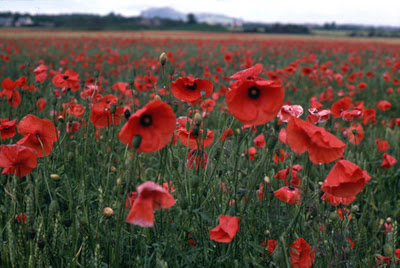
And yet, the 11th hour rescue still unfolds. One of the most famous poems of WWI was written after the trench warfare in Belgium churned up muddy soil where poppy seeds had long hibernated.  The buried soldiers were soon covered in blood-red flowers, and a Canadian physician meditated upon the irony of life coming from death.

In John 12, Jesus foreshadows his death by talking about a seed of wheat that will die to bear much fruit. The soldiers of 100 years ago, in the poem, call out to us to hold onto the faith that resists evil and risks all to redeem this world.

I'm thankful today for those who fought, and particularly those who paid the highest price.  I'm thankful for the spirit of catching that torch to keep fighting for this world, be it by working for healing, by standing for justice, by caring for trees and mountains and resources, by innovating technical solutions to majority-world issues (that's a shout-out to our four kids).  We sometimes think this year has been tough, but if I try to imagine how people a century ago held onto hope in the face of a world at war and a third of the population of the entire globe succumbing to a flu that no one even understood at the time . . . I can appreciate that we have made good changes, we have kept faith.  And we will soldier on.


Tuesday, November 06, 2018

3 things in 2 years, and why humble perseverance is the key to the kingdom


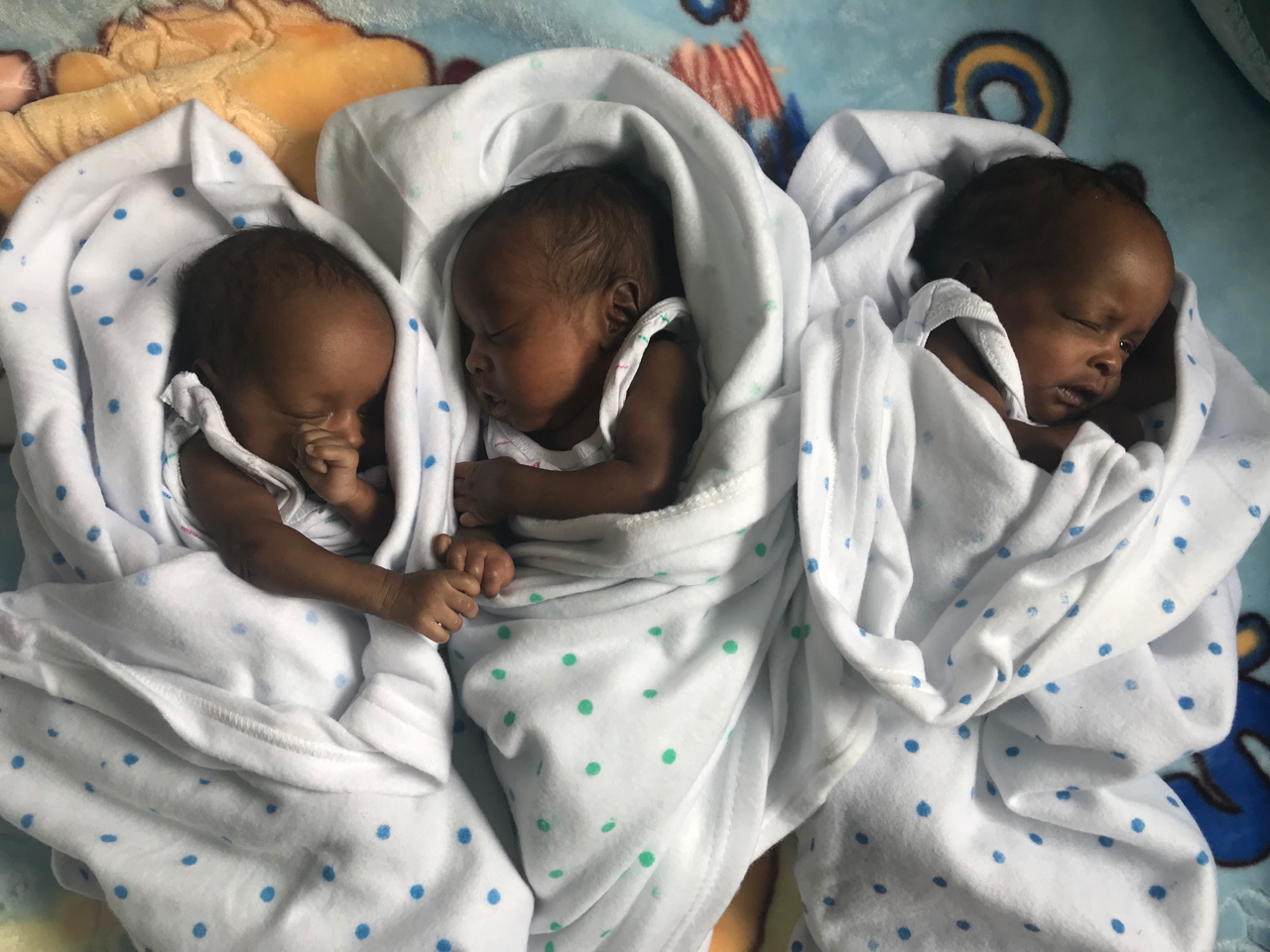
Yes, those are triplets.  Three boys, born at 1, 1.1, and 1.4 kg at 31 weeks out of 40.  At home.  Then rushed into our hospital, where they stayed for 53 days, doubling in size. Yesterday they went home, about 10 days before their actual due date.  Surviving in Kenya as triplets is no common occurrence.  Their mom L.C. deserves a round of applause, 53 days of day and night feedings, hand-expressing milk and pouring it into their nasogastric tubes.  And the nurses, who gave them antibiotics, a blood transfusion, oxygen by CPAP, cleaning septic umbilical cords, teaching skin to skin kangaroo care.  And the interns who patiently recalculated daily fluids and feeds in tiny increments, who gathered vital signs and paid attention to heart murmurs.  L.C. found me when she had changed out of her hospital gown and was ready to leave, for a photo.  She was so happy, and even though she didn't have a smart phone or email or any way to receive the photo, she wanted to celebrate by seeing it:

That happy moment has of course been swallowed up in a mid-day mortality audit of the 30 deaths last month.  Poverty, HIV, violence against women and children, desperation (one death was of a very hypothermic newborn found abandoned under a bush), malnutrition, congenital malformations, tinier prematures, overwhelming infections, complicated births leading to asphyxia and brain damage. This town can feel like a slough of despair some days. But for a moment, we clearly saw 3 reasons to be here.

About two hours after those snaps, we had a meeting with our hospital medical superintendent and our department heads as well, at our request since we passed the 2-year mark last month and wanted to listen carefully to their feedback. More on that later, but a few things stood out: they see improving care, commitment to teaching, and communication with patients as the 3 things that they consider worth the at times stressful, awkward, unclear nature of working with foreigners.  They want their hospital to have better outcomes, so they were glad to have help, particularly in applying Kenyan protocols more deliberately.  By having more than one consultant on the service, and by the fact that we communicate with each other and them, or came with some years of experience, they could see changes that affected outcomes for the better. Secondly, they know we are training interns and medical officers and students of all levels, so the idea of a core curriculum, regular teaching, practical skill sessions, they affirmed.  Patient care and teaching, not too shocking, the core of what we do day by day, integrated together to bring healing and mentor our younger colleagues.  But their third point came as a bit of a surprise.  The Med Sup said she knows when Scott is in the hospital or not without leaving her office, because she sees a difference in the patient complaints that come to her desk.  He takes time to talk to patients, and they gain confidence, feel heard, noticed.  I think that is so much second nature to him that he never thought about it, so hearing it as a top-three feedback caught our attention.  WE had 625 deliveries last month.  That's a LOT of women coming through OB to talk to.

Triplets, feedback, and our prayer card verse all had me thinking about threes.  Yes, we want to know, does all this make sense?  Is it worth being thousands and thousands of miles away from our widowed moms and 20-something kids?  Is this what God asks?  Micah 6:8--what does the LORD require of you but to do justice, love mercy, and walk humbly with your God. That was the verse my sister chose for my Dad's funeral, it's the verse on our prayer card, it was the theme of the conference Julia attended last weekend, and I think that it also parallels this life--doing justice (serving in a place of poverty and need where staffing is low, investing in wave after wave of inexperienced young trainees), loving mercy (the hours, the empathy, the conversations, the prayer) require a willingness to embrace a walk of obscurity and humility.  Which is probably incompatible with a blog, but I'm affirming my husband anyway.  He is much better than I am about finding a way to quietly approach the chaos that is Naivasha SubCounty Hospital Maternity, without demanding a position or recognition or honor, and plug away at patient care. Day after day, examining, giving a little push here and there to get things done, talking to patients. And it makes a difference.  A few years ago, we were told this hospital had 1-2 maternal deaths a month.  Now it's 1-2 per year.  That's many factors and God's mercy, but if you're a person who feels like you are wondering if your labor is in vain, take a deep breath.  Do justice, love mercy, and walk humbly, and the tiny seeds of the kingdom will take root.


Scott has a nowhere birthday next Monday.  Another year of living by Micah 6:8. He's a pretty amazing guy, and hearing the Med Sup talk about him yesterday made me thankful, and reminded me of the things that matter.  In a year marked by the creation of fear and division, humbly pursuing justice and mercy can heal our divisions and bring the kingdom.  Vote for whoever you find most like Scott, today?


Tuesday, October 30, 2018

The Only Thing Stronger Than Hate . . .

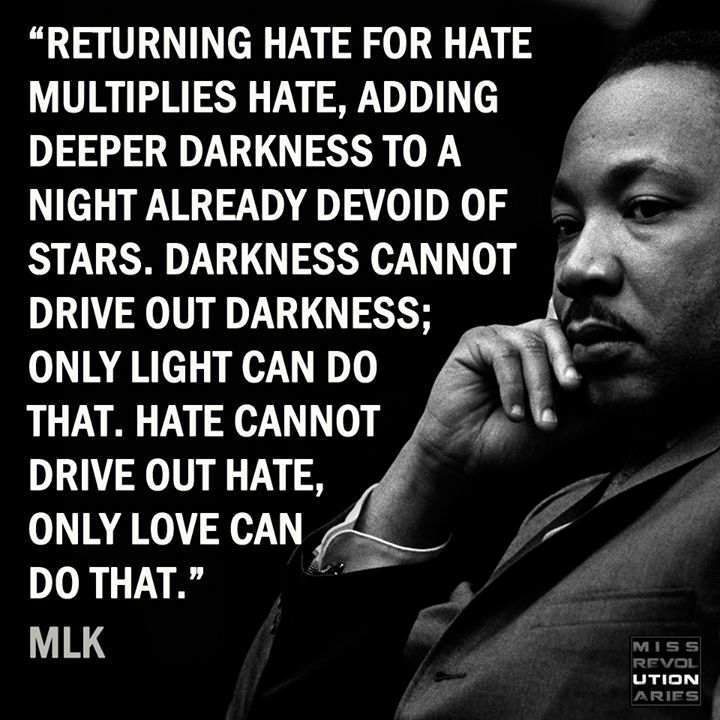
The only thing stronger than hate, is love.

Image result for the only thing stronger than hate is love

It's been a wrenching week for our home country.  In Kentucky, Maurice and Vicki were shot and killed, both in their 60's; they seem to have been targeted for being black. Across the country, people from Joe to Kamala to Tom, 14 in all, were mailed pipe bombs to punish their political views.  In Pittsburgh, people from Bernice to Rose to David, 11 in all, were hunted down with an automatic rifle in their synagogue, for being Jewish. Rose was 97 years old.  I am using first names because I find that humanizing.  These are ordinary Americans going about their ordinary lives, crashing into hate. You could have been friends with their children, or borrowed their car, or had dinner at their table.  These are real people, innocent people, with their own stories.

In this situation, it becomes easy to be riled.  To lash back.  To ridicule, or to despise the perpetrators, to erect some sort of moral pedestal from which to feel dissociated from the mayhem. To comb through politics and leadership for blame.

So this is a crucial time to remember that love will win.  That hate is temporary.  That the most powerful way to respond to hate is to choose to love. 

This week, Pittsburgh responded with love.  A Muslim crowd-funding site raised over a hundred thousand dollars for the burial costs of the massacred Jewish worshipers.  So many people packed the city-wide rally that half had to stand outside in the freezing weather.  I see campaigns popping up on social media to practice random acts of kindness to strangers as a way to authentically counter the sorrows that have befallen us. The mayor affirmed: we are one.  The rabbi refused to be drawn into partisan politics, reminding us: speaking hatefully only makes the problems worse.  There are some leaders in America still trying to see each other as humans first, still trying to calm fears and build bridges.  And that is what we need.

Martin Luther King, Jr., preached love while absorbing hate right up to his death.  As did Jesus.

A week from today Americans will go to the polls.  We far-away types had to mail our ballots in early.  This excellent opinion piece by Pastor Tim Keller reminds people of faith that a. we must participate in the political process to love our neighbors, but b. the Kingdom of God and the kingdoms of the earth never perfectly align.  So read up on your candidates, think hard about the common good for everyone from the unborn to the elderly to the earth, make your hard choices with confidence that love will overcome evil in the end.

From my devotions this morning (commentary on Matthew 28 by NT Wright): "People get very puzzled by the claim that Jesus is already ruling the world, until they see what is in fact being said. The claim is not that the world is already completely as Jesus intends it to be. The claim is that he is working to take it from where it was--under the rule not only of death but of corruption, greed and every kind of wickedness--and to bring it, by slow means and quick, under the rule of his life-giving love. And how is he doing this? Here is the shock: through us, his followers. The project only goes forward insofar as Jesus' agents, the people he has commissioned, are taking it forward."

Monday, October 29, 2018

ACACIA: 21 years of art, spunk, and resilience


Acacia, illustrator of the four Rwendigo Tales, turns 21 today.  

How many people do you know who have published illustrations for four books before they are legal adults?  So this is a short tribute to a remarkable life-in-progress.  Acacia started helping me when she lived in our house for most of the first three years of high school, commuting from South Sudan.  She had spent her early years inseparable from our kids as we all lived in Bundibugyo, Uganda, together, so she was a natural fit in our family.  And since she had spent her entire life in the Rwendigo settings, she could see what I was seeing as I wrote.  Only unlike me, she could also draw it! 
Today we celebrate that artist's soul, the attention to the tiny details like wave ridges in the sand, or the way sea urchin spikes are oriented.  Acacia's eye finds beauty, pattern, integration, setting where most of us take the world for granted.

Acacia has also been a lover of animals from a young age, from pet goats and rabbits to a passion for dogs and donkeys.  If you read the third book (A Forrest, a Flood, and an Unlikely Star) the featured messenger is a tribute to Acacia, and some of her favorite lines make it into the dialogue.  Had she not embraced art therapy as a means of blessing the world, she probably would have worked in animal husbandry or veterinary medicine.  But both demonstrate a heart for the overlooked, a willingness to get into the mess to be redemptive, a broader view of this world and its needs with an intent to serve even if it is costly. In other words, spunk.

Growing up in three African countries plus regular immersions into American culture is no small task.  It takes a strong dose of resilience to navigate languages, climates, cultural systems, chaos across continents.  I appreciate Acacia's imperturbability.  She is comfortable enough in who she is to enter into other lives without having to be the center of attention. She holds onto humor, listens deep into the night to her friends, bakes therapeutically, and has a gift of encouragement.  

So join me today in wishing Acacia a spectacular 21rst birthday, definitely a somewhere-milestone of grace that gives me an opportunity to thank God and her parents for this life!
Acacia with an acacia . . .


And to celebrate that we go back a few years . . .


Julia and Acacia in their matching outfits circa 1999??

If you haven't seen Acacia's work, check out the books here: New Growth Press or Amazon or here.

Sunday, October 28, 2018

29 deaths in 28 days after 25 years: thoughts on burning out and smoldering on


October seemed so promising for the first couple of weeks, as we celebrated some encouraging discharges, some unlikely healing, some cheering morale.  But the nature of serving in a marginal place is this: even doing the right thing with all we have is often not enough.  Sure, scores of preemies have been discharged over the last weeks, and remarkable resuscitations have seen lives saved.  But the OB team had their first maternal mortality in months Friday evening, and the Paeds team has had a discouraging run of septic twins, severe asphyxia, an abandoned hypothermic baby found in the bushes, home deliveries brought in days later on the brink of death, tiny prematures born on the way, all not making it past the first 24 hours. I made a graphic for a lecture recently that described all the massive societal injustices that impact HIV prevalence and severity, and drew a tiny arrow to represent the medical impact of getting the medications right.  It helps, but it doesn't solve all the huge gaping wounds of poverty, violence against women, lack of transportation, inadequate staffing, corruption, and on and on.

As we passed our October quarter-century-in-East-Africa milestone, I've been thinking a lot about endurance and burn-out.  The years do not make one immune to discouragement, or confer the wisdom to not rail in the heart against a thousand frustrations.  A friend sent us an article about physician PTSD in the USA that described current medical life as "death by a thousand paper cuts", the idea that the accumulation of small constant assaults on your sense of purpose and joy accumulates to a career-ending level. Not everyone's story is the same, and longer does not necessarily mean better (and we would thoroughly encourage, actually for our organization, MANDATE, serious time for healing and reflection for anyone sensing such a loss of hope and vision).  But by grace and prayer here we are on a rainy afternoon many thousands of miles from our immediate family and if it is any help to those a few years behind, here are some reasons why.

  1. Grace through you.  Your prayers. This has to be the top of the list.  A thousand may fall, but if God still has work to do in and through us, still has a path for us here, then here we remain.  That may sound like a sloppy syllogism, but deep down we have to humbly (Psalm 91) acknowledge it is true.  Many people do everything possible for a long and healthy cross cultural career and they are dealt an unsurvivable blow.  We have not been.
  2. The Burning Paradox.  I think that most of us would assume that to prevent burn-out, we should turn down the flame.  However, a couple of weeks ago I read a thought-provoking article by a physician who suggested that delving deep into harder work actually might bring more satisfaction, which in the long run might keep you going.  Perhaps instead of turning down the flame, adding more fuel? I do think that for our particular wiring, being all-in committed to a team, a project, a patient, can paradoxically bring life. At various times for us, that has meant pioneering HIV prevention, innovative nutrition programs, investing in medical education, or perinatal care for maternal and infant survival. (below, a malfunction in the camp stove this weekend seemed to illustrate the point).
  3. The Bigger Picture. Being part of an arc of redemption that extends through history, being a tiny footnote in a glorious story where all shall be well, all manner of things shall be well. We don't see evidence of this everyday unless we look very hard, but by faith we hold onto this truth.  
  4. The Community of Colleagues.  We cannot overstate the uplift of a team, the life-saving attitude-rescuing essential of working in community.  Our fellow Sergers, our Kenyan counterparts, our daily interactions with trainees, the nurses, the neighbors.  Work for the common good, done with the and for the community, brings a sense of belonging. We are relational humans; and that human touch can make all the difference. A corollary to this is investing in younger people, in students particularly.  Passing on our gifts by creating a human bond while teaching.
  5. Countdown against Futility.  Atul Gawande advises medical students:  count something . An act of measurement fights the temptation to believe all is vanity.  Change can be slow. We can lose sight of hope, and think nothing changes in spite of our efforts. So accumulating a few facts to the contrary can build a sense of curiosity, which is close to a sense of purpose.
  6. The Leavening of Levity.  There is plenty in every day to mourn; it takes commitment to keep finding the humor.  But honestly the difference between a spiral of sorrow and a plodding resilience can be the ability to regularly see irony or absurdity, to not take ourselves completely seriously.  We need help with this sometimes.  But if you can't laugh at your own ridiculousness, it's time for a break. It's OK to acknowledge our mistakes, to even laugh at them. Which brings us to the final thought.
  7. Rhythms of Sabbath and Festival.  The ancient culture of one day's rest in seven, three all-culture week-long assemblies laden with food and fellowship, still bears wisdom.  If we can't step away from work we start to imagine that everything depends on us.  Once we were asked to speak to young doctors and said, while you're in Africa, take your family on safari, even if people die while you're away from your hospital.  It felt a little risky to say that, but we still believe it is true.  We are not God.  When we unplug from duty and demands, immerse in beauty and quiet, we gain staying power for more good overall.  This is perhaps the counterpart to #2, a work-hard rest-hard philosophy.  This week we spent one night in a tropical rainforest, a small community-run campground, hiking in the mist, listening to birds.  Less than 24 hours, but it was another bolster of refreshment to return to the mess ahead.


I am well aware that even as we ponder the grace that has kept us thus far, we do not know what's around the corner. For this moment, however, these are the truths to which we bear witness.  They actually align pretty closely with our organization's core values: the big good-news picture, the foundational centrality of prayer reflecting unseen realities at work, embracing vulnerability, focusing on loving people. 

Tomorrow will probably bring a 30th death for the month.  It will probably bring some disappointment, some mistakes, something important we miss, some longing for those we love, some awareness of our weakness and temptation to hide or pretend.  But we pray for ourselves and those we supervise that tomorrow will also bring eyes wide open to the deeper realities, curiosity to investigate and delve deep, connection with others, and a few laughs. And a rhythm that paces us into the next 25.