rotating header

Saturday, August 22, 2020

Power, weakness, and a tale of three babies: COVID-19Uganda day 155

 One hundred days into the Ugandan Covid epidemic, a 15-year-old "K" walked into our hospital and delivered a 1.2 kg baby girl (that's 2 1/2 pounds) ten weeks too early. Yesterday, She took her 4-pound baby home, after a 55-day marathon of tube feeds, incubators, IV lines, antibiotics, hours of skin-on-skin kangaroo care, countless replaced ng tubes. That's still two weeks shy of her actual due date. This was a Christmas school holiday baby, a young girl who had just finished her 7 years of primary school, a dad half-way through high school. The pregnancy and COVID aside, she statistically was not likely to receive further education besides the hard way. And she learned quite a lot over the last two months. She knows how to express milk and draw it up in a syringe, measure quantities, drip it into a tube. How to secure a tiny speck of life to her chest. But mostly, she learned hope. Because at first, she was quite disengaged and reluctant. Her baby did not look likely to survive, and she withdrew into a protective shell. It took the community of other moms spurring her on, and her own mother-in-law, a spunky lady who showed up to take care of her (she's only 15 remember). But it also took Ivan.

Ivan with K and baby, preparing for discharge from NICU

Ivan grew up in our orbit, his dad having been one of the young men we sent for nursing school in the late 90's. Over time he became Jack's best friend, spending much of his time at our house, and when his parents' marriage broke apart his mother asked us to take responsibility for his schooling. He was two months short of graduating from Uganda Christian University with a degree in nursing (most nurses get diploma-level education, so this is a boost to our district's skill level) when the world shut down. In the 2020 limbo, he's been volunteering several days a week and focusing on our newly opened NICU. Kacie spent time teaching him newborn resuscitation using the Helping Babies Breathe curriculum. Dr. Marc, Dr. Isaiah, Scott and I have worked with him and explained and entrusted more and more.

So a few weeks ago, when K came down with a cold and then her tiny baby got sick . . . and then stopped breathing, Ivan was on duty. He found another nurse wrapping the infant's body up in defeat. But Ivan did CPR. He sent someone to get me. Over the next week, we did everything we could to keep this baby alive, oxygen and a transfusion and medicines and monitoring. She had to be revived more than once. And improbably, she clung onto that thread of life. 

Her discharge was a concrete moment of hope. It was really Ivan's belief in not giving up that saved this baby's life. And that's what the good news of God's rule seeping in looks like. It's a multi-decade process of relationship that gave this nursing student the courage to see the survival of a 1.2 kg apneic baby as a possibility. That brought in partnerships with Save The Children building a tiny NICU, brought in incubators and ng tubes. It's the refusal to write off a 15-year-old grumpy teen, and slowly coax her into being a skilled mother. It is little acts of faithful work, over and over, 55 days in a row.

Last week, we picked up urgently and rushed to Kampala for another birth. This one was right smack on time and in spite of a last-minute C-section, all went well as Jenna and Boas welcomed baby Nile. The day before, Karis and Stephen delivered baby Zaks in Nairobi. Neither of these moms had their ideal birth plan; both had hoped to be in other places, and with family support. But both faced the reality of 2020 with courage, and both are now holding nearly 2-week old healthy boys, with minimal help from anyone but a husband and very limited friends. We had the joy of being surrogate grandparents, ooohing and ahhing over the sweetness of Nile (with masks and clean hands of course) for days, and admiring Zaks on What's App.

Nile in Kampala day of birth 

Zaks meeting big sis in Nairobi

Two weeks ago was the last normal Saturday I sat here at this desk, and asked for prayer for baby of "K", for our two Serge moms about to deliver, for our own weary souls. I'm still plowing through the melancholy of Jeremiah and Habakkuk . . . "in wrath, remember mercy" is his prayer in chapter 3. As their global situation devolves into chaos they see ways God moves in power to show mercy to the remnant. In the wrath of 2020's insidious viral death-march, ripping open of festering racial injustice wounds, divisive tribal fear-stoked hate on multiple continents . . . the babies represent a message of mercy. Potential. Hope. Seeds for good that will grow in ways we can't predict. God's power in several vulnerable packages.

-------------------------------------------

Which, besides anxiety over survival, has been the other major current of thought in the last two weeks. Because I pulled off my shelf a 20-year old book by Marva J. Dawn called Powers, Weakness, and the Tabernacling of God. Dawn delves deeply into the Biblical passages and literature exploring the idea of "principalities and powers", something that is taken for granted to be true in African culture and Biblical culture but must be re-established for the average American audience. 

We need to recover a more nuanced and holistic view of evil, which paradoxically helps us see more clearly into good. The world is broken, people sin, and there is an unseen realm of forces that are both institutional and demonic that seek to harm us. As I was writing, I was interrupted by a phone call from a friend desperately worried about his sick child, and on the way to my car to respond to the emergency my young neighbour (another kid who grew up with ours) met me to tell me about his sick daughter. COVID-19, malaria, and other pathogens are part of the frayed fabric of our world, the brokeness of the Fall, the intrinsic sorrows that are part of being human. That these children live in a town where the hospital is out of malaria drugs and never had much oxygen capacity is not part of their personal sin, it is a world system of poverty that is stacked against them. Yet there is probably sin in these scenarios too, perhaps a nurse somewhere stole or sold off the medicines meant for needy patients, or a greedy pharmaceutical company set a price high enough to finance yachts while leaving the poor to die, or a parent spent his small fees earned by his boda business on alcohol instead of a mosquito net. And behind the scenes, though Satan was defeated on the cross, the mopping up of all spiritual powers that set themselves to harm us has not been completed. In most situations we can find multiple forces of evil, and the good news is that the cross reverses the decay of a groaning creation putting us on a path towards all things new, justifies and forgives all the sins we have committed and will commit, and chains evil powers, limiting their capacity as a promise of their eventual disappearance. 

The brilliance of Dawn's book lies in the way she moves from an overview of evil and the power of the Cross to .  .  . well, if this is most places, it would be either a name-it claim-it simplistic prosperity-promising temptation to grab the victory in full this side of time, and be financially successful, physically healthy, socially "in", and gorgeous to boot. Or a sober diatribe on personal sin and repentance that boils all evils down to individual choices and wants a uniform set of moral rules to keep things straight. But the Bible, shockingly, after affirming Jesus as victor by a literal resurrection from the dead . . . has him cooking fish and calming hearts and quietly fading away. Within a generation, his followers grasp that the rule of God is not pounding in with an army or a gilt temple, irrefutable and irresistible. The power of God comes at the end of human power, when we give up our rights, our voice, our time, our wisdom, embrace our weakness and limits, and depend fully on the grace of God. The more we get out of the way, the more people can see the glory of God.

Throughout the New Testament, then, we have seen a diversity of evidences for weakness a God's primary method, including the weakness of a suffering Messiah, the weakness of our sinfulness that necessitates a Saviour from outside ourselves, the weakness we have relative to the powers of the world, and the priority for our communities of welcoming the weak. (p 55)

I believe her final two chapters have much to say to the American Evangelical Church in 2020. If we are called to a path of the cross, of suffering, of embracing weakness . . . when did we become so obsessed with winning, with power, with control, with position, with status, with numbers? She calls us back to the basics, particularly to prayer, to fellowship, to being countercultural, in the world but not of it. She calls us to gracious generosity, to compassionate insistence on justice, to metrics of faithfulness and dependence upon God. I think that her descriptions of the early church, and of the Ephesians 6 "armour" of the Spirit, give us a challenging vision of living out the rule of God as salt and light in a world that needs to taste and see.

We need not feel overwhelmed by the cultural forces arrayed against Christianity; the battle against the powers has already been decided. And we need not feel overwhelmed when we remember that such ending of our power as we might be feeling is exactly what Christ desires for the fullness of his tabernacling.  . . .The cross is the heart of history. (p 163-164)

-------------------------------------------------------------

If anyone is still reading, thank you. Because I want to end by saying, a robust theology of evil, and of good, matters. Putting the blame for a preem on the shoulders of a 15-year-old girl is demonstrably wrong. Did she sin? Yes, daily. Me too. But she also suffered the consequences of systemic evils so much larger than her. Does the victory of Jesus on the cross mean no more premature babies? Not yet! But yes, someday, no more tears at all. The dense and complex narrative of baby-of-K reflects the dense and complex narrative of the incarnation. Jesus, vulnerable, in the flesh, pitching his tent here amongst us in a decidedly marginalized people. Jesus, resisting the short-cut to power and glory, carrying the cross and meeting death head-on. Jesus, forgiving sin and healing disease and promising Heaven, because in that death and resurrection the entire order of the universe shook back towards a trajectory of hope. Jesus, choosing to work behind the scenes through the Ivans of this world, blowing a spirit of life into a dying baby, preaching the forgiveness of sin, breaking the power of evil. The full establishment of shalom is not yet here, but we catch those glimpses of glory and hold on for more.


Ivan on one of those 55 days of doing the next needed task (furthest from camera)

Ivan teaching NICU moms, K is in the center

Arriving in Kampala after 8 hours in the car, to celebrate a Ugandan-American miracle!


Nile and mom


The whole Fort Portal team turned out to celebrate!

Baby of K, oblivious to the drama, ready to go home

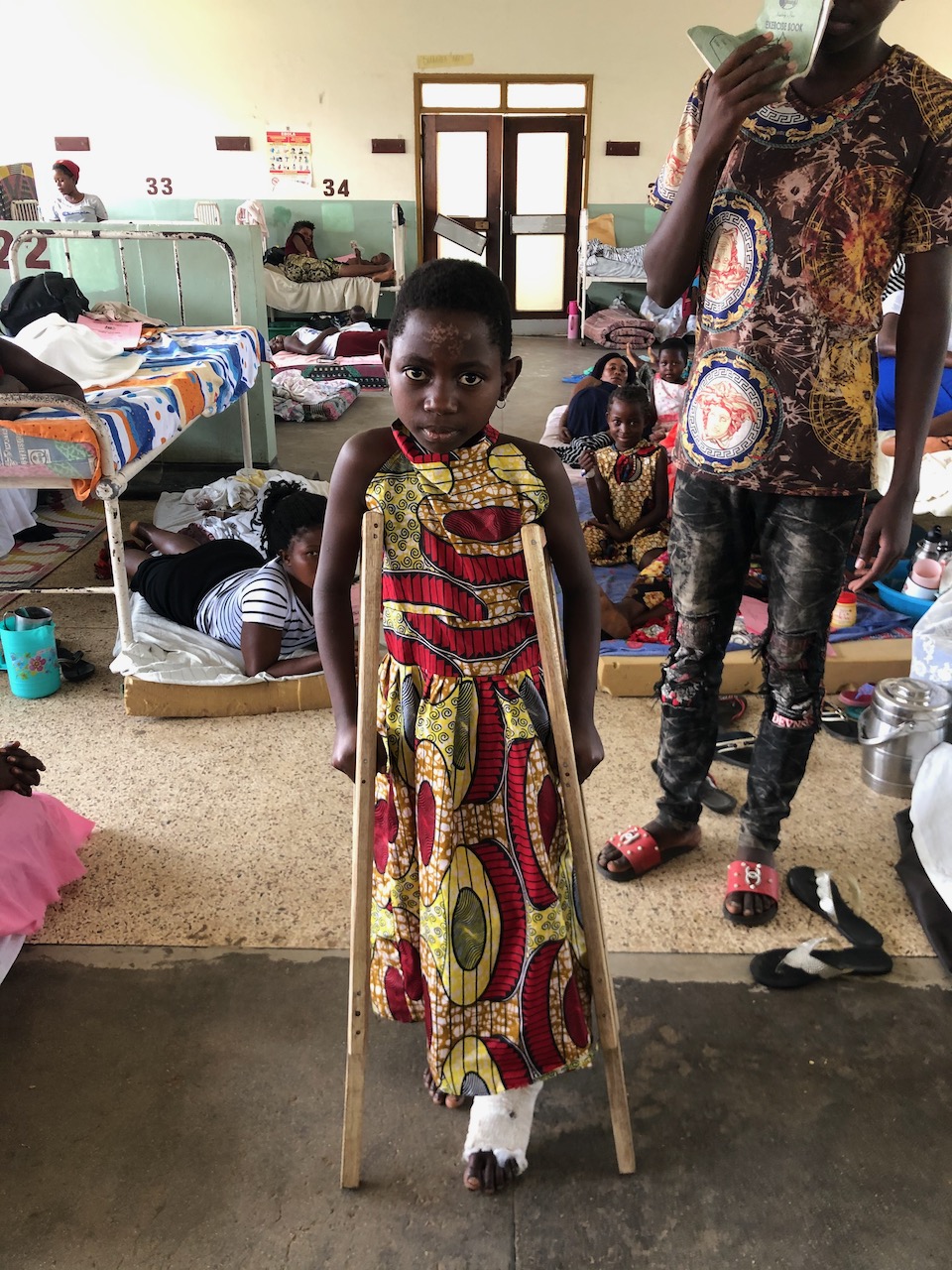
a glimpse of my weakness, a ward crowded with sick children

One more of Zaks meeting his big brother


Saturday, August 08, 2020

"I am weary of holding it in." COVID-19Uganda day 141 from Jeremiah

 141 days are feeling long for all of us in Uganda, yet our troubles are only a minuscule taste of the world's.  August finds the read-through-the-Bible-chronologically march in Jeremiah, in the final days of the crumbling Kingdoms of Israel and Judah. And perhaps because we have to Sergers in our Africa area awaiting childbirth, every time Jeremiah says "pain as of a woman in labor" it jumps out. Labor is inevitable yet unpredictable. You can learn about it but no two experiences are the same, no one can feel another person's pain, no one can really prepare you precisely for the experience. Anguish is going to grab those two, as it has women since Eve. I wonder if Jeremiah's mother or wife was a midwife, since he goes to that analogy repeatedly to warn the Jewish people of the trauma ahead. We are globally in the 8th month of being aware of the spread of the novel coronavirus. In January we read the early reports of a mystery respiratory highly contagious viral syndrome, briefly wondering if it might inconvenience us with impact on our May all-company conference. Now in the 8th month the entire globe is reeling with heaviness. Our US Embassy yesterday told us that if we were not paying attention before, it is time to pay attention now and assume anyone we meet is infected (link included as many American readers may find it more helpful than much of what they are hearing). We watched coverage from Georgia last night, with skyrocketing infections and the death of an otherwise-healthy 7 year old. Meanwhile we are about to celebrate the 7th birthday of a kid on our team.

That dissonance is weary-ing to us all. Perhaps being a doctor in 2020, a team leader, a writer, a human whose heart holds the heaviness of traumas and injustice past and present, is similar to being Jeremiah in the ascendency of the Assyrian and Bablyonian invasions of the known world. In chapter 6, he wonders, who should I warn? No one is listening to this, they have no delight in it. Therefore I am full of the fury of the LORD, I am weary of holding it in. We try to stick to policies of masks and hand santizer and distance and outdoor meeting, of limiting travel and interaction. All of these are counter to the Gospel-picture of community and openness and immersion. This is hard for all of us. We are weary of holding it all in.

I think our two women facing labor and delivery are way wearier than any of us, stuck in countries they did not intend to stay in for this process, unable to have family nearby, no guarantee a husband or friend can even enter the labor room with them. I know that having done this a few times including in some marginal places, there is always the nagging doubt, how bad can this get, and can I survive it? Am I strong enough? What if.. . .? And I think everyone is getting a little taste of that right now. How long can we deprive ourselves of human contact, of hugs, of parties, of connection? How long can we put our kids' educations on hold? How high is the price of a lonely 84th year, or 87th? 

Last night I read a story that for the first time, malaria resistant to our main medicine (artemisinin derivatives) has been found in Africa. Two sites in Rwanda. The potential loss of lives over the next five years if this mutation takes hold and spreads is 78 million cases, over 100,000 deaths. In another year, that might have been interesting or sobering, this year it is alarming and makes me want to cry. Because those deaths occur right in front of me right now, currently due to delayed care or poor systems or co-morbidity with sickle cell and malnutrition . . but if we get to the point where we are doing all that right . . .  and we are still powerless, malaria will make COVID-19 look minimal. The paediatric ward is now not even standing-room-only, because standing room is almost gone. People have to line up and wait to weave their way through mattresses on the floor because I'm squatting between two that are only inches apart. I had to put my head down on a bed fast because the umpteenth squat-and-stand left me dizzy. It is pouring rain right now. Mosquitoes are proliferating.

The childbirth analogy continues right on to the teachings of Jesus. In John 16 he is talking to his disciples prior to his arrest, and says:

"A woman, when she is in labor, has sorrow because her hour has come; but as soon as she has given birth to the child, she no longer remembers the anguish, for joy that a human being has been born into the world. Therefore you now have sorrow; but I will see you again and your heart will rejoice, and your joy no one will take from you.  . . These things I have spoken to you, that in me you may have peace. In the world you will have sorrow; but be of good cheer, I have overcome the world."

Bahati with the joy that she laboured for!

Both-and. Yes, you are weary, you are facing anguish, things look rough ahead. Yes, you will have sorrow. But . .. also yes, you will have joy and you can go forward with peace, because Jesus holds the end in hand, and all shall be well. Coronavirus and malaria, racism and poverty, greed and abuse, will all be overcome.

So prayers appreciated for our two about-to-enter-anguish moms. For a glimpse of the joy of holding those newborns to see them through with courage. 

And prayers appreciated for two weary doctors, in the unending sorrows of this broken world. Yesterday Scott found his two lost sheep: a woman who had laboured all night with zero progress . . . meaning he had to push against the inertia of the system, supply sutures and some of the anaesthesia medicines, often he has to wheel the patient to the theatre or put in the IV himself to get the C-section moving. The baby was not-quite-dead, and revived. Then as he was writing up the operative note, a nursing student begged him to ultrasound scan her sister. People love ultrasounds here, and want them for all kinds of inappropriate indications, and Scott is the only source of free and accurate ones so he gets weary of these requests. But he trudged back to maternity to discover an undiagnosed ruptured ectopic pregnancy, again having to set up and push and innovate to get the woman to surgery. Her hemoglobin was 2.4; she had 5.5 LITERS of blood in her abdomen, as he worked to remove the burst tube the anaesthetist transfused the little amount of blood available, and she survived. My lost sheep were a preemie that Ivan resuscitated on Weds when the staff generally were ready to call her dead . . . she got a respiratory infection from her 15-year-old mom 40 days into her incubator stay (and a glimpse of joy, that Ivan saw the potential for action, sent another mom to grab me for help, and saved this life for now). And two very very lethargic and weak malnourished children, little girls who did nothing to land themselves in families with HIV or TB or divorce and abandonment. Plus a little boy with sickle cell and malaria, on a mat on the floor squeezed between two other actual mattresses on the floor, whose labs I happened to find under some books on a desk while looking for something else . . . hemoglobin 3.8. This is why we keep pushing through the crowds to find those closest to death and focus the team's energy there. Meanwhile we are trying to teach students, and I personally am failing to remain calmly gracious at the fray. Repenting for my sense of self-righteous input; and yet also relating to Jeremiah's sense of "isn't anyone listening???"

This is 900 grams of vulnerable life, entering the world at 28 weeks instead of 40, just as we unwrapped the bundle brought to us 18 hours after birth . . . 
Celebrating the discharge of this little child who may not look great YET, but is 100% better than two weeks ago!


In that incubator is the baby Ivan rescued; join us in praying for her survival (baby K).


This was Wednesday, numbers were up even higher by Friday . . . 

Saturday, August 01, 2020

Systems and Powers: #COVID-19UGANDA day 134

Monday, Wednesday, and Friday we spend the first 30+ minutes (OK who are we kidding it is often an hour) of our hospital day in an outdoor, socially spaced, all-staff morning report. Twice in the last few weeks we've spent an extra all-day meeting for government and partner planning on health, education, care for children. Every day we have people coming to talk to us, or we are interacting as we work and move. And IN EVERY SINGLE CASE we are the only people from beyond the borders of Uganda in the conversations, which means we are always listening and learning and processing and comparing. We are always running a little behind the curve of a dynamic system of beliefs, habits, values, history, proverbs, language, culture. Then many evenings we are viewing through the window of CNN or newspapers back into our birth culture, watching testimony before Congress, or reporting on protests or the pandemic. This week there has been a slew of live-coverage from Congress. Again we are outsiders by location, slightly out of step and behind the dynamic curves of popular opinion. But in both cases, I would say our off-balance not-belonging can be a strength as well as a weakness. Because we can bring a fresh view.


So when Attorney General Barr said that he did not believe there was systemic racism operative in our criminal justice system, I immediately applied that to the kind of systems-thinking we try to do in medicine in Africa.

When problems arise, the human tendency is to look for the person to blame. Bad outcome of treatment? Well, whose fault was it?

But while it is important to hold people accountable to do their jobs, most of the real progress in improving care and reaching goals comes from thinking about the system that is functioning to produce the results that we see. For instance, here are some of the problems we have been present for discussions of this week:


  • A child dies of severe anaemia from Sickle Cell, because there is no blood in the blood bank to transfuse them.
  • Teenage pregnancies are on the rise during lockdown, and we're all realising that many girls are safer in school than at home.
  • An infant is still born because the nurse called the doctor to do a C-section, but he did not answer his phone, and so she waited for the next shift in the morning.
  • Rats are eating the hospital register books and plaguing the operating theatre because they are attracted to placentas left in buckets.
  • A two-year-old comes in with an abdominal stab wound inflicted by his own father who was high on a substance and mentally ill.
  • Alcohol and marijuana are in our markets because the parliament gets income from this business.
  • Artesunate, a key malaria drug, is out of stock because people believe it is so powerful that they sneak into maternity ward and copy the name and file number of patients so they can go to the dispensary and fraudulently take it.
  • Before all schools were closed, teacher absenteeism was rampant because they take loans which they cannot repay on their salary so are constantly working other jobs.
  • Government staff do not respect their supervisors because their salaries come via bank transfer not tied to performance.
  • Coronavirus deaths are now three in the country (extremely low, but the beginning of the wave) because people have stopped wearing masks and distancing.
  • Families complain to the police when their daughters are enticed into sexual relationships as teenagers or even younger, but as soon as the threat of action generates a financial settlement from the seducer they drop the case.
  • Medicines are out of stock because the national supply chain is months behind schedule.
  • A friend has to move out of his paternal home because his alcoholic brother keeps beating up the friend's wife when he is at work, and the family cannot send this alcoholic brother away.
  • Another friend calls a community meeting because the neighbours have blamed a death on the statement "you should take her to the hospital; if you don't she might die" , attributing that statement rather than the delayed care as the cause of disaster.
  • A neighbour limps in with snakebites because the local house construction has many gaps.
  • The school gets a 2.4 million shilling water bill (almost $700, or more than 30x normal) because of a shoddy repair five years ago that has now allowed thousands of liters to silently leak into the ground. 
  • We are on our last tin of therapeutic milk, because our district relies on UNICEF supplies that do not reflect the reality of the need.
  • Food production is inadequate for our district, because people planted so much land in cocoa over the last two decades to make some cash, at a ratio that benefits the buyers and leaves the small holders with hunger.
  • A baby dies because his exhausted mother is over 40 and on her tenth delivery and she just can't summon the strength to push him out.
  • A rape case is not followed up because the family can't pay the extortion required to get all the forms filed with police and medical reports.
  • With primary elections approaching, people are warily testing the winds to figure out who will win, because the voting is done publicly by lining up for your candidate. So what is meant to quell rumours of ballot box stuffing becomes, in peoples' hearts, a fear that they will be punished for supporting the wrong person (whoops, your name was deleted from the payroll, spend a few months with no salary to try and sort that out).
  • The further from town a school or health center is, the less likely it is to be fully staffed, because as people move up in education and responsibility they want to live more centrally with access to shops and power.


It is exhausting to generate a quick list of items we have been presented with in just a week, let alone months and years. I am not making any of these up, and I know I'm not remembering many. Pretty much any of those issues could be traced to an individual who cut a corner, took a bribe, failed to show up, made a bad decision, committed a crime. But the fact that they happen, over and over, is bigger than any one individual. They are part of systemic injustices that have brought pain and suffering into Bundibugyo for centuries. The Bible speaks of the world (the fallen state of everything from the coronavirus to flooding), the flesh (our own sinful desire to promote ourselves at the expense of others), and the devil (principalities and powers in the unseen realms bent on evil and destruction). These are seen in the objectification of women, the colonial systems of administration, the removal of resources, the corruption in allocation of services, the extreme fear of the spiritual powers, the personal conflicts, lack of agency, lack of trust. None of the solutions are simple. We can exterminate a few rats or buy some milk or boxes of medicine or pay for some court cases . . but the real solutions require generational changes in values and habits. They require hearts for serving others, access to adequate food and information, dependable safety nets. 

Which is, of course, why we are here for the long haul. In the meeting of the district committee on orphans and vulnerable children (OVC's), I noticed that amongst the two-dozen people in the room were two young adults who had received OVC scholarships at Christ School. OVC's who were now planning for the care of OVC's. This kind of change takes time, lots of it. But it is happening. The people of this district are resilient and committed, patient enough to listen to a dozen sides and opinions, willing to sacrifice and wait, willing to pitch in and change.

So Mr. Barr, let us respectfully disagree.  The broken world, self-absorbed human hearts, and evil intentions, permeate every part of our globe. Our problems in America are not just a handful of agitators or trigger-happy outliers. Change in the USA and in Uganda both require some deep works of the heart, some careful attention to policies, some just allocation of resources.

Today I finished my read through the book of Isaiah. The prophet is writing at a time of danger and upheaval, and I imagine his audience felt something like we do in 2020. And much of what he has to say relates to big-picture, large-scale, national systemic transformations. Yes there is talk of individual piety, it is never either-or, always both-and. But let's not forget that God works through people for peace to cascade in like a river that carries life to all.

Thursday, July 30, 2020

Rookies of the Year, COVID-19 edition (Uganda day 132)

When COVID exploded last Spring, our Area of Africa was not immune to the impact of altered plans, closing borders, mounting worry. Quite a high percentage of our workers had structured Home Assignments (the 1 in 5 plan for furlough from the field to report to supporters and reconnect with family, pursue professional development, take Sabbath rest) around the rhythm of our quadrennial all-Serge conference. When that gathering was wisely canceled, it was understandable that many would still opt to return to North America to wait out the wave of uncertainty.  These decisions are complex and varied, with no two stories the same, vulnerable people, needy relatives, medical high-risk conditions, burning-out souls, longed-for plans, and on and on. Everyone did the best they could to walk by faith and act responsibly.

But today I want to thank and honour the three 20-something single women in our Area who decided to stay.
Why Jesus Chose Mary Magdalene to Proclaim His Resurrection | CBN.com
The history of spreading the word that Jesus conquered death begins with a single woman, Mary Magdalene in the garden around the empty tomb, taking the risk of soldiers and controversy to perform the hands-on inglorious task of embalming. And throughout the story of the reversal of evil in our world, we see the marginalised and vulnerable moving into places of risk and need, usually without much fanfare or stories. From Clara Barton to Helen Roseveare the good news has traveled on the feet of women who chose paths that put them at odds with their peers and the expectations of their culture.

That history continues today, and though the word "missionary" may conjure up for you a middle aged man with a seminary degree, in reality the demographic includes a disproportionate number of spunky young women.

Back to our three rookies-of-the-COVID-year.  

Lindsey in Uganda has spent the COVID season so far finishing out a school year teaching kids, including accelerating the program when one family decided to depart early because of the pandemic. While "summer" is supposed to be a restful break for teachers, she spent June and July supervising a total overhaul of the 25-year-old school building, flushing out rats and snakes, repainting walls and shutters, having cabinets built, sorting through accumulated mouldy supplies, commissioning curtains and rugs, landscaping and rearranging. Her most proud accomplishment of COVID though is creating a pathway for about 70 pounds of curriculum (books, paper, supplies) to be shipped to a country with closed borders. We aren't quite sure how she did it. But this week she drove the 8 hours to the chaos of the capital and claimed the haul.
Lindsey with the curriculum in her back seat. NO SMALL JOY.


Emilie in Kenya is the ONLY member of her team left, besides the leaders.  She has joined them in discipling coaches through their Ambassadors Football program, pouring multiplicatively into Kenyan coaches who can then become positive role models and Gospel influences for youth in the city's informal settlements. Because of the economic impacts of the drastic shutdowns in our region, she and her team also raised funds for food packages to help their coaches survive. Her room-mate had to leave the country unexpectedly too, so she is now facing her summer's most challenging task alone: preparing to be the main support for her leaders' family as they prepare to deliver their third baby in Kenya instead of back in America with their own family's support.  Third baby means there are two other toddlers in the mix.
This is Emilie (far right) last year; she's said goodbye-for-now to everyone else in the photo


Maike in Congo is literally the ONLY member of our Serge team left, though she's on a hospital compound with a few other missionaries. She has continued to provide nursing care in maternity and the intensive care area, mentor youth in Bible study, and raised funds like Emilie to support the stranded families of Bible School students. When a local militia attacked the military nearby, there were some tense hours. Many of her neighbours fled into the "bush" then slowly returned in fear. Maike and her colleagues perceived the need for trauma healing, as this community has faced so much insecurity and disease over the decades. So she facilitated a workshop to begin that healing and reconciliation process.

This is Maike's photo from the reconciliation exercise last week, giving grievances to Jesus to be buried at the foot of the cross.

At Serge these are just three of the MANY women of faith. Would you pray for them in a special way? The rest of us have some automatic proximal family with whom we live even when we miss our families of origin. We have some ability to process, or just other humans with whom to share car maintenance and cooking and make weekend plans. The loneliness of lockdown intensified the sacrifice; yet we need their invaluable contributions. And if you'd like to be in the running for next year's rookies-of-the-year (we have several on the way . . ) send us a message.  

PS read this fast, because I did not ask any of their permission to use their names and photos, so I may be in trouble soon and have to take this down.

Saturday, July 25, 2020

Running in the Dark: #COVID-19 UGANDA day 127

When we moved back to Bundi 1.5 years ago, I started running in the dark. It's too hot and humid to go later, and too public to run in the daytime while attracting "mujungu! mujungu!" frenzies from children, unwanted attention, traffic to dodge. Plus to be at the hospital by 8 while living on the equator where the sun sets and rises at 7, means that fitting in exercise, a Bible and prayer time, breakfast and hygiene requires a start in the dark. Once COVID hit, Scott started joining me, since he could no longer take strenuous distant bike-rides in the limited-movement lock-down. We step out into the cool morning darkness in a time I call star-fade, as the background subtly greys and the flickers of starlight disappear pre-sunrise. We take our dogs on their leashes, and carry a small torch (flashlight) which illuminates the pavement a few feet at a time. 26 1/2 years ago when we arrived, this would not have been possible on the treacherous muddy potholed track, but now our road is smoothly paved with a helpfully reflective white painted line on the side, and a wide verge. We are rarely passed by more than a handful of motorcycles or trucks, and we usually encounter less than ten other humans also out moving on foot. Frogs complain until we get too close, then are silent until we pass. There is one very alert rooster that always squawks.

When running in the dark, seeing only the next few seconds of roadway, the path gives one the illusion of being straight and level. So it always strikes me when I later drive in the car, how many dips and curves there are. Our road is quite good . . . but it does have to bend to the reality of being situated at the base of the third highest mountain range in Africa. There are ridges that fall down to creeks, contours that cause the road to wind. In the daylight, particularly on the way back from Town, one can note the overall trajectory, the bird's eye perspective . . which shows that our distance is not a straight line at all.


But in the early morning, it is all about plodding ahead, taking the next few strides.  


When we moved back to Bundi 1.5 years ago, we had no idea what those 1.5 years would hold. We were plodding a few strides at a time. We thought we were coming for a few months to fill a gap in leadership. It looked pretty reasonable, as far as our little flashlights could project. If we could have seen the near-implosion of the school as an unstable teacher instigated riots, or the decision of some key team members not to renew their terms or to change their foci, or the impact of this pandemic on our capacity to move, would we have had the courage to come? Maybe not.

Yet here we are down the road in 2020, which is one big blind curve. Not the story we thought we were choosing. Somehow we expected this phase of life to be one where seniority had some perks, where we could somehow hold together the needs of our octogenarian moms and just-launched young adult children with the forward progress of eleven teams in five countries. We thought we'd do that by perhaps living near an airport, having a base but frequently in motion. Instead, it's been 127 days circumscribed routine (minus three to camp and pray recently!), with no clear end in sight. In other words, exactly what everyone in the world is facing. Being in one place and staying there. Seeing patients, again and again. Attending meetings with spacing, eking out the same small palette of culinary options, music, clothes, interactions. Yes we are still thinking globally and dreaming beyond, but we are at this moment deeply rooted.

And the surprise is this: darkness is a mercy. 

We do not know how 2020 will end. It doesn't look good for anyplace right now. Uganda has locked down more effectively than most, but we've recorded our first death this week. The whole world is addicted to the reality-TV of America, us included, with astronomically increasing sickness, violence between groups stirred up to fear and hate each other, and a flare for turning things like wearing/not wearing a mask into a litmus test for righteousness. When healthy 30-year-olds die of this virus, we are reminded that while a fatal outcome is unlikely for most of us it is certainly possible for any of us. We can't see the road very far ahead. We can only see the immediate next steps. We wear our masks and wash our hands, greet from a distance and avoid most activities. We read and pray and treat and hope. We prepare Bible studies and medical teachings, reports and letters. We mentor and supervise. We listen and intercede. A few steps at a time. Until one day we realise: this road is actually good in many unexpected ways. We are in the home have had for more years of our lives than any other, the home we helped build, the home where we raised our family. We are working with young people whom we care about deeply, being invited sometimes into their hearts, their marriages, their dreams. We are helping a team carry out a vision we were part of setting in motion. We get to see the decades-long arcs, not just the moments. We get to learn to be elders, a base that allows others to thrive and embrace their own callings. We get to talk to our kids and moms and sisters sometimes, not enough but we do appreciate that technology that did not exist when we started.


Faith is a run in the early morning darkness, a commitment to move ahead without knowing exactly where we will end up. Faith is work, and a work-out, a necessary precursor to arrival and rest. Whether this stretch is a 5K, 10K, a half or whole marathon, or an ultra-marathon, we can't say. But that is the mercy of God's mystery.

Thursday, July 16, 2020

Humbly Hastening Righteousness? #COVID-19UGANDA DAY 118

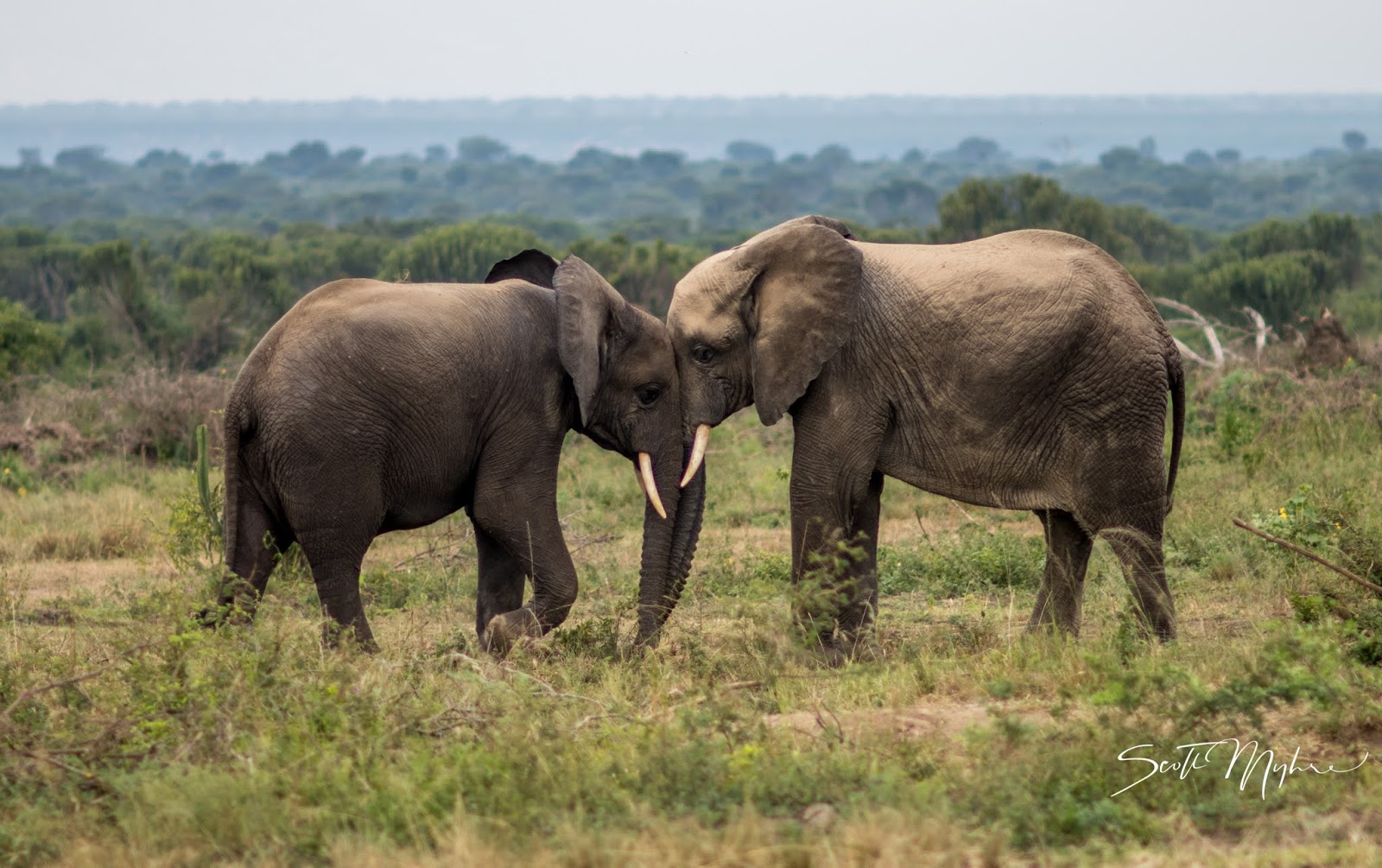
First, the weekend was exactly what we longed for. A spot of untouched rugged beauty, wild animals just living their lives wandering by, an unexpected respite of wind and cloud that gave picture to the Spirit's refreshment, books to read and prayers to offer sitting in camp chairs which we moved to catch the shade of a cactus. Remembering redemption, and how it comes in hidden slow ways. And just to keep us on our toes, the challenges of reality: encountering a whole new kind of tiny stinging ant that swarmed under our clothes when we inadvertently washed dishes on their territory, a lone pesky hyena that kept wandering back after being chased away with rocks and a panga and in his curious boredom chewed through our tire cover and gnawed on our tea pot at night. And, the requisite car issue. We went on one game drive (it seemed superfluous asa the the game kept coming to us, why go to them, but we do love the motion of the savannah and looking for lions . . ) in which we're pretty sure we were the lone visitors in the park (the lodge was closed, so only campers and we didn't see any other campers).  So when we ended up on a newly graded track in the rain . . and the black topsoil turned to slick muck that quickly filled our tire treads and left us fishtailing like we were driving on ice, and we ended up in a ditch, we were envisioning being stuck for hours. We chopped small branches from nearby clumpy brush to get some traction (while keeping an eye on nearby buffalo) and the 4WD mercifully got us going our first try. Yeah. The highlight of the weekend was perching our chairs on the roof rack and watching an elephant circle our camp, spraying clouds of dust on his back. We saw easily over a hundred elephant and buffalo, and dozens of warthogs, waterbuck, kob. Not to mention 3 lions and 9 giant forest hogs. Ever since we really READ Job, we have embraced the concept that God's answer to suffering is to go look at creation. So we are grateful for the time we could do just that.


We packed up camp in the rain Monday morning, which means we actually just threw the wet tent and muddy tarps into the car for later cleaning/drying/sorting. A real blessing on the way back was the opportunity to have a leisurely porch lunch with the Fort Portal team, recounting griefs and blessings. They are our neglected stepchild, independent strong women who rarely ask for attention and for whom we are grateful but wish we had more to give. That time was a good choice with some consequences of a rushed minor re-supply shopping time in order to beat the curfew and return to Bundi.

Which brings us to the last 48 hours. If you put down your work for a weekend, it gathers strength to pounce upon return. Hundreds of emails, a few meetings, some brewing issues, heart-to-hearts, a flurry of cleaning, visitors ... .plus the news that we were to appear for an annual District Health- NGO Coordination meeting on Wednesday with reports on our activities and plans for the year. A late night Tuesday creating a presentation, an early morning Wednesday unsuccessfully trying to push through rounds (I think I rounded and wrote notes on about 10 patients out of 80-ish), and then we were called and told to get to the meeting.

All masked, socially spaced at tables, open windows . . . still odd to be in a meeting these days. The district health team was joined by another dozen or so representatives of the NGO's focused on health, all Ugandans and mostly NOT from Bundibugyo who work for major organisations. Person after person put up impressive, articulate slides, with tables and work plans, goals and dates, numbers and percentages. Pathfinder has a five-year 11-district USAID grant to improve access to family planning that involves universities, research, highest levels of government. Save the Children procures mama kits (delivery packages of helpful items) and supplies village health teams with basic medicines, but also heavily facilitates the work of the district health team in supervising and planning. World Vision has an ongoing project in one area of the district that includes peace-making and literacy activities. Baylor University employs a team of data gatherers and analysts to make sure HIV/AIDS care is evidence-based, up-to-date, accessible, monitored. As the hours went on with these presentations, all with their slick urban representatives, their impressive funding, their buzzwords and acronyms, personally I was feeling more and more like a failure. What are we even doing here? And how does all this heady office-based assurance match up with what we see on the ground actually happening? I started googling the budget sizes of these organisations. Wow.


We were called up last. While Scott connected the computer, I had a Holy-Spirit moment. Instead of trying to look just as competent as everyone else, I was able blatantly say that we are NOT equal to them and to just reflect thanks to them all. Save the Children and World vision are 2+ billion dollar organsations; Pathfinder and Baylor are 50 million dollar enterprises. Meaning they are all 25-1000 times larger than Serge. And what I saw was, everything they are doing here, we were struggling to start nearly 30 years ago. Community health teams with Dan Herron, immunisation outreaches, the Kwejuna Project that initiated HIV testing and care and mama kits and safe delivery capacity,  BundiNutrition that educated and provided food for kids, education with CSB, kids' outreaches, relief after war, epidemic response. It used to be us, and the government, pretty much alone. So what a blessing that now there are multiple organisations with more funds, more personnel, more expertise, investing here! It's not our territory to defend, it's our home and family to rejoice in the opportunities. We are nobodies, who made simple attempts and began some good works, that we now have the joy of seeing grow beyond anything we could have accomplished. After that we made our presentation, admitting our limited capacity, but connecting our work in the hospital, nutrition, water, relief, sponsorship to build up the
health of this place.

Then we sat down, and the whole air of the room changed. Immediately the local-Bundibugyo person running the meeting transformed the fact that we went last from "now that the major people are done we'll get to World Harvest" to "you know in African culture, the elders speak last, so we saved Dr. Scott and his wife for last." It's as if our sincere acknowledgement of how far we have come together with recognition of the incredible input from everyone allowed us all to stop trying to impress and to just relax into nostalgia. And perhaps as the lone foreigners in the meeting, by not taking a superior role we let everyone just breathe. Or maybe it was just the importance of history, so the few who knew us were then empowered to remind the others of our long shared experience. As the meeting closed the local leaders were (verbally, in a COVID - friendly way) embracing our presence. It was very sweet.

God answered my question, what are we doing here? Mostly, just. being. present.  Getting older, and remaining. In an almost simple monastic way, doing hands-on care that people with less training or experience could do but doing it alongside them even when it is long and tedious. Sometimes speaking up for justice. Sometimes pulling in research or ideas from outside. Sometimes carrying the memory of what has and has not worked, or of how far we have come. Sometimes praying, and noticing that God brings in Save the Children and Baylor. Sometimes pushing the younger people forward, with boosts of advice or help or visibility.

I am sure the weekend of peace set our souls up for the unexpected day of collaboration for District Health. This morning, the phrase I read in Isaiah 16 jumped out. Isaiah is pronouncing judgements and warning of dire days, but then speaks of shelter, a throne established in mercy, One who seeks justice (v. 5). That one will sit on the throne in truth, "hastening righteousness". God is going to put this world right, including destroying COVID and racism and poverty and cruelty and oppression and everything that is NOT RIGHT. In the meantime, we're about hastening that right-ness where we can. Getting a jump-start on preventing AIDS or feeding the hungry or proclaiming the Kingdom. Yesterday was a glimpse of how this team has been doing that since the late 1980s and how the pace and scope of change has accelerated. Now we have the opportunity to be back in this fray to protect the gains from being lost to the difficulties of 2020. Here we go.

Thursday, July 09, 2020

111 Days: #COVID19Uganda helps us embrace our limits

It turns out, our wall is at 111. The morning started with a bat swooping in the dark around our heads in the bedroom, a court case to attend that continues a 6-year protracted attempt to take away food garden property from our school, pushing back against some rash decisions, meeting with people, preparing studies, working, juggling, listening. Phone calls, desperate "I have no food for my kids" letters. We truly love this place and believe in the life God has given us here. The pressure of ever-increasing work with ever-decreasing resources has felt heavier and heavier.

So tomorrow afternoon after work, we are retreating to the wilderness for two days. Prayers appreciated that we will find God's presence in ways that restore and encourage us to go on. Thanks. And that our team will be healthy and safe, various simmering crises will take breathers, various colleagues will be blessed.