rotating header

Monday, December 14, 2020

Joseph, fathers, and the Christmas story (and yes it's still 2020, still #COVID19-Uganda day

 Our Father, who art in Heaven.

So begins the prayer that teaches us to pray. My actual father is in heaven too, which feels quite far and unreal at times. And yet the primary way Jesus talks about God is as Father.

My Dad 

Which leads one to consider Joseph, Jesus' model of fatherhood. Besides the story of Jesus' birth, he only gets passing reference as people try to figure out the upstart rural teacher and miracle-worker, saying . . . isn't this Joseph's son?  Joseph is a subtle part of the story, but bedrock enough to be the cultural identity of the surprising carpenter when he goes public with his preaching. 

Most of us will never be a father. Since half of us are biologically XX genomes, and the XY's don't all reproduce. But all of us have a father. And all of us are capable of relating to God on some level. And most of us end up in a parental role with someone younger. So looking at Jesus' father this Advent season seems an appropriate way to embrace the story.

Fr. Jim Hasse, S.J.

Matthew tells the story from Joseph's perspective, Luke from Mary's, and John from a more poetic metaphysical point of view. In Matthew we learn that while Mary and Joseph were slated for marriage, the communal formalisation or acknowledgement of their partnership had not yet occurred, and they did not yet live together. Their lack of prior sexual history means that when Joseph learns of Mary's growing belly, he has no doubt that he is not the father of the child. Today we looked at that passage in the first chapter in our hospital Bible study--so relatable in any culture really, the sense of confusion and betrayal finding out one's future partner has been apparently unfaithful. The pregnancy itself would not be a huge deal in the majority tribe here as proven fertility is a desirable commodity, but for a man to accept (without shaming her) his wife's pregnancy as not his own and to take responsibility for the child. . . well, that would be shocking. Ancestors and decedents are the name of the game. Proceeding with marriage to a young woman who in the entire history of the world would be clearly lying as she claims a holy-Spirit conception . . that is a real plot twist. Yet, his first-respsonse thought is about how to make things easier for HER.

So the first remarkable thing about Joseph: he subverts his rights to do what is helpful for Mary and her baby.

As soon as he starts to think about how to be gracious to her, God sends dreams and angels four times to make the path clear. Marry her. Go to Egypt. Return to Israel. Settle in Galilee. And he acts on every one. Presumably he had a business, a carpentry shop, tools, gardens, family, obligations, land. It can't have been convenient to move regions and countries. 

So the second characteristic of Joseph--he's tuned into the supernatural, he's willing to take risks, basically he's a man of faith. 

Much of the fragment of the story we get contains movement and discomfort. 160 km from Nazareth to Bethlehem because the powers-that-be decided on a census, requiring the entire country to re-sort itself into ancestral groupings. That's a long walk. The chaos of the time time means normal inns are full. There has to be some improvisation with a manger. The young child attracts the peculiar visit of magi (scholars with a touch of royalty) which sets off an international incident and security crisis. Once again Joseph has to uproot, at night, on short notice, danger at his heels, into the unknown. 

So the third thing we learn is that this father was characteristically protective and proactive. 

Federick Del Guidice

The last time we hear about Joseph are the Temple stories. When Jesus is 8 days old, his parents take him for circumcision, and when he's 40 days old they return with alternative sacrifices for poor people (turtledoves being cheaper than lambs). Then after the Egypt refugee time, they move back to Nazareth, but continue annual Jerusalem treks to the Temple for Passover. When he is 12, Jesus hangs back at the Temple listening, questioning, learning in the atmosphere of religious debate while his Nazareth group starts the return journey. His parents miss him when the first day's journey is over and anxiously back-track to find him exasperatingly oblivious to their concerns. Jesus seems to be dawning with awareness that he has a Father in addition to a father, and the two claims sometimes compete. an issue his family will continue to struggle with. But Joseph does not seem as upset at Mary from the few sentences we get. 

So the fourth thing about Joseph: he respects the traditions, but he doesn't cling to them to ensure his own power. He's on a journey too, one that involves circumcision and sacrifice as signs of the covenant. but one that is about to take shocking new directions with his son. And he ponders, and changes.

George de la Tour


Jesus' father-figure on earth: a man of self-emptying kindness, a man of risk-taking faith, a man of alert and reliable protection, and a man with a spirit that both participated in traditions but sought for new meaning, allowing his son to move out and on.

So when Jesus teaches us to pray Our Father . . these are some of the things he must have had in mind. Our Father in Heaven operates on the basis of love--what is best for the church his bride, what is best for the children his family, what is best for creation? That is a bedrock to prayer. We are asking the kind of God who doesn't punish a mystery-pregnancy with shame and isolation, who instead pays whatever cost is necessary to help the apparent transgressor (us) survive and thrive. Our Father in Heaven operates in the realm of the supernatural, the realm of faith, the realm where 5 loaves and 2 fish are enough to feed hundreds, the realm where generosity is the default, the realm where we can confidently take what seem to be risks with faith that all shall be well. Our Father in Heaven has our backs, protecting us, proactively anticipating harm and moving us into better paths. And Our Father in Heaven enjoys tradition but pours out the Spirit to blow away the dust, to shake the room, to make all things new.

my Dad with his mom and his daughters

It is no small miracle to have grown up with a father who had Joseph-character. My own "dear old dad" (as he signed a rare note) would gladly pay a cost for our good (reference coming to my dorm room at Hopkins once at night to kill an inner-city rat that was not compatible with good sleep and study). He was willing to take risks based on faith I think (like moving from West Virginia to the growing DC suburbs of rural Virginia to start a construction company that employed men whose job options were quite limited). He was certainly protective (reference everyone my sister and I dated, with the possible eventual exception of our husbands, even buying a car in high school for me to drive when he wasn't too happy with my usual ride). And he was loyally traditional while also letting go (reference driving almost every weekend over twisty narrow curves back to West Virginia to be with family but not guilt-tripping a daughter who moved across the globe).


I have now lived almost twice as long with Scott as with my father. So the observations of fatherhood for me are also heavily influenced by him. And like Joseph, like God the Father, like my Dad . . . he has those same qualities of absolute love, such as scouring the you tube to learn how to fix something for a kid; he's the king of dirty jobs, doing hard and messy things for his family that involve plumbing and dead animals and other grossness. He's not a risk-taker by personality, but he is one by faith, and is one of the few people I know who has actually been called upon to save his family's lives in a war and in epidemics, who has consistently walked into harm's way for others. He's protective and proactive, looking ahead for potential harm and creating buffers. And while he likes our traditions, he's always up for learning new things that his children are interested in, so he can participate with them, most notably changing from American football to become a soccer fan, learning the rules of Rugby, embracing bike riding or bread baking or gardening that they enjoy.

These are the men you want with you when you're giving birth in less than hygienic circumstances (believe me I know), running from massacres (know that one too), moving across international borders with kids (check), and keeping grounded in a religious organisational culture while remaining open to the Spirit (trying). Serge has entered a year of prayer based upon the Lord's Prayer. This Christmas, I'm wondering where I trust God, our Father in Heaven, and how that trust would make my prayers more bold. 2020 has been a long series of lowered expectations.  Asking for bread, I half-expect stones. And given the good men around me I have no excuse. Praying to lean on God like a pregnant Mary on Joseph, when you're hitting that wall of unable to go on, and you just need a strong shoulder and an encouraging voice. 


Saturday, December 05, 2020

Advent, Life, Death, Remembrance: 13 years of Dec 4th, Dr. Jonah, and COVID-19 day 260


Dr. Jonah Kule, died 4th Dec 2007

On the 4th of December 2007, we were in this very place, surrounded by epidemic, and without our kids, facing uncertainty and loss. 2020 is not the worst we have seen.

13 years ago Ebola Bundibugyo boiled up in this little pocket of the world. Dr. Jonah was in his first year post-internship, and had been examining and treating patients with Dr. Sessanga, PA Scott Will, and us, all of us lulled by the negative Ebola testing into the assumption this was a particularly bad typhoid epidemic. However, it was a new strain of hemorrhagic virus, requiring a new test, and by the time the CDC announced this discovery Nov. 29, Dr. Jonah was already shivering with fever and depleted with vomiting in Kampala where he had gone to pick his daughter Masika up from school. We put our children and team on small planes on the grass airstrip to evacuate them from the risk of being near us if we also succumbed, and tried to keep on responding to the epidemic as larger organisations arrived to help. Dr. Sessanga also fell ill with Ebola, and Scott went to his home to check on him. On Dec 4th we received the stunning, unbelievable phone call from  Jonah's brother: he was dead.  Within a day, the toll for Bundibugyo health workers climbed, and five from the hospital died. We buried four of them in a memorial plot at the hospital together, only a few of us attending, the whole district blanketed by fear and grief. Those days were so raw, running on adrenaline, wondering if we would all die.


Yesterday, the hospital administrator Francis, whose mother had been the Matron (head nurse) in those days who died Dec 5th, 2007, organised a meaningful remembrance. About 60 of us gathered Friday afternoon to speak, remember, lay wreaths, pray. There were family members of the five hospital staff who died, clergy, government officials, current staff. Scott spoke about Jonah's life, his commitment to lay down his life in a very Jesus-like manner to serve his people. His final words being words of love, hoping that no one else died like he was dying. Dr. Amon, who went to medical school on scholarship thanks to the funds and programs we initiated as a mission in response to Jonah's death, spoke of the heroism of the five and enjoined current health workers to take courage. Rev. Julius who was in CSB back then and now leads the main Church of Uganda congregation in the district preached the Gospel: good news that this world is not the end, and yet a strong call to use our time in this world like Dr. Jonah Kule, Kule Joshua, Rose Bulimpikya, Asanasio Maate, and Johnson Kiiza did. It was a sober but determined tribute. 

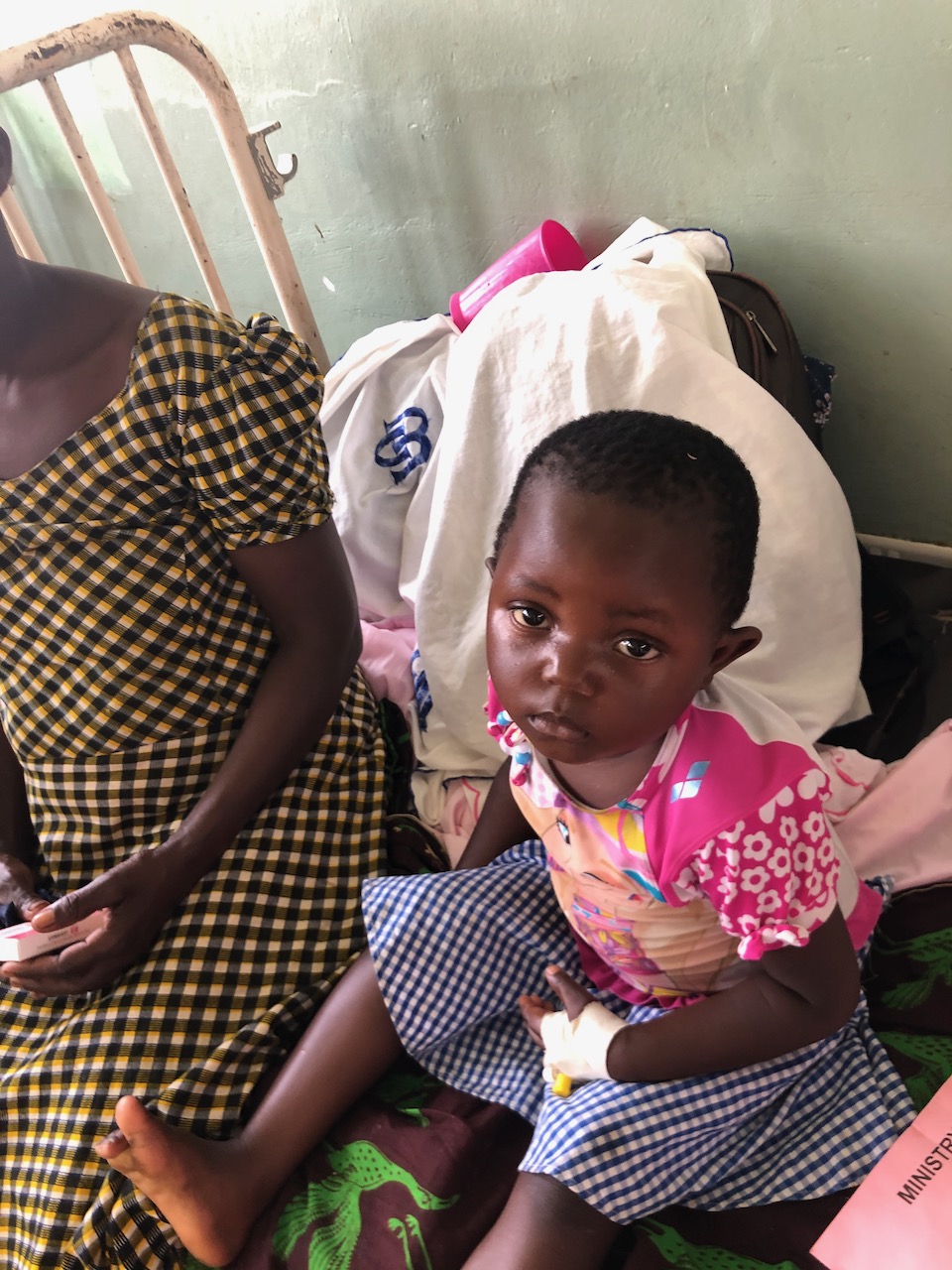
And timely, as cases of Covid-19 climb, as deaths continue. Working in a hospital is draining in the best of times. In rural Uganda, it is often an experience of reaching one's limits, stepping over too many patients lining halls and floors, finding IV's out and medicine stocks "finished", surgery delayed for lack of a pair of gloves, babies dying after hours because the power went out cutting the oxygen concentrator off. This week a child died in my hands as I was desperately resuscitating while the nurse ran looking for supplies, alternating breaths and compressions alone, with a mother screaming and writhing and a crowd of onlookers. Malaria, which is up 42% since 2018 due to the heavy rains, has taken a huge toll here. Africa loses twice as many people to malaria in a year as North America has to COVID-19. This week Scott cared for a mother pregnant with twins . . . who had lost FOUR CHILDREN in last December's flood, when they were simply swept away but the landslide of rocks and water. We shore up IV tubing for blood transfusions, or antibiotics for meningitis, or locally made food supplements for malnourished kids.  Wednesday I admitted the infant of the woman who died almost a month ago with post-CS bleeding and shock, from eclampsia. She was starving.

Baby M.O. expressing her hungry unhappiness. Pray for her grandmother who is trying to feed her.

This blog has been hard to write lately. I was sick, which turned out to be a minor URI but it took 9 days to get the negative COVID test back, and in the interim I kept entering the sea of viral goop with my N-95 mask and hand sanitiser to keep trying to minimize harm from all the above, which actually cost us some trust and misunderstanding. We planned and led a 3-day team retreat over Thanksgiving Weekend, as safely as possible with our "bubble" of 14 adults and 13 kids from Bundibugyo and Fort Portal. Our theme came from Zechariah, tied to Advent, which I'll write about another day. It was a needed time to connect with God and each other but also a major effort to pull off. December means end-of-year evaluations, budgets, contract renewals, school finals, bonuses, needs, asks, gifts, graduations, weddings, and funerals . . .all things that are important and additional to all the other work. We miss our kids. Our moms. It's been a lot.

So yesterday came as a gift really. Paradoxically, though we gathered to mourn, we actually came away strengthened and encouraged. Where your treasure is there your heart will be, and it is no small thing to be able to gather with people who walked through our darkest days with us, to share a joint grief, and to celebrate a joint view of how far we have come. Bundibugyo Hospital has risen from the bottom of district rankings to the top 20%; as has Christ School. Small seeds die, but grow. It really is true. A daughter of one of the other health workers remembered Scott coming to their home with food, when they were shunned and feared. Small, but bearing fruit for years. And even though we get tired of the constant sense of helpless inadequacy, angry at injustice and corruption . . . we are humbled and challenged by the example of the Bundibugyo Five who paid the ultimate price for serving others.

At our retreat, Mike preached on Sunday, and he talked about the metaphors of the vine and branches, of fruit, salt and light. Salt has stuck with me this year. Taste, yes, but as Mike said, also preservative. We are scattered, small grains in a lot of rot. And if we can slow the sorrow even a little, stop the decay even temporarily, that is enough of a calling. Sometimes presence goes a long way, in 2007 and 2020. 

A little fighter in the 575 gram weight class

More malaria


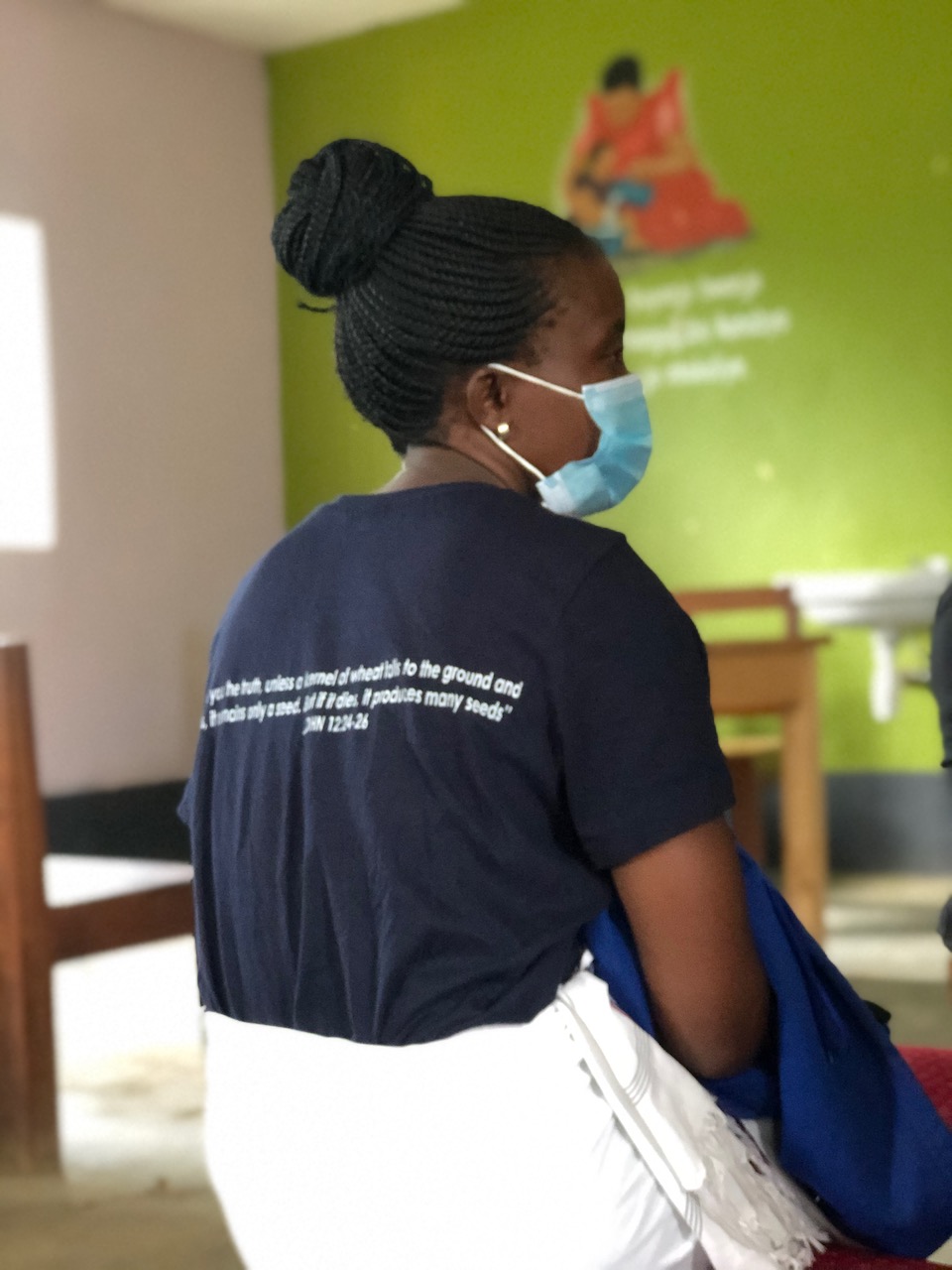
The verse Scott preached at Jonah's burial, on memorial shirts made by his family.

Addendum: at the same time I was posting this, our ED for Serge Bob Osborne wrote us an email reminding us of this article about Dr. Jonah back at the time, and sent this photo from Jonah's medical school graduation, with us and his wife Mellen.


Thursday, December 03, 2020

A cry of help for BundiNutrition

Guest post from Jessie Shickel . . . because it's been a full, hard, great, sad, normal, abnormal few weeks, more later, but today we want to focus on BundiNutrition. (Giving link here)


"The Father of all mercies and God of all comfort"

At the beginning of 2 Corinthians, Paul talks about sharing in our sufferings and in our comforts. Sadly as the coronavirus numbers peak, fall and peak again in America, the majority world is still suffering from the repercussions of this disease, specifically hunger. Paul continues in the first chapter to say that in our despair we are given the chance to rely on him alone, not ourselves, to deliver us. And that the church needs to keep praying. 

Right now, your financial gifts and prayers are so important. 

My husband and I returned from Uganda in June after 18 months in Bundibugyo working with the BundiNutrition program and Serge team. I saw time and time again as the nutrition team sat in the middle of despair. Typically with a mother on the bench in our assessment room with a child far too sick, and the team wondering all of the following "Why did she wait so long to bring him in?" "What is causing such terrible destruction in this child's tiny body?" "Do we have enough supplies to make it through the line of people waiting outside today?" Many days over the 18 months I spent working in Bundibugyo, I sat in despair, praying and knowing that if we make it through today, it was Christ alone that delivered us - not my own strength or wit or clinical skills. 

The resilience of the BundiNutrition staff is incredible, providing care in a setting that is overcrowded, understaffed, and under resourced. But the need for nutrition help in Bundibugyo is far greater than the ability of the staff to persevere and they can't do it alone. Not without Christ guiding them, not without your prayers interceding for them, and not without your financial blessings providing resources to carry on. 

Since March, Uganda has been rocked by the effects of COVID-19, just like many of your communities, businesses and schools closing and many people simply unable to feed themselves. The nutrition program has been a constant in Bundibugyo for years, meeting needs that are complex, rooted in social and cultural brokenness. We are so thankful for your heart towards caring for the least of these and a desire to see the gospel spread through word and deed ministries in far off places.

Would you consider giving?

Would you consider giving a year end gift to the BundiNutrition fund?

Do you have a family member who would be honored to have a donation given in their name?

A neighbor or a Bible study member who cares about feeding the hungry across all nations? 

Would you share this giving opportunity with them?


Would you pray?

- For stamina for the BundiNutrition team: All three Ugandan workers welcomed new babies to their families this year, please pray for health and energy! Dr. Jennifer is juggling team leader, area director, and Pediatric doctor roles so pray for her to stay healthy and hopeful on really hard days! And pray for Kacie is stretched between the nutrition program, labor & delivery where she teaches Helping Babies Breathe and guiding her own family in a new place!

- For the resources: The finances to purchase supplements for outpatients as well as the actual supply of supplements from the government to be adequate for inpatient needs. For the cocoa harvest happening this time of year to be lucrative and the money generated from that to feed many people! 

- For God to be glorified through this challenging work! 


In Christ,

Jessie Shickel on behalf of the BundiNutrition Team (Bwampu, Bahati, Clovice, Kacie, and Dr. Jennifer)


PS From Jennifer: we committed to our district to increase our giving for nutrition by 50% this year. AND WE DID IT. Plus some. We usually receive about $1500/month in donations; this year we spent $2700/month because we served so many families through the economic distress of this pandemic. This is exactly the right thing. But in doing so, we wiped out our reserve. God can refill it . . . thanks for any help.


Saturday, November 14, 2020

60 years + 60 hours--Grateful for Scott David Myhre


I opened a drawer today looking for something, and saw this, with 1990 written on the back. We lived in Chicago for residency, and Scott was wind-surfing on Lake Michigan. Fast forward another half of his life-so-far, and he's just turned 60 in Bundibugyo. 

Here he is with our team on his birthday (except for one family who was sick), plus a couple of kids who grew up with ours. . . having just spent the evening cooking us all pizza in an oven he built himself. Having made a special delicious slow-rise dough himself too, and a good bit of the toppings, including pesto from his garden. Not to mention built a lot of what you see in this picture, and mentored all these people, and fixed everything in a kilometer radius, including plumbing and electricity and motors and humans.

So the two photos, the first one showing his fun spirit of adventure and athletic capacity and love for the outdoors, the second showing his life of serving, pretty well sum it up. Everywhere we go in Bundibugyo, someone knows Scott and has a good story.

60 is kind of a big deal. Just living to 60 for someone who has been shot at in war, run for his life, been exposed to Ebola in more than one epidemic, climbed the three highest peaks in Africa in some dicey conditions with a touch of pulmonary oedema, survived an explosion or two, been in some car accidents on very dangerous roads, had to pull me out of an ocean current, camped with lions and elephants moving through, fought off hyenas, killed cobras, received threatening letters from rebels, received threatening letters from a couple of evil men, challenged tribalism and stood up to bullies, had malaria and a run-in with the flesh-eating strep, and just gotten all of us out of more danger than I can even remember . . . 60 is remarkable.

But what is even more remarkable is to have walked through all that with grace. Kacie on our team had the grand idea of gathering 60 letters from people for his 60th birthday. She ended up with way more than that. We have barely begun to read through the album, but God's timing could not be sweeter. After the intensity of bad maternal outcomes and loss, this letter album was a beautiful reminder of the richness of community that God has given us. I think Luke quoted from "It's a Wonderful Life", no man is a failure who has friends. It does boil down to loving God and your neighbour, and Scott embodies that. He's thoughtful and faithful, and the kind of person who has spent those years going out of his way to drive someone where they need to go, lend someone money, evaluate someone's injury, pay attention see what is needed and just quietly do it. Often at personal risk and cost. People have noticed, and it is gratifying and humbling for me to see this love poured back to him that he has poured out for others. He's not just tough, he's tender, and lots of people have been blessed.


But mostly, me. 40 years and 2 months ago, he pulled up in his car and offered me a ride to church. We've been friends 2/3 of his life now.  Hoping for more than 3/4.  I suppose if we made it this far, what's a little global pandemic? 

For a few years in the 2000's, Mark and Kristen Vibbert were managers of a high end safari tented camp in the Semiliki game reserve. They invited us to celebrate Scott's birthday and our half-anniversary as their guests. This year we decided to splurge and go back on our own (COVID discounts) and so last weekend we had two glorious nights away. This is a place where you can hear and see birds and read books and eat well and be at peace. 

Of course no Myhre adventure escapes the requisite "will we make it" moment; but in addition to all the above Scott can 4WD through some serious mud, and after a couple hours' delay we made it past a line of about 20 trucks stuck in both directions. 

Just so you know that not EVERY day is will-we-make-it, we had over 48 hours of luxurious rest.


Happy Birthday to the man who is sold out for justice, who fights for the poor, who shores us all up with his resolute can-do spirit and his unflappable belief, who engages with issues, who captures beauty in photographs and carpentry, who can drive through anything, climb anything, bike anyone into the ground, perform surgery and make dinner and preach. Wish we could have celebrated with friends and family from all the decades of his life, but thankful for the letters and for our team here.

Wednesday, November 11, 2020

Living the 11th hour in a troubled world: 11/11/2020, Pandemic day 236 in Uganda, bracing for cheer

 The 11th hour is upon us. 

This story is about this woman, and death, and faith. Keep reading.

Today's remembrance holiday commemorates the end of WW1 102 years ago. Poppies blooming between crosses, larks singing where guns once pounded, capture the hope that time and beauty heal the wounds of war. By pausing today, we acknowledge that war has taken a toll, that death and evil invade and distress, but also that sacrifice and love prevent their triumph. That's why we honour our veterans. 

In the USA today, we have our government casting doubt upon the legitimacy of our democratic process, even though ten lawsuits so far have been concluded with no evidence of fraud. The secretary of state implied that the incumbent president who lost the popular vote by 4-5 million votes and the electoral college by 279 to 214, with 45 votes still to be finalised in Arizona, Georgia, and NC, will continue into a second term. There were 139,855 new coronavirus cases yesterday in America and 1448 deaths, both exponentially increasing. Here in Uganda we have a steep rise as well, and our first confirmed COVID death from our own Bundibugyo hospital. As dire as all that sounds, I suspect 1918 was worse as the flu pandemic raged amidst the brutalities of WW1. Still, good emerged, but only after a lot of sorrow.

Today, my Bible reading included one of my all time favourite verses, one that pretty much sums up the history of now. 

In this world you will have trouble; but be of good cheer, I have overcome the world.

Two truths that do not blend easily together, a troubled world, and a cheerful confidence. Sorrow and hope. A world that keeps throwing punches, and a God who says it will all be OK.

It's been one of those weeks. Monday, as I was finishing staff Bible study looking at the covenant God made with Abraham (side note, but who would choose circumcision for a 99 year old man who was unable to make his wife pregnant? God stacks the odds against the outcome we pray for sometimes to make it so dramatic) . . . Dr. Isaiah came to find Scott. His sister-in-law was bleeding, after a difficult C-section, and there was no blood in the hospital. They began arranging to send her to Fort Portal for blood, but before they could load her into the ambulance, she died. Meanwhile Scott was pulled in to see another woman in labor because she came with an ultrasound diagnosing twins, which was quite believable since she was very large. He re-scanned, did not see twins, baby was OK, but labor was stalled, so planned to take her for a C-section too. Only there was: NO sterile instrument set (insert 3 hour delay), NO sterile gowns or drapes (do without). Once she was in theatre her Blood Pressure was 221/150--sky high-- not the ideal time to have gotten the first set of vitals. She was hyper-reflexic, heading into ecclampsia, so this was suddenly life and death. NO medications for the ecclampsia, or the hypertension. Anesthetist UNABLE to get the spinal so he just dosed her with ketamine until she was moaning less. I think you get the picture--an extremely non-ideal situation. If we wait for the ambulance to get her to Fort Portal, or to get back with blood, she's going to be dead. So Scott went ahead, a really really hard case due to all the missing things and her obesity. At the end, she just started bleeding even more (not surprising in ecclampsia, which messes with clotting), so he re-opened and tightened up and re-sutured. By now her BP was 70/40, pulse 120's.  The baby was great so after a quick resuscitation I had handed the little girl off the maternity nurses and stayed to keep praying, taking BP's, prompting more IV fluids, more oxygen, calling the returning ambulance whose driver pretended to be almost to Bundi but had actually not even started to return yet. Post-op we got her BP up a bit with the fluids, had her on oxygen, propped up her legs, waited and waited. Finally the blood arrived and it was nearly dark by the time we had it running in. She was opening eyes and moving, and we were relieved. As we went to bed, we got an encouraging report from the on-call doctor. And a half-hour later, she died. Two maternal deaths in one day. I'm not sure we had even had two this year prior to this, except for a woman with advanced AIDS. Babies and children die almost every day, but not mothers. We were all devastated. As I looked back over the weekend, I realised at least one child had died each day due to lack of blood supply. Extremely discouraging, particularly when our regional blood bank is projecting statistics to the country of functioning perfectly.  In the last couple of weeks, I've had to declare several children dead as they breathed their last in front of me, and pretty much every time I come to rounds I find someone missing. 


In this world you will have trouble.

Ten days ago, when we were in the capital to pick up Michaela, we witnessed a horrible accident. As we drove down a main city street, a matatu coming towards us hit a motorcycle taxi. Two women on the back of the boda fell off, one into the path of the matatu. We watched her body bounce on the pavement and then the matatu run over her, wheels crushing her abdomen and chest as it jolted on. The matatu driver sped away as we pulled off the road and ran to the body. We cleared her airway and held her neck in traction, she was still breathing but unconscious, with blood pouring out. A crowd quickly gathered and grabbed her from us and loaded her onto the back of a small truck, to rush to a hospital. I know she died. This is a country without 911, without accountability for wanton vehicular homicide, without emergency options.

In this world you will have trouble.


I think the accumulation of death this November is just too much. Too much blood, too much trauma, too much impotence to change. We're in a disaster-level rainy season, and there were more floods on Friday. We got a two-night weekend respite for Scott's birthday, but spent hours stuck in a line of mired trucks on the muddy road, and nearly didn't make it. We came back to a tormentuous crop of intensely itchy bug bites. Our team is grappling with the rising coronavirus, and we are wading through murk in trying to create liveable protocols with almost no testing or data. Today was supposed to be our final court appearance, when the judge would announce his decision about the attempt to grab back land we as a mission bought 20 years ago for Christ School gardens. The son of the couple who sold the land is a policeman with power, and decided to try and invalidate the sale 14 years after the fact. It has been in the courts for six years. This morning when we arrived in town, the judge said he needed more time to consider the case. Not a good sign. Our friend, neighbour, and former worker was walking home Saturday night after dark and got mixed up in a fight of some sort on the road, which a soldier decided to break up with bone-breaking force. Literally, he clubbed our very slight, fragile, hundred-pound, 50-something friend so hard he ended up with a broken arm. So that was another day, getting xrays and Scott putting on a cast. The main young doctor who has been working with us quit last week too. So every day is longer, and the days we devote to our other jobs as Area Directors and Team Leaders leave the hospital even less covered.

In this world we have serious trouble. Flood-level trouble from injustice, misinformation, greed, corruption, broken systems, crazy weather, just plain evil.

But, Jesus said on the night before he was killed, "be of good cheer, I have overcome the world." It didn't look like a bloody surgery on an important part of Abraham's body was going to give him an heir. It didn't look like a bloody execution on the cross was going to defeat evil once and for all. It doesn't look good right now that we lost two bleeding post-CS mothers this week, or multiple kids with malaria and anemia and seizures and infections. It doesn't look hopeful that an off-duty soldier can whale on a pedestrian with bone-breaking force, or that a judge can take more than six years to decide that after the proceeds of a land sale were used by a dad to put his son through college, that son can't claim to invalidate the sale. It doesn't look like we're on the evil-defeating side when our patients die, or when we are just kneeling on the asphalt holding a bloody anonymous woman. 


The 11th hour is decidedly where we live. There are poppies and larks at times, but those grow and sing amongst the graves. Jesus has conquered all evil, all broken systems, all bleeding and disaster, but we're still living in the last hours before we see that reality on earth as it is in Heaven. "Be of good cheer" is less a breezy greeting and more a bracing command that goes against the grain, that determines to look deeper than all we can see. 


Monday, November 02, 2020

The night before elections; what makes for our peace?

Luke 19: Now as he drew near, He saw the city and wept over it, saying, “If you had known, even you, especially in this your day, the things that make for your peace! But now they are hidden from your eyes.”


Today’s reading in my Bible-in-a-year plan, unrelated to US elections tomorrow, but appropriate. I can imagine Jesus in America, watching and weeping. The chapter prior he has been saying some pretty uncomfortable things, and I quote: “Shall not God avenge His own elect who cry out day and night to Him, though He bears long with them? I tell you that He will avenge them speedily.Who is crying out day and night in 2020? Let the little children come to Me, and do not forbid them; for of such is the Kingdom of God.What is the state of our children in 2020?Sell all that you have and distribute to the poor, and you will have treasure in heaven; and come, follow me.Is this what we hear preached to the self-justifying and satisfied top 10% of the world economically? It’s what Jesus said to a young man who had wealth, power, and a moral majority type of record. There is no one who has left house or parents or brothers or wife or children, for the sake of the kingdom of God, who shall not receive many times more in this present time, and in the age to come eternal life.A bitter acknowledgment that being together with family is not the ultimate metric of God’s will. Then Jesus reminds the disciples that he is going to Jerusalem to be scourged, mocked, spit upon, and killed, but on the third day he will rise. 

Overall, the things that make for peace seem paradoxically uncomfortable. Justice for the marginalised. Gentle welcoming of children, access and acceptance and love. Radical voluntary distribution of profits to the poor rather than all-holds-barred accumulation. Willingness to forgo our own families, even. Walking with Jesus into suffering. Risking everything because we know the cross was the pivot point of evil’s defeat. All of these show an acknowledgment that there is something of such high value that the pursuit of that reality ultimately changes all our metrics. 

(In fact, the rich-young-ruler who has money, power, and social embrace contrasts a few paragraphs later with the tax collector, who has money, power, and social opprobrium. Both encounter Jesus out of curiosity, restlessness, seeking. Both receive his attention, and engagement. But the tax collector, a figure of some ridiculousness climbing a tree, ends up grasping the message. He not only delights in Jesus’ banter, welcoming him to his home, he goes the extra step of announcing reparation plans. The crowd is scandalised, God is pleased.)

Tomorrow, and for the weeks and months and probably years to come, we as Americans are a country deeply divided. I think Jesus weeps over our churches as he did over the rich young ruler, deceived that power and money and superficial ten-commandment checklists were the ultimate measure of success. I think Jesus would be reaching out to both the law-abiding ruler and the law-breaking tax collector, whoever the equivalents are today, and finding places to demonstrate compassion. 2020 is already a year with mortality such as we have not seen since world wars. How will we rise? The way up is down, as always in the teaching of Jesus. Love, the kind that casts out fear. Realising we ARE those little children who are welcomed, accepted, seen, enough. Then taking that love out sacrificially to others in justice and generosity. 

Because no matter whom you vote for, it is pretty much guaranteed that people you love are listening to a completely different set of narratives. We all think ours matches the truth best, and it’s our job to struggle with that, to check sources, to observe, to not ignore the uncomfortable dissonant sayings and events. But even when we land on what we think fits Jesus’ values best, a huge percentage of people even in our close circles will decide differently. And the only way forward into 2021 is to keep working to address that gap without using shame or fear or coercion or hate. Jesus does not shame, name-call, punch, shoot, exclude. Jesus joins the conversation, the meals, with penetrating questions and a readiness to heal.

Let’s start with the simplest exercise in that kind of kindness: the COVID pandemic disproportionately affects people who are old, who are overweight, who are hypertensive, who are poor, who are minorities. So if you don’t fit into those categories, every time you put on a mask and wash your hands and limit your own freedom of movement and association, you do so to care for others. Simple as that.

Tomorrow and beyond, let us pray with Jesus for the things that make for peace, even as we walk with Jesus on the path of the cross. Every time we rest on the fact that we are loved and cared for by our Father in Heaven, and can therefore confidently consider the common good of our neighbours . . . well, that's a step towards peace.