rotating header

Wednesday, February 24, 2021

Love has the last word: a glimpse of glory in central Africa

"Heaven and earth, it seems, are different, radically different, but they are made for each other ... and when they finally come together that will be cause for rejoicing in the same way that a wedding is: a creational sign that God's project is going forward, that love and not hate have the last word in the universe; that fruitfulness and not sterility is God's will for creation." (NT Wright, Surprised by Hope)

There is a little kingdom on earth, in central Africa, bordering a fathomless lake and wrinkled with uncountable hills and shrouded in misty clouds, where heaven has at times felt impossibly distant. This country has known colonisation, injustice, slave raids, and genocide; has buried too many children and mothers giving birth, has raised too many men who felt powerless to protect their families. And yet, when many ran for their lives over the last waves of violence in the 70's, 80's, 90's . . they did not lose site of what could be.  Men who had watched their fathers murdered, or walked for days, or struggled to find their mothers and sisters; women who had carried mattresses and cooking pans and babies, regrouped in safer places. Some found themselves in Kenya in the year 2000 and audaciously founded their own Hope Africa University, which they transplanted a few years later back home to Bujumbura. They added a medical school and built a campus and found partners, including us. 

the team that could break away to say bye as we took our final journey to the airport
*NOTE* you will see masks with patients but not with team because they bubble in a low-prevalence country and we had 7 days of isolation and three negative tests to get to this point!

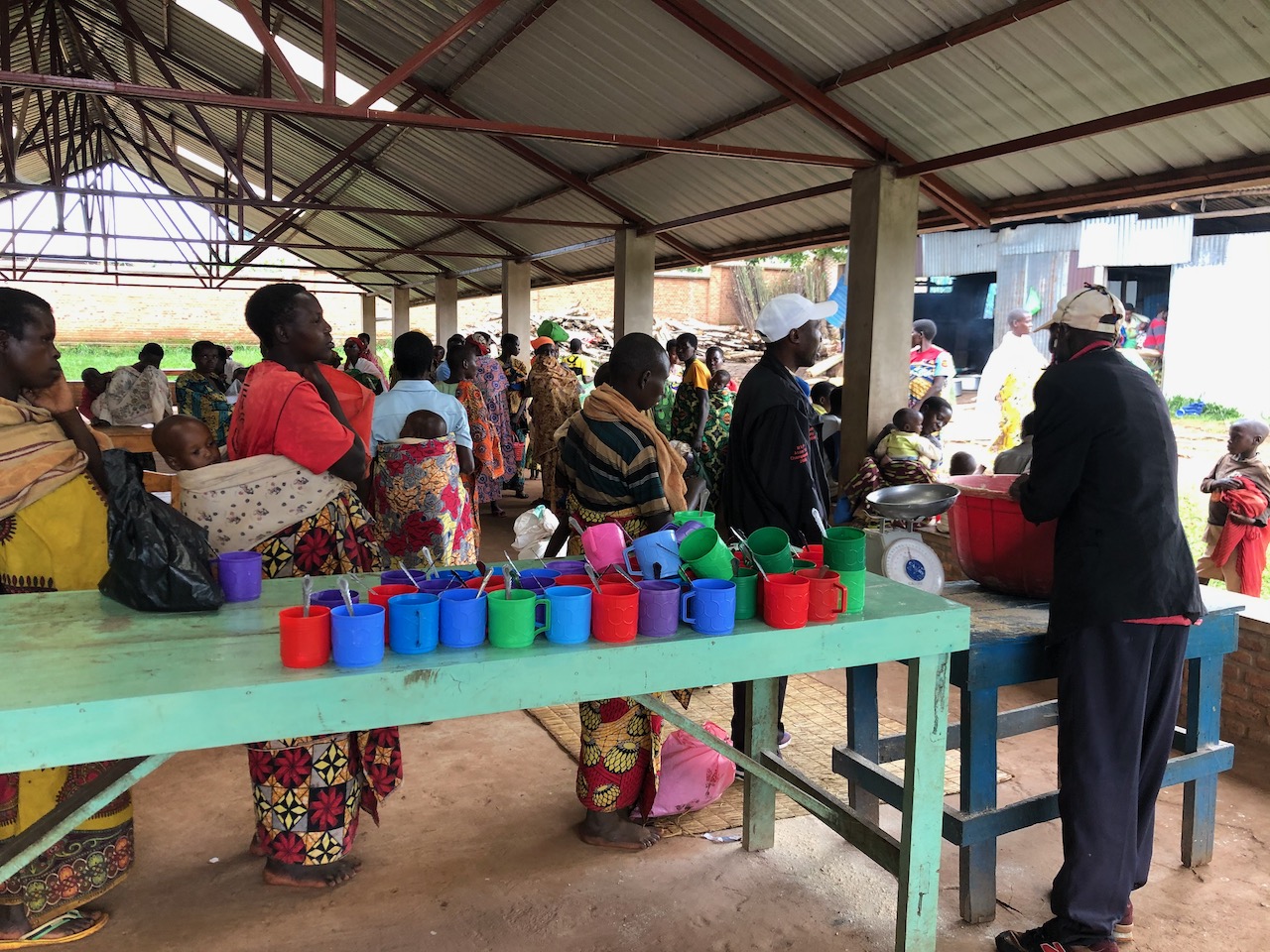
In 2010 a group of young doctors working in Kenya with Samaritan's Purse met visionary Burundians from the Free Methodist Church, and in 2011 we traveled there with three of them to lay the foundations for a partnership. Bishop Eli had prayed for God to send a team of 20 doctors (to a country with one of the lowest doctor-to-population ratios on earth) to train up a new generation. That reminds us that the whole presence of Serge in Burundi began with the prayers of a Burundian, and not with our programs and plans. The team joined Serge, went to French language school, and landed in Burundi in 2013. Now 7 1/2 years later, what was a tiny provincial hospital in a rural village has 13 specialists, and 20 other doctors, 350 beds including two massive new multi-story wards, a solar powered electricity plant, oxygen generation, a feeding program that serves about 400 kids weekly, plus a 50% increase in patient visits, hospitalisations, surgeries. They have trained 255 new doctors who have spread out into every part of Burundi, started a rotating 12 month internship, sponsored numerous graduates in residencies (masters), and laid the preparations for a new surgery and family medicine residency programs. I don't even know how many blind have received sight, or how many lame now walk, but the visible evidence that Jesus pointed to of God's Kingdom can be seen. The stories sound glorious, because many of them are, and seeing this over less than a decade has been miraculous.



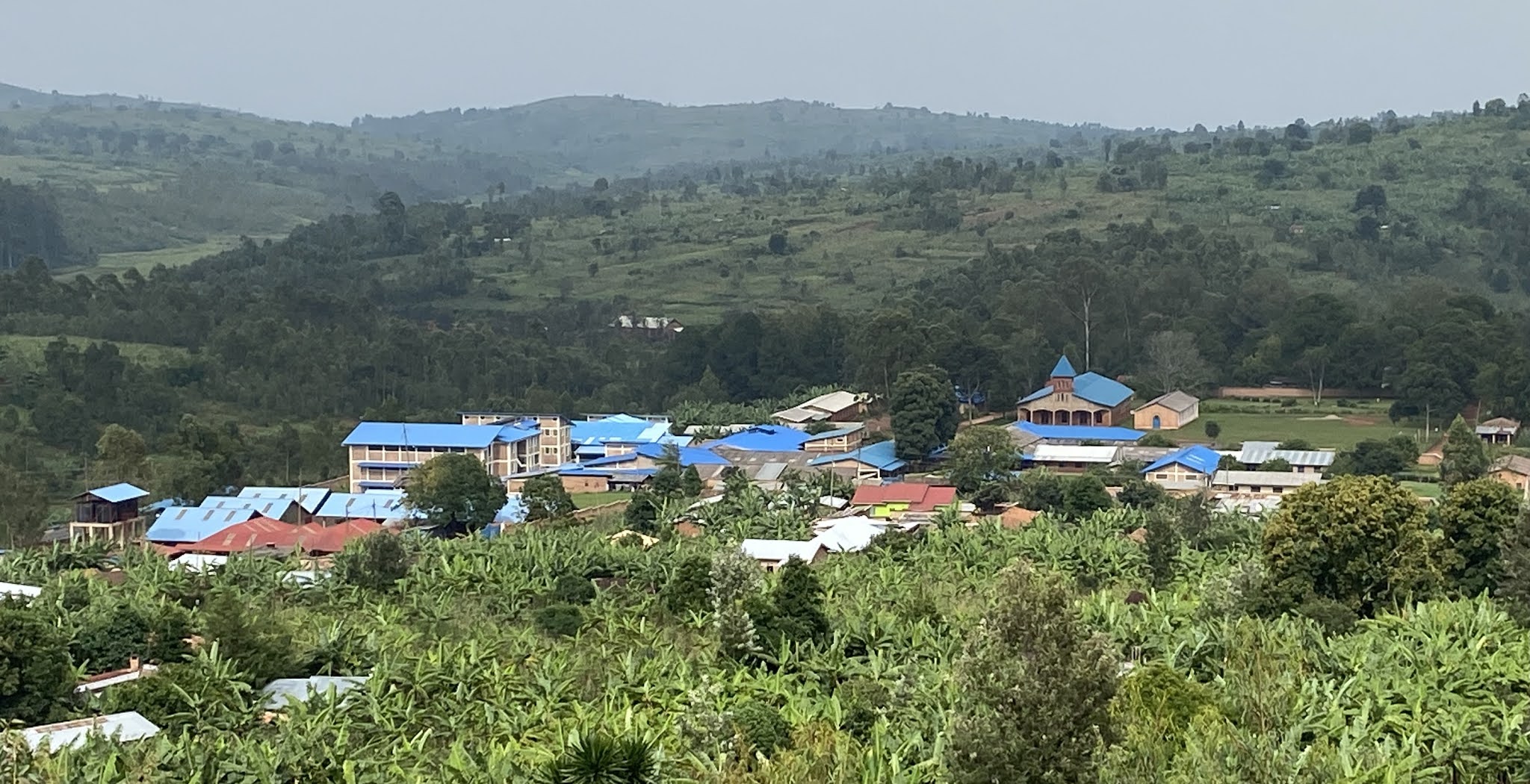


view of the hospital from a climb up the hill, the medical director says the buildings in Kibuye sprout like mushrooms

But just ask Jesus, miracles of resurrection often pass through crucifying loss. All that is described above sounds like a shining glory in the clouds. But most of the clouds in Burundi are damp and obscure. 

We went to Burundi for the last two weeks to bear witness to their progress but also their pain, to listen, pray, ask questions, repent, acknowledge shortcomings, point to truth. This is the part of our job, the Area Director piece, that has suffered the most in COVID. Our partners planned a two-day summit to review and discuss our partnership. It's not like we thought to ourselves, mid-February just after re-closure of land borders and re-institution of a strict mandatory seven day quarantine (in a pleasant guest house but under armed guard keeping us in our room) would be a great time to travel. But 3 COVID tests later (pre-departure, arrival, and end-quarantine) we were released to begin the second week of visits and meetings.


The most important event was the partner summit. Six Burundian leaders and six of us from Serge. Though multi-language cross-cultural communication is ALWAYS exhausting, we emerged from those meetings with a greater empathy for the many ways this country has suffered and a rare opportunity to humbly repent for our part in the global injustice. We affirmed our common vision for medical training, patient care for the poor in Burundi, DRC, and Tanzania, all in the name of Jesus. We rejoiced in the projects completed and stated again the priorities still to be realised. We tried to clarify our own Serge structures and funding for transparency, and to remind all that we are guests serving a local group and vision. We were very blessed to have the meetings close with the chair of the Hope Africa University board stating his approval and commitment in clear terms.

Maybe the most important event . . . but maybe not. Also crucial was just the opportunity to pray and talk with many of our team. We know that 2020 was rough. A year ago, as we were live-streaming Dr. Travis's funeral, thieves violently attacked the Watts family in Kibuye. Though all of the victims survived, the physical and emotional scars remain, and it was also a privilege to take part in a prayer memorial service and just spend time with this family. And for others, the loss of needed arriving help due to COVID, loss of travel for conferences and vacations, loss of hoped for progress, have taken a heavy toll. We feel it too. The leaders are amazingly resilient, hard-working, insightful people whom we love, so getting to be face to face as we supervise instead of calls and zoom was also a treat. So we are glad we could visit and try to encourage.

perks of exit COVID test, see Bujumbura in background, evening with Watts

Our Team Leaders the McLaughlins, good friends and inspiring colleagues. 

Highlight: reading books to the Harling kids

The Jack Shack. He built the pizza oven and recreation space when he was an intern.

Kibuye Hope Academy classroom

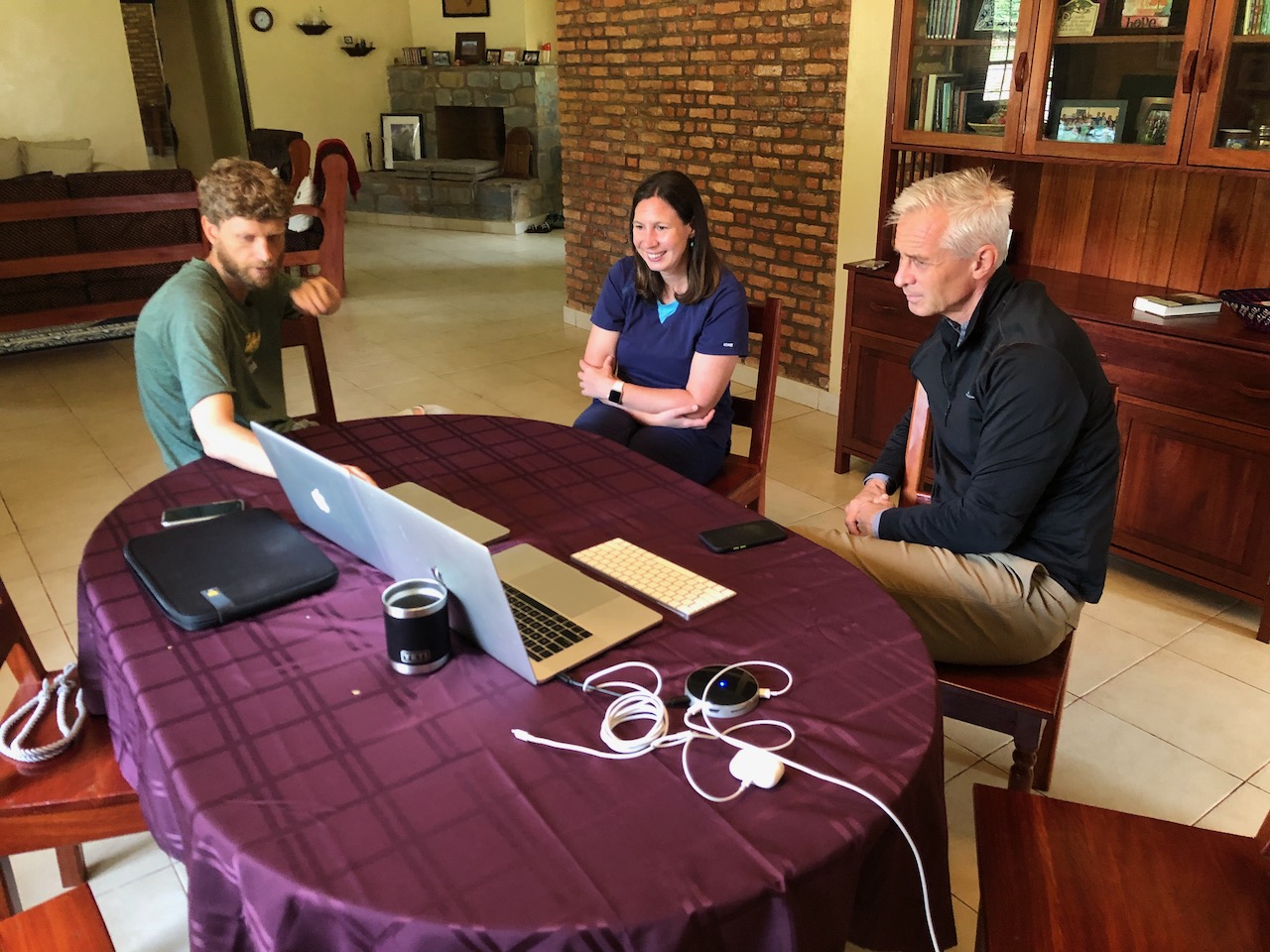
Strategizing on presentations with Eric and Alyssa

Yes, the Kingdom comes. There is a feast where we will dance with the survivors of genocide, and those who didn't survive, in a New Heavens and New Earth. Most days that promise feels quite dim. The glimpses are blurry and fleeting. And yet, two weeks in Burundi gives us hope that the final fulfilment of all the resurrection set in motion will indeed be glorious.

This malnourished girl with Down Syndrome is seeing into the cloud more clearly than we are.

A few more bonus shots . . . . 


We quarantined in a suite/efficiency with a patio, and this was our favourite view: the Crested Crane pair that came to visit daily.

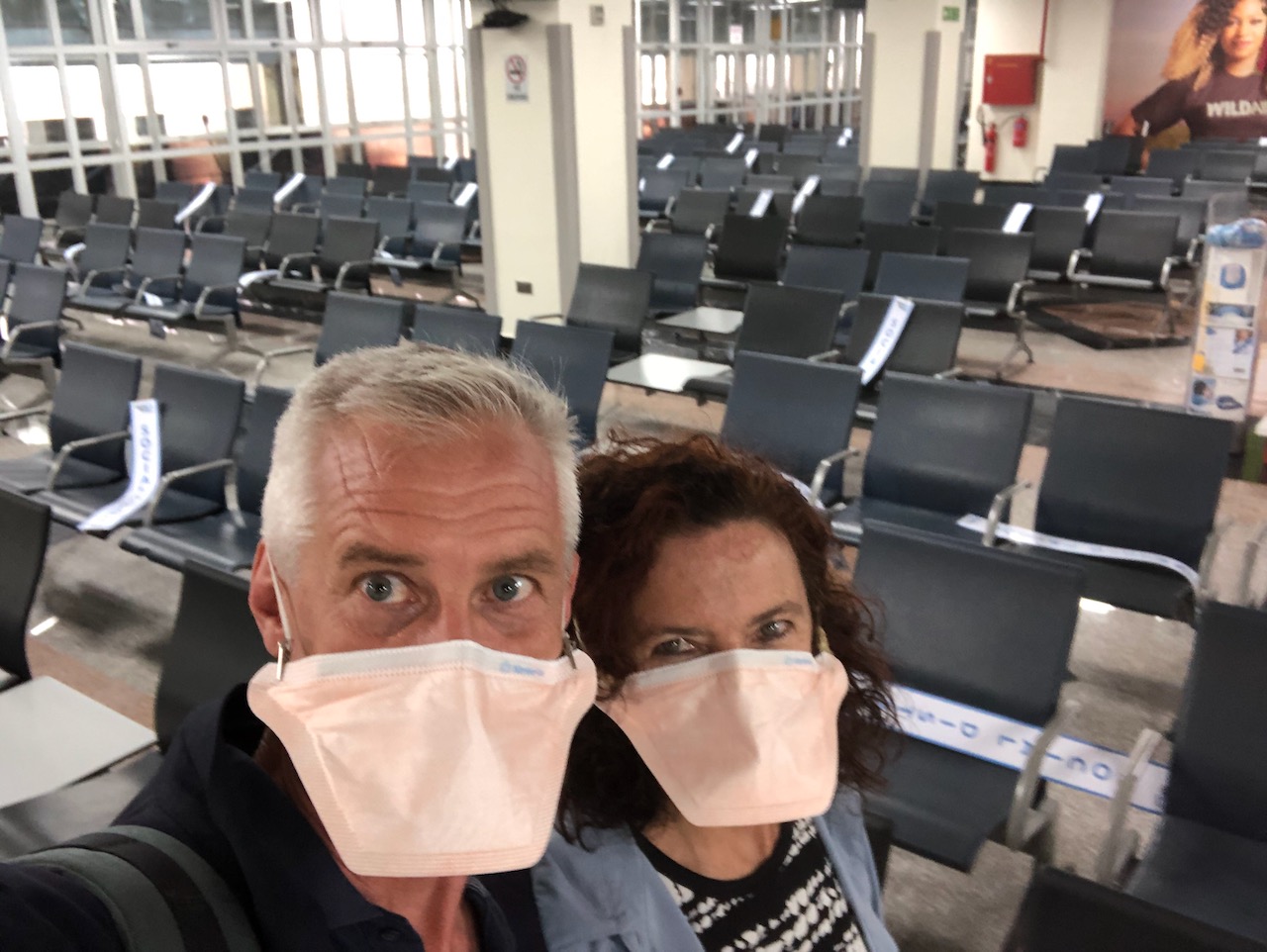
empty airport at departure, only four people flew into Uganda (us +2)


COVID test 3 out of 4. Maybe this is why the flights are sparse.

Looking as spiffy as possible for our meeting


Thankful the billboard behind us was true: Safe Travel. Back in Uganda yesterday.


Sunday, February 14, 2021

Resurrection, witness, democracy, and hope

No doubt you have wondered, why didn't Jesus appear post-resurrection in more indisputable flash-bang forms that would have left less room for doubt? Our team is reading Surprised by Hope, and in discussing the historicity of the resurrection testimonies, the author points out that the disciples did NOT expect to see Jesus' bodily resurrection from the dead, it was not even in their universe of imagination. The accounts are so similar, with such odd details (like the women as witnesses, or the combination of both eating fish and appearing through locked doors) that they carry a ring of truth. He also, however, mentions the human capacity to ignore evidence counter to what we want to believe, becoming ever more strident in our claims. This week we can surely see that even if all the first century Palestine events had been recorded on video and  presented in the highest court of the land, even if more than half the people agreed that what they saw and experienced was real, a vocal minority would still refuse to engage with the evidence if it threatened their core world view. 

Because knowing is a very complex process. 

If the secret ballot (AGAINST censuring Rep. Cheney by a massive margin) and the public ballot (only a small handful going against the party line) differ this much, then there is more than rational weighing of evidence on the line. There is fear, there is calculation, there is anticipation of consequences and self-preservation or promotion. 

In 1947, Winston Churchill pithily said: ‘Many forms of Government have been tried, and will be tried in this world of sin and woe. No one pretends that democracy is perfect or all-wise. Indeed it has been said that democracy is the worst form of Government except for all those other forms that have been tried from time to time.…’

And there we have it. 

Democracy is only as great as the integrity of the people exercising it. What is happening now in America is the very reason that Africa has been skeptical of democracy. As long as tribalism seethes below our surfaces, fear of others, a scarcity mentality, the suspicion that we are under threat from those who are different and there isn't enough for all, these fears work against the basic function of democracy which assumes that the best options will eventual win the most votes.  We watched the election, we read the news, we paid attention to the results, the speakers, the newspapers, the court cases, the attorney generals, the challenges. Whomever you wanted to win or lose, the system worked and there was a winner by both electoral college and popular majority. We were watching CNN on Jan 6 in real time as the riot spectacle unfolded, listening to the real time "a woman has been shot" distress. When a mob gathers to impose their will, democracy is threatened. And when our senators try to play both sides, pandering to the mob and yet trying to appear sensible, hoping to keep their voters even at the cost of their consciences, it is depressing to watch.

Democracy requires changing hearts and minds of individuals in order to bring about a more just society, a more enabling and hopeful atmosphere. Trying to short-cut that with violence will never bring a lasting good result. 

Which brings us back to belief in the resurrection. A hammer of force is not God's style. Jesus appeared to handfuls, dozens, hundreds, who were scattered like salt and light into the world. Very grass-roots. For the Kingdom to come on earth as it is in Heaven, we pray, we work. We argue in court or work night shifts in the hospital or till the earth; we write books and preach sermons. It is slow work, but lasting work. 

If your January 6th sorrow has not been improved by the February 13 vote, here is a quote to end with:

And this is the point where believing in the resurrection of Jesus suddenly ceases to be a matter of inquiring about an odd event in the first century and becomes a matter of rediscovering hope in the twenty-first century. Hope is what you get when you suddenly realise that a different worldview is possible, a worldview in which the rich, the powerful, and the unscrupulous do not after all have the last word. The same worldview shift that is demanded by the resurrection of Jesus is the shift that will enable us to transform the world.  (Surprised by Hope, NT Wright)


Friday, February 12, 2021

In which we find ourselves only meters from Lake Tanganyika, in the capital of Burundi, in strict quarantine

 The Christmas letter sent Dec 1 by a mailing service in the USA seems to be arriving this week, as we have heard from a few readers. Hooray. Meanwhile for the first time in over a year we entered an AIRPORT and FLEW to another country. Which was surreal. 

But in this case, about as safe as it gets, given the fact that we are in the vaccine-less continent.


departing Bundi, looking north at the corners towards Lake Albert

To rewind a bit, we have had no intention of pushing the COVID safety boundaries (MOSSY is our favourite accronym, as it sounds like a very much not-rolling stone, we quietly stay where we fell and gather moss. Masked, Outdoors, Sanitised, Socially Spaced, and You-centered.  . . . we go about our days wearing our facial coverings, staying at two-arms length in sunshine and breeze, thinking about protecting others from our exposures in the hospital, slathering on the hand sanitiser.) Unlike most years, we pretty much stayed in Bundibugyo, with a couple of long-weekends after the strictest lock-down lifted, to camp or get groceries. I think we were present for every Thursday team meeting all year, but may have forgotten a miss. But over the past few weeks it became apparent that our partners in Burundi were not going to cancel a summit they were planning with us, and our team there actually wanted us to come, and we pondered the risks and believed it was the right thing to do.


looking perky at 2 am . . . welcome to Uganda!

Ann with Grayson and Laura, as we join for orientation meetings

So last Saturday, we drove to Kampala in time to meet our two new colleagues arriving in Entebbe. Laura is a teacher headed to Litein, Kenya for two years, but spending her first 5 months in Bundibugyo to fill a gap we will have and to gain some variety of experience while her eventual team leaders wrap up a home assignment. Grayson wanted to come for an 18 month apprenticeship but  . . COVID . . and we are happy to welcome him for three months instead. Ann is the Apprentice and Internship leader, so we joined her orientation for the first couple of days as they began a 7-day period of caution in Entebbe and Kampala before traveling to Bundibugyo tomorrow (they both tested negative again, so good to go!). As we enjoyed MOSSY meetings and meals talking about culture and team life . . . we also popped up to Kampala to sort out our own travel.

Long story short, the Burundian embassy staff were amazing in processing all our visa work virtually the week prior, but never mentioned the little detail that they had moved their physical embassy in Kampala recently. So that final day of getting actual approval stamped in our passports turned out to be a treasure-hunt of a challenge. In spite of wrong advice, Google-map fail, wrong addresses on the web, no one answering phones . . .  good old footwork and asking enough gate guards and boda drivers finally led us to the new site.  Then we chalked up another life lesson: the good deal they offered on visa costs was indeed too good to be true, somehow they seemed to have categorised us as Ugandan not American, so another trip to the bank to pay the balance and at last we were legal. Then it was just a matter of getting negative COVID tests processed by the Uganda Viral Research Institute, which came back at 10 pm Monday, allowing us to head to the airport by 6 am Tuesday.

the treasure hunt hiking the hills of Kampala

perks of Uganda: mobile testing

The airport was a ghost town. We were two of the four total passengers on our flight. Good service and quite safe, we landed in Bujumbura. We could really use a few months in France at some point to booster-dose my now 40-year-expired French class, but we made it through a 10-step immigration and COVID-testing process once again in the airport, and were bused with our two Burundian co-fliers to a quarantine hotel we had booked ahead of time. New rules as of a few weeks ago due to the spread of mutant viral variants: Burundi closed land and water borders and requires all arriving air passengers to sit 7 days in a hotel room and be re-tested negative before release. 

exit loung, Entebbe Airport

final step: arrival COVID tests in tents outside the airport in Bujumbura

As jails go, this one is very pleasant. We are not supposed to step outside, but we do have a little patio area with a yard of palm trees in front, a glimpse of the lake across a highway, and two very acclimated spectacularly beautiful Crested Cranes that preen and peck and are fond of toast fragments. Our room is simple but spacious, more of a suite, with a couch area, hot pot, dorm fridge, electricity and a solidly functional bathroom, and small AIR CONDITIONED bedroom. Three days have gone by quickly, and here we are smack at the midpoint in day 4. 

current view from my computer

when the mosquitoes get too intense, moving inside to work

And as it turns out, subtracting hospital work and leading our team-on-the-ground does open up some space, but it does NOT leave us bored or restless. In fact we've had non-stop work the last couple days with meetings, phone calls, email, discussion, planning. I guess we let some work accumulate knowing we'd have this stretch of Area Director office time. Frankly I'm glad for the space of this week. So far have read two novels and inching my way through Four Hundred Souls. We do jumping jacks and pushups on the patio, and order delicious grilled fish and crispy Belgian fries for dinner. Sleeping probably 1-2 hours longer than normal every night. No complaints. 

If all goes well, we will get a third negative COVID test on Sunday (day 6) and be released Monday (day 7) . . . but of course that could all get pushed back a day, or more, or our test could be positive (hard to see how unless Crested Cranes are transmitters). That gives us a few days with our Kibuye team, then two days of meetings about our partnership here with the leaders of Hope Africa University.

Prayers we would be filled with the Spirit as we get this opportunity to see a team face-to-face, and build relationship with our partners. After a lock-down year of COVID, we know this is a huge privilege. 

Tuesday, February 02, 2021

Consolation arriving in small packages

 Today is 40 days from Christmas Eve, so some historical Church traditions celebrate this as the day the infant Jesus entered the Temple. So many layers to that, as the Temple was the absolute centre of God's presence on earth, the geography of what was lost in the Garden, the glory and pride of the nation. Entering the Temple compound may have appeared to be a duty to sacrifice pigeons, poor people hedging their bets in a cruel world (that was about to turn genocidal). Or like pious pilgrims grateful for the not-to-be-taken-for-granted healthy delivery, like here in Uganda where new mothers are greeted with webale kwejuna, thanks for surviving, for helping yourself through that danger. Or maybe Mary was glad to finally get out of isolation (can we all hear the amens to that), having served the post-delivery 40 day purification time, ready to get back into the crowd and see friends. As always, the story can have multiple strata of colour and texture. But . . . 

Father Georges Saget


Only two elderly people recognised the full picture in all its irony: God's presence in the baby outshone God's presence in the Temple. Simeon lifted that small swaddled body, fragile, earthy, maybe damp with his mother's sweat from the climb up to the plaza, or damp with dribbled milk. As the multitudes gaped at the gold fixtures, the high walls, the ornate altars .. . . he recognised in the very ordinary body of this baby that a light had come that would explode out to the world. Perhaps the only other person who noticed was a woman my mom's age, Anna, who saw the baby, the parents, Simeon, and redemption. An old man, an old woman, a baby, and a couple displaced from the countryside trying to do the right thing. All around them the swirling crowd, unaware.

google image, from El Salvador, no artist credited


A far cry from Malachi 3: who can endure the day of His coming? Who can stand when he appears? A refiner's fire and a launderer's soap, a force, a terror, holiness and change and judgment melting away evil.  The prophecies prepared them for war. For a conquering hero to clash to the Temple with fury and determination. The reality arrived with a whimper, carried, wordless, powerless for now.


The NKJV bible uses the world "consolation" for what Simeon waited for. The actual word is paraklesis, a close companion comforting and encouraging alongside, an exhortation, urging, based on legal evidence that all shall be well. It sounds like the word for the Holy Spirit in John 14, an advocate, a lawyer, a helper. They were looking for a King who ruled by force; God sent a human who quietly appeared alongside us, taking our perspective, our case. For us. This is not without cost, for sure. Even then Simeon mentions the soul piercing grief Mary will experience, the no-neutral-ground tumult that will ensue. 


Thinking a lot about the kind of salvation we all wish for. So much of our politics has been about power. Who can stand when he appears . . . sounds good if we think we'll be the ones standing, and we assume those who disagree will be the ones scrubbed to righteousness. February is not just the Temple story, it is the beginning of Black History Month.  Jesus came back to that Temple as an adult and threw some tables. We need justice, and there are occasions when those enslaved need an army to bring it. Justice brings the space for real change to occur, and that is where we realise that the quiet along-side comfort of a friend who sees truth and goodness in us, who encourages the right choices, who persuades the better angels of our nature to rise, brings actual change. As satisfying as that other Temple-thrashing was, it did not conquer evil and death. Only the cross, the baby lifted in an old man's arms becoming the naked beaten body lifted on the cross, did that. The soul pierced, the body pierced, did that. 


Our world needs deep consolation in 2021, and we are certainly looking for it. Let us be like Simeon and Anna, let us recognise the power of powerlessness, the presence of the Spirit in hidden breaths. 


Sunday, January 31, 2021

Layers of story, layers of sorrow, layers of grace

 Layers on Layers.

Makoto Fujimura, Images of Grace


This. has. been. a. week.


What would you think of a high school girl who comes back to boarding school pregnant? It's sad and complicated for her life, for sure. What if she was an orphan who had received generous aid? Feels frustrating or irresponsible. What if this is a culture where girls have almost zero access to resources without using their bodies to get money, what if even marriage was basically that arrangement? What if the money was to help a sister? What if the girl had some mental health issues from a prior assault? What if her mother had the same life pattern? Does that change the picture? What if you advocate to keep her in school, but the staff and culture point out serious ways this could be seen as tribal favouritism or as condoning behaviour? What if you find out that though some girls who drop out of school have their baby and return, most get abortions and change to another school? What if it took hours of discussion, and then more hours of accompanying her to her home, so that you can't just make a clinical yes/no decision, but have to see the reality of a disabled sibling and a dysfunctional environment?


What would you do to help missionaries who are hitting the proverbial wall? 2020 was a bear, we all know. We've been living on the edge, bracing for plague, staring down the unknown. We've had all our visitors canceled, all our trips out to retreats or fellowship eliminated. Colleagues left in a little wave as the lockdowns began, on limited evacuation flights, without any compensatory return. The company-wide-conference for 2020 got pushed to 2021 then this month to 2022. Somehow as a collective group left behind, we've all held on through Christmas, through the inauguration and riots, through local politics and elections, and in January the toll is being felt. What would you say if in the same week two key families decided to either leave or significantly step down their work, another was looking for a new field, another was retiring, and two colleagues from other organisations were in mental health crises? Of course you would hope to have compassion. Absolutely you would empathise with the broken systems that have worn them down and out, with their frustrations with our own inadequacies as leaders, with the many complex background effects of their own background challenges behind the veil, losses and sicknesses and struggles. But the cumulative weight of people's dissatisfaction does wear on all.


What would you say as you are leaving the ward, and stop to greet a patient in whom you diagnosed TB as the underlying cause of the baby's severe malnutrition, only to find out that three days later the child still has not received her medicine? Maybe you initially blame the nurses, but they tell you they have sent her to TB clinic two days in a row. Then you think maybe the patient's mother is dodging, but she shows you the very bench where she sat waiting for treatment, the very office she entered, and says she was rejected for care. What if the clinic staff tells you that this is a chronic disease that requires 6 months of compliance, so they find it essential to only start people with a basic grasp of the treatment plan? Should the life of the child be forfeit to the low capacity of the mother or the sense of both the ward and the clinic feeling overwhelmed? What if you found a mother with impending ecclampsia and the treatments that you initiated never were given, the people you talked to never managed to help, you try again, then four days into the course the baby is finally delivered, dead? What if all but one of the oxygen concentrators in the hospital are broken? 


All of this is real, all of this is us, all of this is this week. These are nuanced, layered, complex stories. There is no clear villain, no clear hero, no clear path towards redemption.  Teacher Desmond preached this morning on the parable of the seeds, and passionately warned the students of the roots they need, the dangers they will face, the essential ground of truth that must be their foundation. The world, the flesh, and the devil, that old Puritan formulation, fits well into that parable. There are extremely broken societal systems that choke out good. There are personal choices to choose short-cuts of sin, that wither in adversity. There are supernatural forces of evil at work that snatch the word truth right out of our lives.  In all these stories, for all these students, the reality is strata upon strata of family or culture, of laziness or greed, of curses and fears. Let the one who is innocent throw the first stone. We are all stuck in systems, we are all sinners, we are all suffering attacks. 

Sower at sunset, Van Gogh


Several Serge friends mentioned attending a webinar with Makoto Fujimura.  I had read his book Silence and Beauty a few years ago, and found it to be a profound text about suffering. So the chatter about the webinar and his new book Art and Faith led me to his web site. There I watched a short video about his technique called "Nihonga: Slow Art."  He paints in layers, dozens, hundreds. Each is created by hand-pestled pigments of minerals, earth, stone, pulverised. With out destruction there is no creation, he says. He takes years to build up the layers to show the patterns, colours, light. 


This idea deeply encouraged me. One layer at a time, and sometimes our stories are hard. A story of corruption. Of incompetence. Of pain. Another of a choice, a decision to sacrifice, to love. Another of a birth, a connection. Another of a death. Layer after layer. Only with time and distance do we get to step back and see the pattern, see the beauty, see the creative intent. 


Praying to view each person's life this way. Some layers are messy. Some are sparkling. Praying to have the patience to see God's bigger story emerging from the pigments ground out of our earth, our engagement here. 

A little sparkle this week: Annabel recovered from pneumonia

And Desmond preaching the truth that sets us free

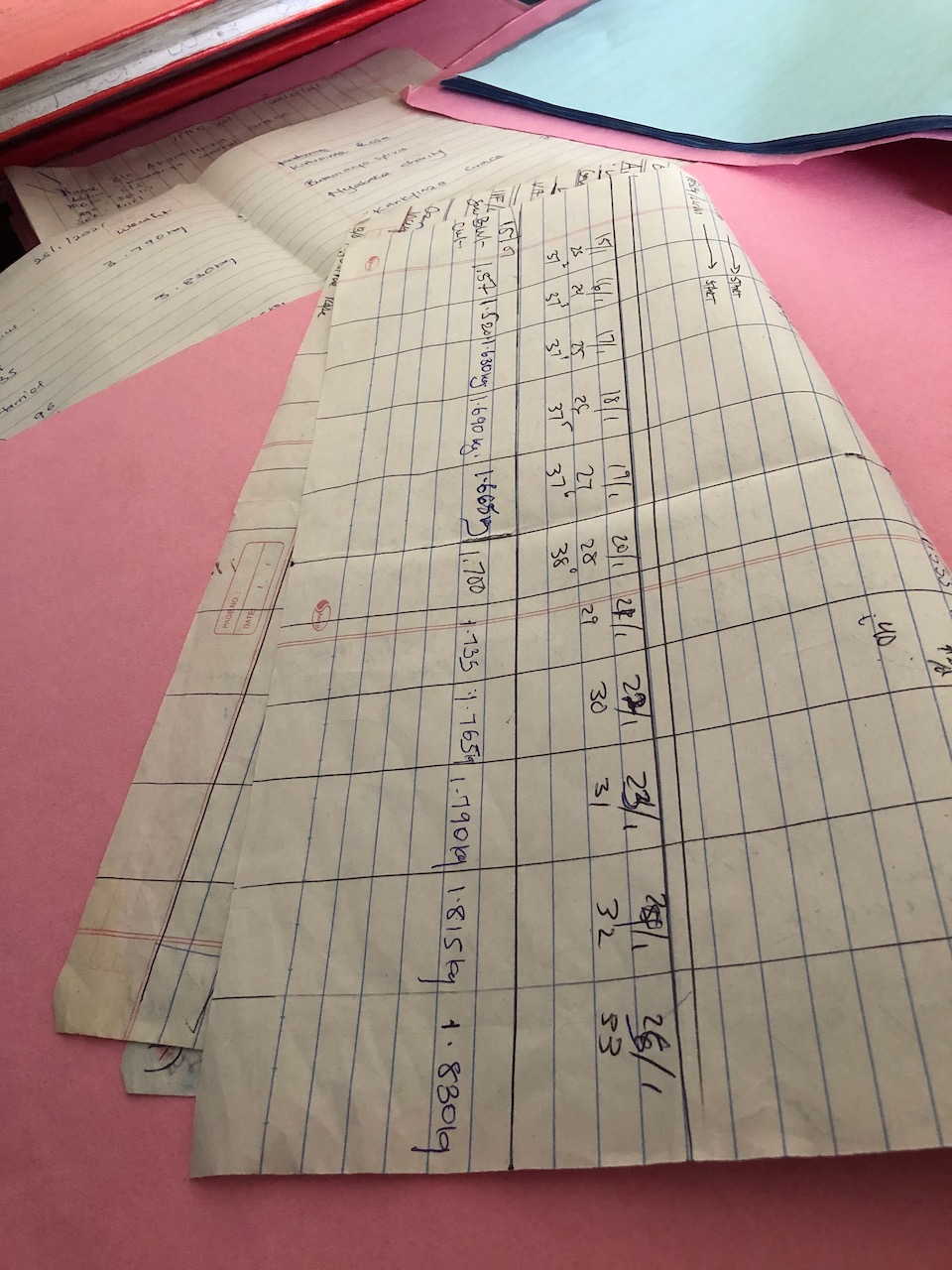
The march towards the magic 1.8 kg for discharge

From the Uganda news: this gets our friends and partners discouraged too. But honestly it is not the fact that politicians take bribes that riles people, it is the lack of fairness. As long as the money is seen to be benefitting your people, you're OK. It's when the money doesn't distribute "fairly" that people get annoyed.

The little beads of sweat after days of malaria treatment clued us to look for TB. On day three of trying, she did finally get her meds and went home. 4 kg is less than ten pounds, she's over a year old. 

Scott is part doctor, part construction supervisor. Here we inspect the new cement mixer. Next step: floors and plastered walls for the new Chapel.

Sometimes the layers align. This mom had an emergency preterm C-section when Scott noticed a high fetal heart rate on ultrasound, and by the time we got her to the theatre the baby was born limp and nearly lifeless. But after resuscitation and a month in the NICU she went home with a healthy infant . . . encouraging since she had lost the two previous babies. 


Another hidden layer for us this week: our little dog Nyota, age 4 1/2, nearly died. For days she was listless, not moving, infested with parasites in the skin, not eating. Thankful for this vet, injections of ivermectin and antibiotics, Scott's wound cleaning, prayer. She's rebounding now.

Our new address.

Staff celebrating a thank-you cake for support with a young doctor's wedding.


Sunday, January 24, 2021

Catching up with January: a little journal of isolation, election results in two countries, and hope for 2021

FRIDAY 15 January

The story of 2020 was one of constriction, isolation, a space socially created around each of us for survival. Enter January, 2021, and vaccines and hope and . . . . elections. America imploded with a mob taking the 2nd amendment right to bear arms to its logically unintended extreme: if we don’t like the government other people voted for, if we feel it is illegitimate, then we are revolutionary heroes for storming the Capitol. And just as we were watching new depths of self-serving justification and hearing speeches about accountability . . . . Uganda went full lock-down mode.


Because Thursday, 14 January, we had our own elections. In our case, a handful of opposition candidates are challenging the ruling National Resistance Movement. We have a 35-year incumbent whose vision for a thriving economy and self-determination now feels to a generation born long after Amin and the bush wars as if he is just holding onto power for power’s sake. Perhaps after watching even America fail at running a credible election, our president here in Uganda simply put up a total firewall. On Wednesday we noticed slowing of the internet, and all our friends said, just use a VPN. We do a lot of patient care communication by What’s App. By evening we were cut off completely. No internet-based anything: no loading pages, looking up references, sending emails. No imessage, what’s app, facetime, Facebook messenger. No news. 


Thursday, the election day, was orderly in our district. We did hear of someone accused of preparing to stuff ballots, but the military came to his house, he let them in, they searched and confirmed it was all a big rumour, and the election went on. Our community centre across the street is a polling station, and we saw people lining up dutifully all day. A friend told me she stood in the rain for 4 hours for her turn. There were temperature checks, hand washing stations, masks required, and devices loaded with all the voter data to check ID cards and photos against the database. There were clearly visible ballot boxes. It all seemed very organised. 


At first the lack of internet was just annoying and left us a bit incredulous. By the 24 hour mark I bought airtime to use straight cellular phone time to make voice calls to our moms and the couple of kids we could reach, saying we are fine but you won’t hear from us for a while. We aren’t receiving your messages or emails and don’t feel bad when we don’t respond. Now Friday at the 48 hour mark I am calling my mom in NC to hear what AP and Reuters are saying about the Uganda election: that the opposition is crying foul, that the police and military are patrolling the streets, that the incumbent president is well ahead in early results. We have twice called friends in America to ask them to email people whose previously-set meetings we are now missing. We are dreading the eventual return of service with the dam-burst of back-logged work. 


But in the meantime, at least we CAN for now still use voice calls, even if they are expensive and hard to hear. I just walked down to talk to a team mate . . . we do so much team communication by text chains. Someone wanted to bake and realised her recipe was online, I threw in my opinions of ingredient quantity. I was dosing morphine for a child with severe pain from sickle cell and second guessing myself on no-references-available medication writing. I wanted to communicate with our surgeon in Kampala and a neurologist in Mbarara. Not yet. We went to see a sick neighbour and Scott did an ultrasound, then told him he needed to look up something in a 20-year-old text book that we would usually just use our on-line references to consider. Meanwhile I see mingling in yards, kids riding bikes, and realise for most of Bundibugyo the presence or absence of connection to the wider world is not much of an impact.


No news is good news, is an army-family mantra. If you’ve not heard anything, it’s all OK. However that assumes that “no news” is because nothing is happening, not because you’re cut off from hearing it. As a person whose five dearest humans live very very far away, whose moms could have any number of medical crises, whose job involves mentoring and supervision by internet-based mechanisms for multiple teams across East and Central Africa, whose organisational role connects us nearly daily with many continents, whose last conversations with one team involved rebels invading a fairly nearby town and last conversation with another involved some looming potential crisis . . well, it’s hard to feel that no news is good.


As Scott reminded us, when we moved here in 1993, this was our life—no email, no internet, no mail, no phone. We had a radio to call a MAF plane in an emergency. When we were attacked by rebels it took days to reach safety and send a fax. When my first niece was born it took days for us to get a fax delivered to a post office hours away. Oh, how our expectations have changed! 


So, back to 2020 . . trying to embrace this little window of world-quiet. Of not-knowing. Of living on our small radius of what we can see and touch and hear. 


SUNDAY 17 Jan


Day 5 of disconnection taken to a next-level. 


Positives: finding out how frequently we turn to a phone for an answer. A spelling or definition, a dose, an historical fact, a location, news, a disagreement settled, a curiosity satisfied. Listening to birds, quieting one’s mind, sending prayers.


Negatives: never knowing if our extended families are fine, or just incommunicado. Thinking about the work piling up. Missing deadlines. Missing faces.


Our incumbent president won, of course. We actually do not doubt that result. There was a dignified ceremony run by the electoral commission and televised on Ugandan TV on Saturday afternoon, giving all the vote tallies and percentages, publicly stamping the papers saying Museveni is not only the president he’s the president-elect. The countryside sings his praises. Today we visited one of our young doctors, and his mother gave a speech: Amin threw out the Indians and Europeans. Museveni brought them back. Because of this mission (us), my orphan son got scholarships, training, discipline, opportunity. Thank you God, thank you Museveni. He is seen as the source of electricity, roads, hospitals, development. So the idea that 58% of the voters (who were only half of those age-eligible to vote) came out to support him is not shocking. The fact that the main opposition candidate garnered 35% IS surprising. Museveni usually wins by much higher margins. So yes, there is a young contingent that is ready for change. Uganda’s next task is to figure out: how do we get that change without violence or implosion, how do we move beyond one man’s vision and rule after a generation? It will not be easy. And 5 days of no internet does not build confidence.


We miss communication; and we hope it is back tomorrow.


TUES 19 Jan


Yesterday late morning, working in NICU, suddenly my phone started buzzing. Nearly 300 emails pouring in, dozens and dozens of texts. HOORAY. Uganda still has social media shut down, but the internet is back up. And those who can manage a VPN can connect on what’s app too . . .but the choke on it is enough of a deterrent to make it unlikely to be used for mass mobilisation (having an internet-capable phone, paying for data, paying for a special tax the country imposes to use social media, getting a VPN, all mean a significant barrier as intended). Also, as noted in the newspaper today, culturally people here expect to be paid to show up for a candidate, so it would take a LOT to get them rallying at this point.


We were practically giddy getting home. Sure we didn’t get to have lunch til almost 4, but we watched some news and checked some web sites and had a family FaceTime and texted others, and by 7 we were were on a Leadership Foundations Round Table with 11 other Sergers. HOORAY. 


Truth be told, the tyranny of demands can make the accessibility feel over the top at times, but when it is gone, we realise just how far we are from many of the people who occupy our hearts. Being an Area Director located in a very small place on the Uganda/Congo border rather than in a hub city . . . is possible only because of internet. Being a human who supports her family from a distant village is also only possible because of the internet. So I for one am glad to be turning the corner back to “normal.” 


SUNDAY 24 Jan

And here we are at the end of the week, a blur of meetings and calls once we were back in range, the week that was our turn to not only lead the book study and business for team meeting but also prepare a prayer time; the week that it was not only our responsibility to prepare the fire and oven and dishes and space but also make all the dough/sauce/toppings for our weekly pizza night. The week that another round of elections went by, this time for our “governor” (LC5 in the ascending hierarchy of local councils elected by the population), which ended in a surprise upset, nights of loud music, days of processions in the streets. The week that patients and workers started coming back to normal levels at the hospital (not that we ever noted a lack of patients, but the workers were thin on election days). The week we lost our tiniest preemie, but revived the second-smallest who presses on. The week we learned of more stresses and traumas for our teams, had more phone calls, more prayer. The week we woke up in the night to an hysterical sobbing call from a dear friend who thought her 2-year-old was dying, and rushed the child to the hospital for oxygen. The week a CSB teacher’s illness turned into a community panic about witchcraft. The week only half our CSB seniors returned to school to finish a delayed 3rd term preparing for national exams (but as of today, we are only missing a handful).


But also the week of America’s inauguration, the week that we hope our country turned a corner towards reaffirming democracy and the value of laws, balances, institutions instead of one dominant personality. 


Our team book study? Surprised by Hope. Seems like a good title for 2021. 


Two patients, just because of cuteness

Even when the internet was down we could get Uganda Broadcasting on the satellite TV

Polling station at the Community center, as seen from our driveway at 8 am pulling out to hospital

One more cuteness

CSB students returning

The road choked with revellers after the new LC5 was announced

discharge day celebration of survival

This land is your land, this land is my land


Friday, January 22, 2021

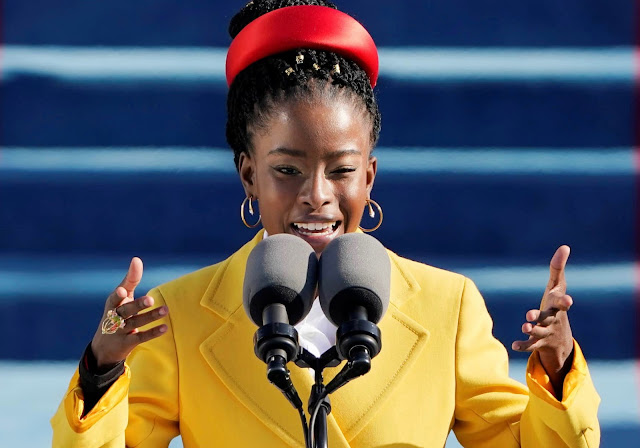
Amanda Gorman’s Poem at The Inauguration

A reposting for those who heard it and those who didn’t.  This is courage, beauty, hope.

——————————-

When day comes we ask ourselves,
where can we find light in this never-ending shade?
The loss we carry,
a sea we must wade.
We've braved the belly of the beast,
We've learned that quiet isn't always peace,
and the norms and notions
of what just is
isn't always just-ice.
And yet the dawn is ours
before we knew it.
Somehow we do it.
Somehow we've weathered and witnessed
a nation that isn't broken,
but simply unfinished.
We the successors of a country and a time
where a skinny Black girl
descended from slaves and raised by a single mother
can dream of becoming president
only to find herself reciting for one.
And yes we are far from polished.
Far from pristine.
But that doesn't mean we are
striving to form a union that is perfect.
We are striving to forge a union with purpose,
to compose a country committed to all cultures, colors, characters and
conditions of man.
And so we lift our gazes not to what stands between us,
but what stands before us.
We close the divide because we know, to put our future first,
we must first put our differences aside.
We lay down our arms
so we can reach out our arms
to one another.
We seek harm to none and harmony for all.
Let the globe, if nothing else, say this is true,
that even as we grieved, we grew,
that even as we hurt, we hoped,
that even as we tired, we tried,
that we'll forever be tied together, victorious.
Not because we will never again know defeat,
but because we will never again sow division.
Scripture tells us to envision
that everyone shall sit under their own vine and fig tree
and no one shall make them afraid.
If we're to live up to our own time,
then victory won't lie in the blade.
But in all the bridges we've made,
that is the promise to glade,
the hill we climb.
If only we dare.
It's because being American is more than a pride we inherit,
it's the past we step into
and how we repair it.
We've seen a force that would shatter our nation
rather than share it.
Would destroy our country if it meant delaying democracy.
And this effort very nearly succeeded.
But while democracy can be periodically delayed,
it can never be permanently defeated.
In this truth,
in this faith we trust.
For while we have our eyes on the future,
history has its eyes on us.
This is the era of just redemption
we feared at its inception.
We did not feel prepared to be the heirs
of such a terrifying hour
but within it we found the power
to author a new chapter.
To offer hope and laughter to ourselves.
So while once we asked,
how could we possibly prevail over catastrophe?
Now we assert,
How could catastrophe possibly prevail over us?
We will not march back to what was,
but move to what shall be.
A country that is bruised but whole,
benevolent but bold,
fierce and free.
We will not be turned around
or interrupted by intimidation,
because we know our inaction and inertia
will be the inheritance of the next generation.
Our blunders become their burdens.
But one thing is certain,
If we merge mercy with might,
and might with right,
then love becomes our legacy,
and change our children's birthright.
So let us leave behind a country
better than the one we were left with.
Every breath from my bronze-pounded chest,
we will raise this wounded world into a wondrous one.
We will rise from the gold-limbed hills of the west.
We will rise from the windswept northeast,
where our forefathers first realized revolution.
We will rise from the lake-rimmed cities of the midwestern states.
We will rise from the sunbaked south.
We will rebuild, reconcile and recover.
And every known nook of our nation and
every corner called our country,
our people diverse and beautiful will emerge,
battered and beautiful.
When day comes we step out of the shade,
aflame and unafraid,
the new dawn blooms as we free it.
For there is always light,
if only we're brave enough to see it.
If only we're brave enough to be it.

----

CLICK HERE TO WATCH HER POWERFUL POETIC RECITATION


Saturday, January 09, 2021

Epiphany part 2: the dark side of revealing radiance

 The post below was written on Jan 6, Epiphany, in the daytime in East Africa, in between a full hospital day, some meetings with local teams, and an evening zoom with our Home Office. At 9 pm our time (1 pm EST), we sat down at the end of an exhausting day to watch the Joint Session of Congress certifying the electoral college vote, an interesting arcane exercise of our democracy that had never seemed very dramatic or important until now. CNN was covering live, and whenever possible it is helpful to listen to actual speeches rather than what someone tells us about what was said. We watched Vice President Pence presiding, and the beginning of the state roll call. Alabama, Alaska. Then Arizona, and the objection presented, the retiring to the debates, the alternating speeches. We were watching live as the reporters outside the Capitol building began to note the increasing aggression in the crowd. Then we watched the surge up the steps, the barricades turned to ladders, the mayhem, breaking windows, the people gawking in the rotunda with their red hats and their Trump and confederate flags, and then a voice behind an outdoor reporter saying "the FBI has shot a woman," the jostling confusion, the stretcher, the blood.  No need to describe the day; the documentary evidence of violence was splashed across our screens.


Literal light arising, this morning

It occurs to me though that those hours are also appropriately called an epiphany, it is appropriate that they happened on January 6. 2000+ years ago, Jesus was revealed to a few who had searched, found in a fairly obscure outpost, in weak and dangerous circumstances, a truth that was enfleshed in powerlessness. In 2021, there were more revelations of character, though weakness was derided in favour of aggression. This Epiphany day, the phrase from Luke spoken by Simeon over the infant rings true: "the thoughts from many hearts may be revealed."

Nothing about America changed on Jan 6, but many hearts were revealed. Glorifying the Confederacy, questioning democracy, using untrue and incendiary phrases to incite a physical, illegal, violent occupation of congress to stop the final step in certifying a lost election, repeating baseless allegations after 60 lawsuits and dozens of recounts proved them false, building an actual GALLOWS AND NOOSE, these are all just as evil as breaking the window or trashing an office. But the afternoon of insurrection made those attitudes visible in actions. 

The fact that the vast majority of domestic terrorism has arisen from the white majority not from immigrants or minorities is not new news, but we all watched it on Wednesday. The fact that a large proportion of our elected officials care more about pandering to the lowest common denominators of fear to maintain their power then they do about the rule of law or the truth is not new news, but we listened to it in speeches even AFTER the rioting and danger.  The fact that law enforcement treats protestors unequally based on race or demographics is not new news, but we watched in real time the complete lack of organised resistance to the take-over of our US Capitol.  The fact that our outgoing President actively encouraged this anarchy might have been suspected but we could all watch it on TV on Wednesday.

So, another epiphany, a revealing. We have sold our souls, and the Devil is taking payment. 

But the good news is that when light shines, the hearts that are revealed can change direction. 30 years after the wise men, Jesus started walking around saying Repent, the Kingdom of Heaven is at hand. Light is shining, and we're all a mess. Every single one of us carries the same broken heart that would choose to harm those in our way. Perhaps this will be our national reckoning. We have too often accommodated injustice to protect our own way of life, and too often worshiped power and money. Jesus offers us exactly what we need: forgiveness, and change. Because we are loved, we can love others. We are preaching this to ourselves and to others. None of us are innocent, all of us need the good news. Many of us get much more than we deserve, hallelujah. Praying the church steps into this moral vacuum with truth: nooses and confederate flags and broken windows do not represent the Gospel, and getting the world while losing your soul is never a good bargain. Let's ask for that Kingdom to come ON EARTH as in Heaven, in equitable vaccines and oxygen, in empathy for those losing loved ones, in transparency of accounts and discomfort for the greater good.

Deep breath, and forward into 2021. Lord we NEED your mercy, we NEED your grace to love others more than ourselves. Amen.