rotating header

Sunday, October 13, 2019

Africa Shining: Running faster, Stopping War, Curing Ebola, Bringing Life

Africa shines whether we notice or not, but this week a lot of people have taken notice. Because a Kenyan runner ran a marathon course in Vienna in under two hours.  Not just barely under two, but he hit the goal with 20 seconds to spare.  Eliud Kipchoge, age 34, from Eldoret the running capital of Kenya, went 26.2 miles in 1:59:40.2. That's averaging four-and-a-half minute miles, 26 times. That is something no human being had done, something humanity was not even thought capable of doing.  And in his understated Kenyan way, his words and life give rich meaning to his accomplishment. He talks about teamwork, about discipline. He has a wife and three kids. My favorite quote: "I believe in a calm, simple, low-profile life. You live simple, you train hard and live an honest life. Then you are free."
Image result for eliud kipchoge live simple quote
Eliud Kipchoge, from Google images

This week as well, the Nobel Peace Prize was awarded to an African.  Ethiopian Prime Minister Abiy Ahmed Ali has used his position to seek peace with neighboring Eritrea. The Nobel committee noted that he and his Eritrean counterpart President Afwerki accepted an internationally mediated border demarcation, which enabled them to definitively abandon their 50-year history of conflict, which had flared 20 years ago into all-out war claiming tens of thousands of lives. He has stood up against corruption, championed press freedom and women's representation in government. The challenges for such a large, diverse country where poverty plagues progress remain. But we hope Mr. Ahmed's work will inspire conflict resolution across the region.
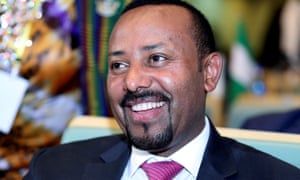
Abiy Ahmed
Abiy Ahmed, from Nobel site

While the Ebola epidemic in the DRC is far from over (3204 cases, 2142 deaths), we have had some glimpses of good news in the last two months. First, a vaccine that has proven effective in limiting secondary spread. And second, the trial of experimental treatments reached statistical significance, so that we can no longer call this an untreatable or incurable disease. Ebola now has a treatment. This involves collecting antibodies from the serum of Ebola patients and reproducing them to treat others, an idea that began with Congolese physician Dr. Jean-Jacques Muyembe, the director of the National Institute for Biomedical Research. He is a virologist who was part of the team that discovered the virus, and has worked in every Ebola epidemic Congo has had. He called living to see his ideas take root and produce life-saving treatments "the achievement of my life."
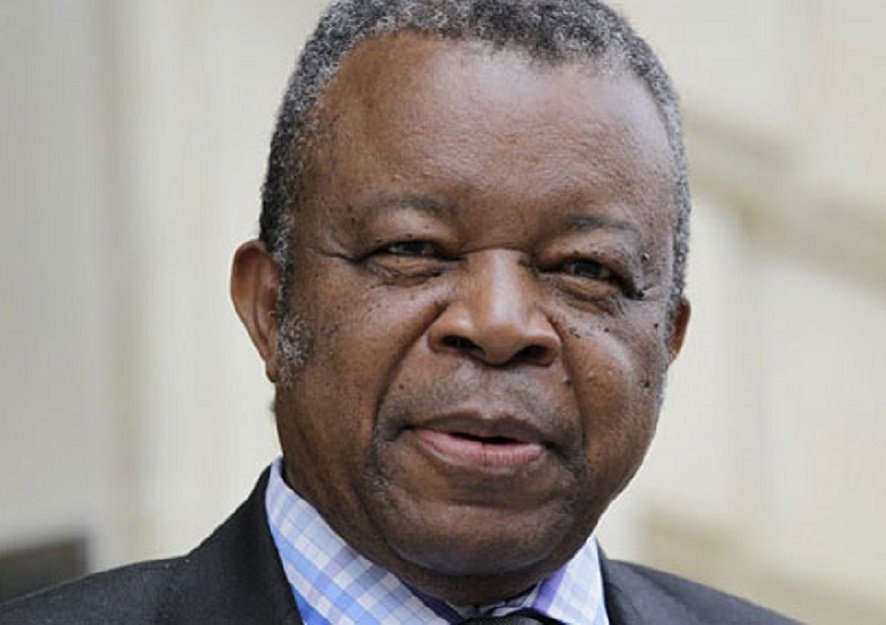
Dr. Muyembe, from link above

Three men whose recent achievements rival and surpass any in history. Physical strength, moral fortitude, brilliant thought. But the Shining of Africa story would not be complete without a nod to the mothers of this continent. Because soon a slight majority of all children in the world will be African, in spite of the inherent dangers of childbearing on a continent with the least access to safe delivery care. Behind each of those men, beside them, are women who risked their lives without knowing their baby would change history. Women whose physical strength bore them, whose moral fortitude formed them, whose wisdom guided them. And in Kenya, Ethiopia, Congo, Uganda . . . there are today's unsung heroes washing clothes, cooking over fires, hoeing a living out of the earth, carrying children, paying school fees, kneeling in prayer. Women giving advice, giving up their own meals for their children's hunger, teaching stories and proverbs, believing in the future. Mothers who at great personal sacrifice enable the world to be blessed with Africans. This is the continent of life, the continent that has seeded and nurtured the others.


These are a friend and colleague, a patient, and a neighbor. They are not likely to have newspaper stories, prizes, or cheering crowds. But they and the millions like them are the true foundation of Africa's shining, and you'll see them again seated with Jesus at the final banquet of honor.

**
Edited to add a Kenyan woman breaking the marathon record for women this week too!!
Image result for brigid kosgei images
Brigid Kosgei, 2:14:04!! https://www.theguardian.com/sport/2019/oct/13/brigid-kosgei-world-marathon-record-paula-radcliffe-chicago
At this rate it's hard to keep up with Africa . . .

Tuesday, October 08, 2019

Linguistics as Liberation: a story of learning Lubwisi


Uganda celebrates independence tomorrow. 57 years ago the British granted the Uganda Protectorate full independence. Of course prior to the 1800's Uganda existed independently with no permission from the British at all, with four or more distinct Kingdoms, each with their own languages, traditions, militaries, trade patterns, preferred foods, capitals and courts. Besides those four, there were dozens of smaller groups creating their own cultures and habits. One of those smaller groups was the Baamba-Babwisi-Batalinga-Babulibuli grouping here on the northwest slopes of the Rwenzori mountains trailing into the vast Ituri rainforest, straddling the imaginary border lines that the British and Belgians negotiated. They lived with very minimal contact with the world at large until the British put in a dirt road in the 1950's and set up a yellow fever research station. The larger kingdoms and tribes around the area tried to dominate, and the British actually encouraged that using those more familiarly organized tribes as administrators of their taxation and profit-making. So I suspect that independence in 1962 did not much impact the average person here. Over the next two decades Uganda's central government in conjunction with Protestant (Church of Uganda) and Catholic missions had set up a few schools and clinics, and our own World Harvest predecessors were making trips from Fort Portal into Bundibugyo to run immunization clinics, public health trainings, and the beginnings of churches. In the process we realized that the predominant language spoken here, Lubwisi, had never been written down. There were no books, and no Bible.

So from the late 80's on, we have had linguists on our team who have worked with local cultural leaders and trained Babwisi themselves to take over the work. They spent years meeting with hundreds of villages to clarify the vowels and consonants and decide on what letters to use, then more years translating the Bible bit by bit. We now have a full New Testament, and some primers, and work ongoing in Psalms. Meanwhile schools are teaching kids to read in English (in spite of national policy of learning to read first in the mother-tongue language, backed up by solid evidence that such a policy leads to better English literacy in the end), all secondary education is in English, government and business occurs largely in English (well, not really here, but most places). So you might argue: WHY learn Lubwisi, why translate it, why invest hours and years into this small language at all, when English competence dominates the world? 

Because God cannot be known fully in English, or any other language.  I am deeply indebted to an excellent book I am reading but not quite finished called Global Humility by Andy McCullough. He re-writes the tower of Babel story by pointing out that after Noah, in the chapter BEFORE Babel in Genesis, a diversification of language and culture was actually the good work of humanity in the world. It was Nimrod the hunter who tried to control, centralize, enslave with one language, one tower, one place. In this perspective, the intervention of God to re-enrich the languages was not an act of punishment but an act of liberation. "A multiplicity of languages, then--and this is the important point here--is a blessing, not a curse."

This has huge implications.  Colonial languages dominate and assimilate and if we only see the world from the perspective of the powerful, we loose beauty and nuance. As missionaries we are called to the margins, to the groups who do not control the world. We are called to become like preschoolers, babies, repeating sounds and pointing at objects. We are called to make mistakes and look foolish. We are called to dependence upon the skills of our neighbors in teaching us. We are called to honor the particularities of this place and time. We are called to move out, not conscript in.

Which is what we devoted the last week to here in Bundibugyo, thanks to Karen Masso.  Karen joined this team not long after we did and we have walked this path together for a very long time now. The Massos have moved back to the USA but Karen still works as a language-learning facilitator for Serge, gathering materials, teaching, supervising, investigating options for language schools. She prefers the growing participatory approach, which involves a lot of visual aids and repetition and a recording-listening app called Mesha. She taught 14 local people in the mornings to work as language helpers and then we all had lunch together and those 14 worked with the team for the afternoon, 1 or 2 with each adult and our best helpers taking the kids in a group. One week is just a taste of what we need to continue plugging away at for months and years. But perhaps the best part of it was the capacity to bring together our very diverse group and start building community between the language experts and the needy foreigners.

Every night Karen was cutting out visual aids and arranging packets

Day one, a meeting with Karen to explain to us the process

We usually had brief times as a group then the bulk of the time was one on one or two.

Many of the new language helpers are CSB grads, including those who found faith and purpose in those years

These kids are going to zoom ahead of us in a month I am sure

The last day, we handed out certificates and tokens of appreciation to all our helpers. Just a representative sampling of the "graduation" shots.


This is a job even a new mom can do . . . 


what a gift to have a true friend spend the week with us. Missing her already.

Friday, October 04, 2019

Quietly Extraordinary

Yosefu and Rose, with Mugi and Zawadi, in the late 90's on the airstrip


"Quietly Extraordinary" was Pat's phrase to describe the life our our friend Yosefu Mutabazi, who died this past Sunday morning at the age of 61. He was born in Rwanda, but moved to Uganda with his father as a boy and went to primary school in the Masaka area.  I could not follow the whole story but something to do with a piki and getting a job brought him out to Bundibugyo, where he met and married Rose and adopted her young son Mugisa who had immigrated from Congo. They went on to have three more children together,  Zawadi Edith (nursery school/early primary teacher with son Abel),  Sam (studying physics, chemistry, and math in S5), and Katusime (an S4 candidate taking exams this year). Yosefu was one of the first men who embraced the Gospel as our team began living and working here, and has been a right hand person of World Harvest Uganda ever since. He trained pastors, helped with Bible stories and translation, worked to establish churches, developed youth programs. He managed the Books for Bundi Library and more recently worked with Laura Stewart's new NGO promoting Bible Memory for youth (Onelife 20:24).  But mostly he opened his heart to the ever-changing group of bumbling foreigners, gave us advice, listened to our questions, gently corrected our mistakes.

He was never in a hurry, never demanding, patiently deliberate, dedicated to Scripture and truth and mercy. Perhaps because he began as an outsider he was sympathetic to our neediness. After knowing him for more than two decades we found ourselves entrusting our newest missionaries into his care. I don't think any of us imagined Bundibugyo without him.

Friday during our CSB celebration, as so often happens with highs and lows, he came to see Dr. Marc having become weak and stumbled and fell the day before. His blood pressure was sky high, and Pat drove him to the local small Catholic health center near by for treatment of this newly diagnosed malignant hypertension. We all thought this was concerning but treatable. However by Saturday he had become unconscious, and in spite of heroic efforts by Marc, Pat, his family, and many friends enabling transfer to Fort Portal, he never regained consciousness and died Sunday morning. We were sadly unavailable having driven Kevin to the airport and picked up Karen . . . but returned Sunday evening to sit at his home til nearly midnight.

Traditionally, when someone dies, the close family sits in the house with the body (in a coffin or on a mattress) and others stay outside awaiting burial the next day. In the old days there would be drums beating all night to ward off evil. These days, we have lights hooked up, speakers for music, and in this case even the Life Ministries projector showing the Jesus film.

Monday morning, we were back down to sit and show our support physically, while younger men started digging the grave. Since Yosefu was a much-loved senior, his grave was lined with bricks and finished with cement. 

Women take turns coming into the house to sit with the wife, children, and body, sometimes singing and praying, talking or being quiet. 


While friends comfort and youth dig, the elders organize for the funeral. Tarps propped up by poles, the sound system, many rented plastic chairs, and an ever growing crowd of people throughout the morning.

The church elders sat at this table receiving any donations to help the family, recording them in a book.

The funeral consisted of praise music, speeches, sermons, tributes, condolences, all of which went on for many hours. We collected and printed a dozen or more messages from across the world, as our missionaries recalled Yosefu's grace in their lives. Here Scott is preaching on Revelations and hope, the New Heavens and New Earth, the Kingdom on which we stake our life, using a song lyric from Andrew Peterson:
And all of the death that ever was
If you set it next to life
I believe it would barely fill a cup
'Cause I believe there's power in the blood . . .
I have to admit that lyric takes some faith here in Bundibugyo. There is a lot of death.

But as the rain poured down and the daylight faded, that lyric stuck with me. We were dancing in the mud, declaring death to be impotent in the face of the life God is bringing. We were remembering a man who preached this truth even as we reminded ourselves of the same truth in our grief. If our theology does not survive a leaking tarp on plastic chairs next to a fresh grave, with bereaved kids all around, then it is not worth embracing. 

By dark, we were ankle deep in heavy mud and rain, the coffin was in the ground, and people were dispersing quietly home. 

The final tradition is held 4 days later, which was this morning, and symbolically the tools of burial are to be washed that day and a large amount of food prepared. Everyone returns to sit under the tarps a final time and eat a plate of food. This symbolizes peace with the spirit of the person who has died. After that, the family is free to leave the home and start re-assembling their life.

We know we will see Yosefu in eternity, with his ready smile and loping gate, probably surrounded by small children who felt the warmth of being in his orbit. Please remember his family in your prayers.


Thursday, October 03, 2019

Christ School - 20 Year Ebenezer


Celebrating 20 years of Christ-centered education, for God's glory and the good of Bundibugyo. That was our theme on Friday.  Our first class entered in 1999, and those first few years were a struggle of survival. The ADF attacked in the area and burned students at another school (Kichwamba), finances were week-to-week and uncertain, we were betrayed on multiple sides by people breaking trust and doing harm, there were riots and sorrows and losses. But the point of an ebenezer is this: a memory, a marker, this far by grace, by God's help, we have come. Not by our own skills or power or luck, but by grace alone.

Grace, mediated often through these two. Kevin and JD Bartkovich joined our team in 1998 as educators who embraced our team leader Paul Leary's vision for a quality boarding school in the district. Bundibugyo was 50th out of 50 district on test performance. Our team had begun to train church leaders and translate the Bible, to reach out in health and water engineering, and we knew we would need a school to equip the rising generation to lead. Kevin was particularly aware that sending kids outside the district for schooling risked having them lose touch culturally with home, having them not return, having them model their lives on big-man power-accumulation values. So he and JD dedicated themselves to building up a new school, from scratch. Scott and I became team leaders as the Leary's left in 2001 which put Scott in the position of Board Chair. We had already sponsored one of the students in the very first class, and continued over the years to put ten of our "fostered" kids and our four biological children through the school. As leaders and parents we were invested, treasure and heart. And as leaders, we have stayed involved over a long arc. Particularly as we returned in 2019 to devote the year to sustaining the school in a time when we risked losing the whole project.

So it was a delight and a privilege that Kevin agreed to return as the guest of honor last week. The photo above is from about 9 pm after the full day of the massive party, as the staff requested to gather and speak words of thanks to Kevin and to Scott. Because though the grace has flowed through our mission, the main place it has landed and been multiplied to spread to students and to the district, is through our CSB teaching staff. These men and women are all in. They live on campus, they teach, they encourage and discipline, organize and inspire. It is their faith in God and their commitment to the school's values that impacts students. Our vision has always been to produce servant-leaders. This is so counter-cultural, in American and in Ugandan culture. Leaders who humbly put others before themselves. We saw that very concretely on Friday. These staff were ushering, serving, setting up, taking down, running errands, absolutely ensuring the joyful success of the day.

Besides the mission and the CSB staff, the other sponsors of the event were the CSB alumni, known here as OB-OG's (old boys and old girls). Above, Scott and Kevin pose with acting head teacher Peter Bwambale and the chairman of the OB-OG organization Agaba Amos. Many of the 750 students who have graduated from CSB returned for the day. Because when all is said and done, 20 years of school-establishing is not really about building classrooms and dorms or having a great football pitch. It is about the young men and women who leave the gate to change the world. Everywhere you go in Bundibugyo now, in government, media, health, education, business, in homes and churches, you find CSB grads who work with a different level of integrity and competence, with a vision for service and a heart of faith.

With all that prelude, back to the party. We invited and expected over a thousand people; I have no idea how many came but it was way over that. The week leading up to Friday was particularly stressful because a prominent local woman died after giving birth, and the family delayed her burial until Friday. Nothing is more important in Bundibugyo than a burial, so all of the district leadership who were coming to the CSB event were also juggling the burial plans. This caused a lot of stress for the people involved, and for us as hosts. We were deeply sad for the grieved family whom we knew, and it was hard to justify celebration in the context of grief. But that is the paradox of life on earth, seen starkly in Bundibugyo. We hold onto sorrow and joy in full measures, at the same time. Mercifully, the main political guests managed to make it to both, though the day became quite long.

Our CSB student choirs and dance teams performed for the guests, looking sharp and talented!

And we show-cased the local cultural group who outdid themselves with traditional dances, playing their flutes and banging their drums and shaking their bells. 


Besides music and dancing, every major event needs speeches. Politicians from the local surrounding village community right up to the LC5 (governor), the alumni association (above, note our son Balitebia John in the handsome maroon suit and his fiancee Paula in the yellow dress), the organizing committee, the PTA, the acting head teacher, the chairperson BOG, and the guest of honor. There were 28 lines on the program for all the invited greetings, speeches, and performances. Which took us about 6 hours.

These people deserve the greatest credit: the organizing committee, led by teacher Desmond (with mic) who is the longest-serving staff member and carries the vision, mission, and values of the school in a very unique way. All seven of these people donated days of work to the event. 

Scott spoke about the ebenezer theme, looking back on God's goodness to us and looking forward by faith to the calling we still have. Kevin told stories of God's faithfulness over his decade of preparing and then leading the school. He challenged the alumni to invest, challenged the students to avoid attempts at "short-cuts" and to live by trusting God and working hard. 

The final event was cutting the cake, complete with confetti and sparklers and cheers.  Left to right, Isingoma Edward who served as head teacher in the 2011-14 years when we desperately needed his help, he dropped everything else in his life and came. Me, Scott, Agaba Amos (head of alumni), Kevin, acting head teacher Peter Bwambale, the LC5 Mutegheki Ronald, the Chairman PTA Edison Balitwana, and the women's member of parliament for Bundibugyo District Josephine Babungi.
And while all that hooplah was shouting and sparkling on the football pitch, there were dozens of people cooking in and around the school kitchen.  Massive pots of meat, baskets of tomatoes, diced and sliced cabbages, plucked chickens, savory rice.  Because educating children takes the entire proverbial village: parents who entrusted us with their kids, the neighbors who sold us land, the brick-layers and sweepers, the teachers and nurses. And the cooks. So many cooks. 


It was a great day, that stretched into the night, with music and gusto and pride and reunions and a sense of accomplishment. 

The interesting thing about ebenezers in the Bible--they are not final markers, not tomb stones. They are testimonies of progress, a dividing line between danger survived and victory enjoyed, but the journey continues.  Friday, and the entire week leading up to the party (starting with the graduating classes' "Candidates Party" held the Saturday prior), afforded us a definite time to acknowledge the good that has come out of the years and lives poured into this work. But it was also a week of dreaming, and of remembering the vision. Bundibugyo needs a reliable, competent school within the district, a place where God's Kingdom is intentionally welcomed, where girls can learn without harassment, where being successful is not defined by money or prestige but by character and service, where learning includes practicums and not just notes, where local dances and drumming are admired on display, where parents are accessible and family is valued. And though we have a two-decade start, we have far to go. So let us end this 20-year post with a thanks to the donors who have enabled us to come this far, and an appeal for your prayers that the same grace by which we have come would carry us forward.


Tuesday, September 24, 2019

A Wedding after a Funeral

The above could be the story of life.  First there is death, then resurrection. First there is suffering, then joy.

Twelve years ago, we were in another busy Fall season, when mysterious deaths began occurring and we ended up in the midst of an Ebola epidemic. Our closest friend and colleague Dr. Jonah Kule died of the disease, and in the aftermath of that sorrow, we developed a program to send a handful of young people to medical school in his honor.  One of those was Dr. Ammon Bwambale, sponsored by the Laura Case Trust, who is now the medical superintendent and our boss as we work at the hospital.  (And cute enough, another redemption, the little boy and girl excited by the bride and groom in the photo above are two of his four children, both born very prematurely and both miracle survivors!). Another was Dr. Baluku Morris, who excelled in med school and was chosen by the government to be trained as an anesthesiologist. And who this weekend married his best friend, Phoebe.
with Dr. Ammon at reception

On Sunday, we found ourselves sitting in a church in Bundibugyo Town, with Dr. Ammon opening and leading the initial part of a wedding ceremony where Dr. Baluku was getting married. It was an 8-hour marathon of waiting, worshiping, eating, dancing, clapping, listening, speeches and prayers. First in the church with, then processing in cars through town honking horns, and then at a local restaurant venue with tents and booming speakers. At some point in the church service, it occurred to me that this day of joy would not have happened without the time of sorrow a dozen years before. Ammon and Baluku Morris would not be doctors, would not be leaders. We might not have even known them at this point in their lives.


Instead, this day burst with true happiness.  My favorite moment was when one of the dance groups played a very traditional scale and beat, which inspired about half of the seated audience of hundreds to move out of their chairs and out into the grass and join the dancing.  It was so spontaneous and people looked truly joyful. There are not many people from Bundibugyo who reach university, medicine, specialization . . . so the celebration was of marriage but also of hope.

Early in the day, Scott said, at least this is one party where I don't have to give a speech (after several unexpected invites over the prior few days). But mid-reception, it was announced that he would. And we are glad he did have the opportunity to remind people of Dr. Jonah, and of the way God brings good out of evil.


Outfit change to something traditional, long live Wakanda

Here is a quote from Kate Bowler's podcast interviewing Nora McInerny about grief: " Yes, I have a life I love and a life I miss.  Yes, I'm filled with happiness and gratitude and with an eternal ache.  Yes, we have all been broken before and yes, we could break all over again. The years will roll on, more joy, more pain, more possibility, more yes, more and more."

Saturday, September 21, 2019

The centrifuge of suffering

In Bundibugyo, the Paeds ward is a centrifuge that applies a centripetal force upon all the misery of the world and distills it down into the bodies of dozens and dozens of small people.

This beautiful place, like all others on our planet, has a hidden brokenness. As we round the mountain curves to return home, I see the smooth amazing pavement which has replaced one of the most difficult roads in the world. I see the outlines of palms and the vibrant green of banana trees, testaments to rainfall and abundance.  I see songbirds and sunsets, hear laughter, creativity, resilience, commitment.

But spin the globe a few times, and then enter the ward to see what settles out. Malaria, malaria, malaria, and the nurse tells me they lost one last night because the quick-acting and effective artesunate is out of stock. My first patient is a newly admitted 4-year-old, gathered on the floor on a mattress with her mother and little sister. I can see her skin is tortured with scabies (a mite) and her face puffy with marginal protein in her diet. Her baby sister's clothes, her mother's thin-ness . . . I am nearly certain that if we tell them to buy artesunate in a clinic, they won't be able to. We have a national medical store that supplies the district, but our population is large and growing, our malaria progress has stalled, the rain this year never stopped, and the vials of medicine run out too fast. We try giving her an oral dose which she immediately and dramatically vomits out. So I end up driving into the market and finding a private pharmacy where I can purchase 8 vials.  8 lives. $1.67 per life.

A few beds later, an 8 year old with HIV/AIDS. I had seen her just before I left for Serge meetings, suspected she was failing treatment, and obtained a specimen container from the lab for her to cough into to diagnose possible TB. We enrolled her for nutritional help, talked about medicine compliance, and left the student doctor to follow her.  Two weeks later, there she was. About four times someone had re-written the same plan in her chart, but nothing had happened. Her attendant grandmother did not have the understanding to complain, to push, to advocate. She lost the specimen container.  I found her not eating, breathing fast, coughing, vomiting, dangerously thin and dehydrated, not getting medicines, patiently waiting for a miracle I suppose. Caring for advanced immunodeficiency requires a fair amount of resourcefulness. To keep up with pills, with check-ups, with care. Clearly the decimated body of this child showed her family could not manage. We found an NG tube and I pulled a nasty looking fluid out of her stomach; not an ideal specimen but hoping it might show us if she has TB. We restarted meds, and a new plan for milk and hydration. The HIV virus is not highly prevalent here compared to many areas, but even 3% of 300,000 people is still 9,000 sorrows.

Across from her, a 2 year old with pale hair, big eyes, swollen limbs, skin ulcerations. His mother left him with his father as the marriage dissolved. His father, it seems, was nearly blind, in his 60's and in poor health, and really had no business getting this much younger woman pregnant.  Months later, he barely found his way to our outpatient nutrition program with his son having dwindled to near death, and the team quickly realized the need for inpatient admission. Thankfully the "divorced" mother's mother, the child's maternal grandmother, surfaced to stay with him in the hospital. His wounds look much better, but he lays stretched in the bed, listless. And his caretaker grandmother complains that while she gives him the therapeutic milk, she has nothing to eat herself. Adults suffering sorrows and making choices and having relational rifts that spin down to nearly kill a child.

Another twenty patients, sickle cell anemia, transfusions given, wheezy coughs, pneumonias, too-early weaning from breast feeding leading to intractable diarrhea, abscesses. I'm almost to the back wall when I see teeth way to big for the mouth of what looks like 3-month size baby. This twin is over 2 now. The mom tells me a story about going into labor too soon, delivering on the way to the hospital, an evidently poor birth outcome leading to severe brain damage. The other twin though looks normal. Something about this baby's spasms just grabs my heart, she really looks like she is suffering. How is it to be this mother and watch this happen, hour after hour, month after month, year after year, in a place with so few options? How is this baby even alive?

And so it goes. The day began with a nearly two-hour all-staff meeting about laboratory quality improvement, and ends with Jessie and I in the District Health Office trying to make sense of the large numbers of malnutrition patients in our books versus the small numbers in the hospital's reported cases. It takes a lot of time and effort to identify the point of the gap, and set up a meeting for Monday. Both of these sessions are very important, because donor money demands results, and the lab and the nutrition help we get will not continue if the data does not show competence. The list of problems to overcome to make changes seems daunting: interruptions in electricity, a broken generator, no service for the machines, running out of paper, out of medicine, out of forms, out of uniforms, out of staff, out of time. This hospital was designed to have 100 beds and serve a population of probably 50,000 in the 1960s. (Uganda and I are the same age, and population in the country in my life has gone from under 7 million to well over 40 million. ) The budget for Bundibugyo hospital for operating expenses (not counting the staff salaries and the standard medicines supplied by the government) is $12,000 A YEAR.  I suspect that keeps a comparably sized American hospital running for about 10 seconds.  So we problem-solve where we can, improvise, document, fund-raise, teach, help.

Budgets, education, lack of supplies, politics, power, accountability, belief--these huge and nebulous issues are hard to even grasp. But when the centrifuge spins, they bore down into the tiny lives left covered in insect bites, apathetic with hunger, shaking with fever.
Lord have mercy.
Give us wisdom and stamina.
Amen.