rotating header

Monday, January 13, 2020

Omaha Beach, 75.5 years later

Christmas part 2 . . . (see previous post for Cambridge). On the day after Christmas, we made our way down to the coast of England. 75 years ago, at the height of WW2, ten thousand young men assembled there for the invasion of Normandy. And amongst them were four of my uncles.


Our parents were all four the youngest in large families, children during WW2. But all of them had siblings who served. My dad, as the youngest of 15, was one of 9 boys. Three were too young to join the military, but the one closest to 18 lied his way into the Navy by the end of the war though he never made it overseas. Five of the remaining six fought in Europe in the war, four of them landing in Normandy, including three on Omaha Beach on D-Day. Pretty much like Saving Private Ryan, except they all lived and no one made a movie. My mother, however, got these men to talk 25 years ago on tape, on the 50th anniversary of DDay. They had never uttered a word of their war experience until one sunny picnic afternoon she got them talking with each other. I listened to that recording for the 75th anniversary and decided to honor my uncles with a trip in their footsteps.

So we boarded an overnight ferry from Portsmouth, home of the British Navy, to the French coast of Normandy, and spent three days walking 40 miles along the routes they would have taken from Omaha to St. Lo, carrying packs and following small roads and fence rows, stopping to read signs and admire churches, sleeping on a couple of working farms.

As we walked the strip of sand where thousands died, we listened to the recording of Uncle Carl and Uncle Edwin remembering the landing. Like a loyal West Virginia big brother would, Uncle Carl borrowed a jeep on the landing day, drove under fire up to the area of Uncle Edwin's battalion, jumped in his fox hole for half an hour to be sure he had survived, and drove back. We saw a monument to the 5th Engineers, Uncle Woody's unit, while hearing his voice describe half his transport blown up, men thrown into the water, helping others struggle out of their packs lest they all drown, swimming to shore and huddling under the cliffs, then burying body after body.

It was an act of courage in the face of the probability of death, a time of miraculous escapes (like the bullets that pierced one uncle's small tank just in front of his chest and behind his back), of moments of humanity like the French church that gave them a feather bed to sleep in, something these country boys had never seen. Uncle Glen was in a barn near St. Lo that suffered direct hits from our own bombs, one of the worst friendly-fire incidents of the war. But they marched on, all the way to Berlin, then came home to marry and live simple hard-working lives and never admit they were heroes.

For us, the days of walking, the kindness of the French people (Jack's language skills were a plus, but the Normandy people still appreciate American partnership), the poignant plaques and memorials, were a sobering yet richly meaningful walk through history. My uncles were my kids' age at the time, 21-26. At one farm, the owner insisted we borrow her car and told us where to go for dinner (it was well past dark and we were exhausted from a day's walking). At another they owners told us their own war stories from their parents, a mother killed, a father missing but found, an aunt who fell in love with an American but lost touch then met him 40 years later in a museum, at which time he sold all his property in California and returned to spend the rest of his life with her.  You can't make this up.

Thankful for this family history, and for the ability to honor it with our kids.

(photos by Jack again!)

Christmas in Cambridge, and dreams coming true


Most of the last 26 Christmases we have spent closer to REAL Christmas than to IDEALIZED. Meaning, in the actual atmosphere of goats and displaced humans and out-of-hospital births and starry skies and poverty. However, this year we opted to depart Uganda ten days ahead of the end of 2019 and break up our trip to January Serge meetings by stopping off in England. Home of my idea of Christmas in many ways, dark nights and twinkling candles and stunning musical choruses, pine trees and hot drinks and baked deliciousness. And more importantly, home to Jack Myhre for this school year as he pursues a Master's in Engineering for Sustainable development.
Magdalene College Library above and chapel below, home of Jack Myhre and CS Lewis


So we landed near Cambridge just as the winter solstice tipped us into the longest night of the year, rented a car and spent the evening with Serge colleagues in Harrow en route to Stonehenge. Jack had found out that for the winter solstice, access to the ancient site for sunrise is free . . . in prehistoric times, people hewed these massive stones and lined them up to catch the sun's rays at the solstice. So we joined hundreds of other adventurers in the predawn darkness and waited for the light, a fitting closure to a 2019 that has been full of sorrow, plague, war, lawsuits, threats, need, landslides, transition, and welcoming a new year where God's light will grow.

when your brother puts a camera in your face once too often . . 

From there we picked up Julia and Caleb and went on to our AirBnb in Cambridge proper for three days of immersion in Christmas and college. We climbed towers and walked lanes, perused books and admired chapels, gazed on art and toured libraries. But our real purpose was to camp out on the sidewalk all night on the 23rd so we could attend the Christmas Eve Festival of Lessons and Carols at Kings College. This service has been celebrated for a hundred years, since young men limped home from WW1 (movie plug--go see 1917, it is excellent) needing to be re-grounded in history and hope. We have been listening to this service on BBC in Uganda and Kenya for decades. And it was a bucket-list joke to say, some day, let's go to the service for real. The line forms around dusk, and by dawn there are hundreds of people waiting. We staked out our little piece of sidewalk with cardboard to sit on and blankets and umbrellas to survive the hours of cold and rain, about 50 back from the front of the line. Amazing story: one of the couples Scott went through residency with, who has supported us all our time in Africa, was doing the same thing with their kids. Fun. I personally huddled under a tarp and shivered and slept curled up for a few hours, because I can sleep most anywhere and because when they hand out the tickets at 7:30 am, I knew most people would sleep a few hours back at home but IT WAS CHRISTMAS EVE BAKING AND COOKING TIME!!!


The doors open to the ticketed diehards at 2:30 pm as we all returned, showered and dressed nicely and eager to worship. The Festival consists of 9 lessons, from Genesis on through the story of Jesus' birth and the wise men and the slaughter of the innocents, interspersed with carols sung by the Kings College Choir. The most iconic is the beginning, as a young boy soprano begins "Once in Royal David's City" alone as the choir enters. The organ swells, the congregation joins, stands, sits, meditates.  It was glorious.

And since we spent our family life in British colonies, we go to church on Christmas morning too. Which was almost better!  A smaller intimate group in another spectacular historical chapel, original music written by the organist, a meaningful sermon looking at the foreshadowing of suffering in the Christmas story, the sacrifice of redemption. Communion.  And as we filed out into the entry of the Trinity Chapel, cold flutes of champagne and warm mince pies and Merry Christmases all around.

Back at our AirBnb, the kind proprietors had put up a tree and lights. And the ever-faithful Schuberts sent us a puzzle, this one of photos from Luke and Abby's wedding. So we had our traditional meals and goodies and gathered around the tree and worked on the puzzle and thoroughly enjoyed the days.

Christmas in Cambridge, highly recommended.  Christmas with 3 out of 5 kids, priceless.

(all photos from Jack)

Thursday, December 19, 2019

13 Magi and g-nuts, soya and morninga: a 2019 visit to the vulnerable

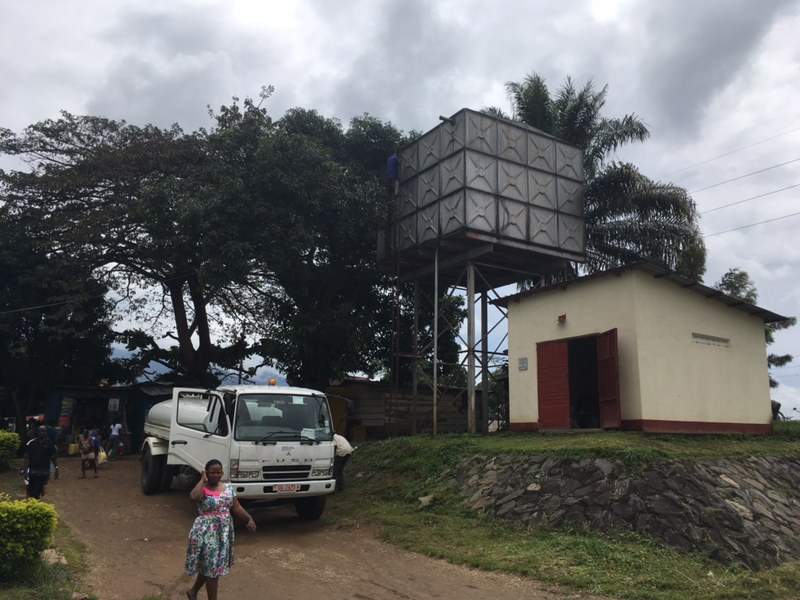
Today is day 12 post-flood and landslide.  Now the SUV caravans of UNHCR, CRS, Save the Children, Uganda Ministry of Disaster Preparedness, Ministry of Health, NGO’s that care for internal migration, the Red Cross, are moving up and down the road (or what’s left of it), calling meetings that suddenly disrupt normal work in the hospital or government, that pull people into the priorities that each group brings with their tarps and money. Mostly this will eventually be good for Bundibugyo. Some press, some concern, some supplies, some effort. Only one water system has been repaired to functionality, and Josh is still problem-solving and infusing some relief funding to keep the water tanker trucks filled and moving to the hospital and camps for the displaced.


Meanwhile though, since we have actually been living through all this rain and muck ourselves, and since we are connected to a small flexible organizations and donors who are quickly responsive, we were able to supply about 500 people with emergency survival items last week, and we’ve now completed nutritional surveys at both IDP (internally displaced persons) camps this week. We gathered and trained a team, purchased supplies, and visited one camp yesterday and one today. At each place we began with prayer and a good-news story, grounding the relief effort in the reality that even in sorrow, God sees and cares. Then women and children were registered, receiving books for recording health visits since their possessions were lost. We gave each child a dose of Vitamin A and emergency supplies of ORS (oral rehydration) and zinc (tablets) that they can use in case of diarrheal illness, a life-saving intervention after floods and rocks destroy waste disposal and cut off clean water. Next each was weighed and measured, then the results analyzed to identify any that were moderately or severely malnourished. In a normal situation, we’d expect 3% or less of kids to qualify. This week we found 16% of the children were malnourished (40 moderately and 5 severely, out of 185 screened).


The good news is that all of the children received a kilogram of supplemental protein rich food, a peanut-soya-morninga leaf blend that will boost their nutrition. The malnourished ones received a quadruple supply!  Plus antibiotics, and a follow-up appointment.

Hungry kids are vulnerable kids. Poor nutrition increases susceptibility to disease, and negatively impacts brain growth and development. It is one of the cycles of poverty that is very difficult to break without an infusion of help from somewhere—food to make people survive and thrive, heal and grow, learn and play, and eventually care for their own families.


Our team has had a focus on nutrition for decades, because it is an intersection point where spiritual truth, parity in relationship, justice in economics, wisdom and kindness in social circles, education and achievement, all meet. Real religion is just this: caring for the orphan and widow in their distress (that’s in the Bible).  In fact we are thrilled to have Serge Apprentice Jessie Shickel spearheading this program right now, and would very much like to have more help. The work this week not only identified and helped another almost 50 families . . . It was a visible touch of God’s mercy in a place that needs to see it.  It was an opportunity to learn new skills and serve for 13 mostly CSB alumni. It was a little taste of the Kingdom for us all.

And it was a reminder of Christmas (isn’t everything), because the young child Jesus was born displaced in a makeshift camp . . And then was sent fleeing as a refugee across borders. The magi came with their gifts, people of resource who studied the situation and came with their aid. Re-imagine the scene of the gold, frankincense, and myrrh, expensive gifts, as an aid distribution. Some portable goods the family could use to survive. Brought out of the respect and curious wonder of people from far away, who wanted to help.


Tonight we will meet with the district leadership and a number of NGO’s. The disaster response is hopefully turning a corner where the bigger agencies will take on an increasing role. Our team will continue to support nutrition and water, and look for gaps we can fill. And Scott and I will head tomorrow to our own Christmas break meeting our kids. We are deeply, deeply weary, feeling the weight of sadness around us, the desperation. At the same time, as much as we are eager for a break and for a reunion, we will truly miss this place for a few weeks. Where you pour your treasure, there is your heart. We’ll be back in January, hopefully with a little rest and perspective.

Let me close with a photo of our team this week, the young men and women who have worked hard to make all this happen.  These are my 2019 Magi.


Tuesday, December 17, 2019

Canaries in the coal camps: on children and malnutrition and Christmas and terror

We are now day 11 post-landslide and flood. The boulders have been bulldozed off the road. Three of the four wash-over spots have now been redirected to culverts, though a roaring muddy stream still churns over broken asphalt and a steep erosion at the worst spot. Silt and mud still fills many homes, and the barren rock fields that flattened and erased many homes remain as now permanent features of the landscape. Five days ago we distributed immediate survival relief supplies to 77 families. The government has been collecting a large store of beans and tarps and other supplies to deliver soon, and Red Cross has been providing some food relief in the camps. World Vision sent a survey team. And our water engineer Josh continues to network and trouble shoot, providing solutions on the spot. Yesterday, for instance, as I drove to the hospital I noticed way too many people lugging yellow plastic Jerry cans of muddy stream water up the hill to town. As soon as I saw the medical superintendent, he confirmed, the hospital is out of water.  Josh spent the day getting a tanker truck to be filled with 8000 Litres on our mission, then delivered to the hospital tanks.

But our main focus this second week is on the frailest of those who survived the floods, the children under age 5 and the pregnant women. A few days ago, as World Vision did their quick initial assessment, we got a call: can we help any malnourished kids? Jessie met the three they had found and admitted them to our hospital inpatient program. But with estimates ranging from hundreds homeless to thousands who lost something to tens of thousands affected in some way . . . Those three we knew were just the beginning. In our WV home area’s coal mining history, canaries were used in coal mines because they are so small, their little bodies succumb to dangerous build-ups of carbon monoxide before the levels harm miners. In the same way, the youngest children (and unborn with their maximally-stressed mothers) are the fragile harbingers of larger lacks. When the economy turns down, when there are droughts or floods or wars or epidemics, the first place we see the impact is in the bodies of the babies.

So Saturday evening, we had a planning meeting to generate the impetus for large scale screening of all under-fives and pregnant women in the two gazettes camps for displaced people this week. Monday Jessie and I came home from our hospital day to meet with the team our nutrition admin Bwampu had selected, training them to take weights, lengths, and mid-upper-arm-circumferences, to read charts, to record data, to dispense medicine and supplies. Today the boxes of ORS, zinc, Vitamin A, Amoxicillin arrived and are being packaged up into 400 units. Meanwhile the women whom we have been buying soya-gnut-moringa leaf home made plumpynut from for a decade and a half (thanks to our nutrition team in the 2000’s, especially Stephanie Jilcott Pitts and Scott Ickes who helped us develop this product and the little cottage industry for women to produce it) geared up to more than triple their production this week. Tomorrow we pray all this comes together for screening the first camp, and Thursday the second. Every child will receive an emergency pack for surviving the inevitable diarrheal diseases we expect to come, but the malnourished will be enrolled to receive ongoing supplemental high-calorie-density supplements.


All of this is possible because of the generous outpouring to our Bundibugyo Emergency Relief Fund. We thank you. We spent 2/3 on the distribution to the families last week, and the remaining 1/3 will fund this nutrition outreach, some of the water emergency solutions, and be held in reserve to combat cholera should it appear.

So what does all this have to do with Christmas? Generosity, yes, giving gifts to people far away who cannot in any way repay mirrors God’s gift to us. Presence, yes, standing with the soggy and trodden who were literally shaken to their cores follows the Emmanuel, God-with-us, reality of Jesus coming into a cave for animals, lying in a feed trough.  But a part of the Christmas story that rarely gets much press is found in Matthew chapter 2. The coming of God to earth was relatively hidden, humble, unexpected, but also accompanied by signs of a cosmic power shift for those who knew how to look. Stars moved, rulers pondered the implications. And one of those responded with a full-scale massacre. Herod sent his soldiers into the town of Bethlehem and all its districts, searching for male babies and toddlers, and killing them. Terror and weeping arose in the wake of God coming to earth. Mary and Joseph and Jesus escaped, but in the wake of their flight to Egypt many other families were devastated.

This is a mystery, one of those times the sword pierces our own hearts too. Innocent children still die as collateral damage in the war evil rages on Jesus. Yesterday, just as we were almost finishing rounds, Dr. Isaiah disappeared and then I saw him bustling to get gloves and a syringe. He called over his shoulder that a very sick child had just come in, and he was getting samples for malaria and blood transfusion. I followed him into the ward as the parents placed what looked to me like a very limp 5 year old girl in the table. “Is she alive?” I asked, which evidently had not been the question on anyone’s mind yet. I listened for a heart beat and watched for breath and checked her pupils all at the same time . . . Nothing.  She was cold, had been dead for some time. When I tried to gently tell her mother, her mother fell on the floor in a writhing screaming cascade of intense grief. Her father began to weep and pull out his Nokia simple cell phone and make a call. She’s gone. They had come to a private clinic on Friday in town, one run by a doctor who is assigned to another health center. But he wasn’t there, he was seeing patients for money. He appropriately realized that she was in poor condition and wrote for a referral to the hospital. I don’t know if they just thought they had to pay him money to get medicine, or went home to gather supplies, or didn’t understand, but three days later they returned too late. A voice was heard in our hospital, lamentation and great weeping, Rachel weeping for her children, refusing to be comforted, because they are no more.


The slaughter of the innocents puts an edge of challenge to the way Christmas has been packaged as coziness and cheer. Birth is joyful, but surrounded by pain and loss. Jesus is good news, but the reason we need that good news is seen in the lengths to which powers of evil play out in the easy death of the vulnerable. A star and an angel choir led a few witnesses to the diorama of the birth, but the unseen reality was mirrored in the raging soldiers and the crucifixion earthquake: this world is being shaken. The old ways of might makes right, me-first, make us great, take care of mine . . . No longer have the upper hand.

A landslide tore through Bundibugyo. Innocent children were the majority of the dead. And in its wake, the babies and toddlers and unborn will be the ones who suffer the most. This is the world we live in, but it is not the world as it should or will be. Because of that birth there is an entire process of redemption and restoration that is spreading like yeast, growing like a mustard seed. There are a dozen young people packing medicine right now, there is an engineer from Florida hauling water. There are women pounding peanuts into a buttery paste for the hungry. There is a young man who found Jesus at Christ School who is preparing a story of hope about Noah and floods and survival and God and love to share tomorrow to people who need to hear that truth.


Friday, December 13, 2019

#bundibugyofloods: this is real christmas

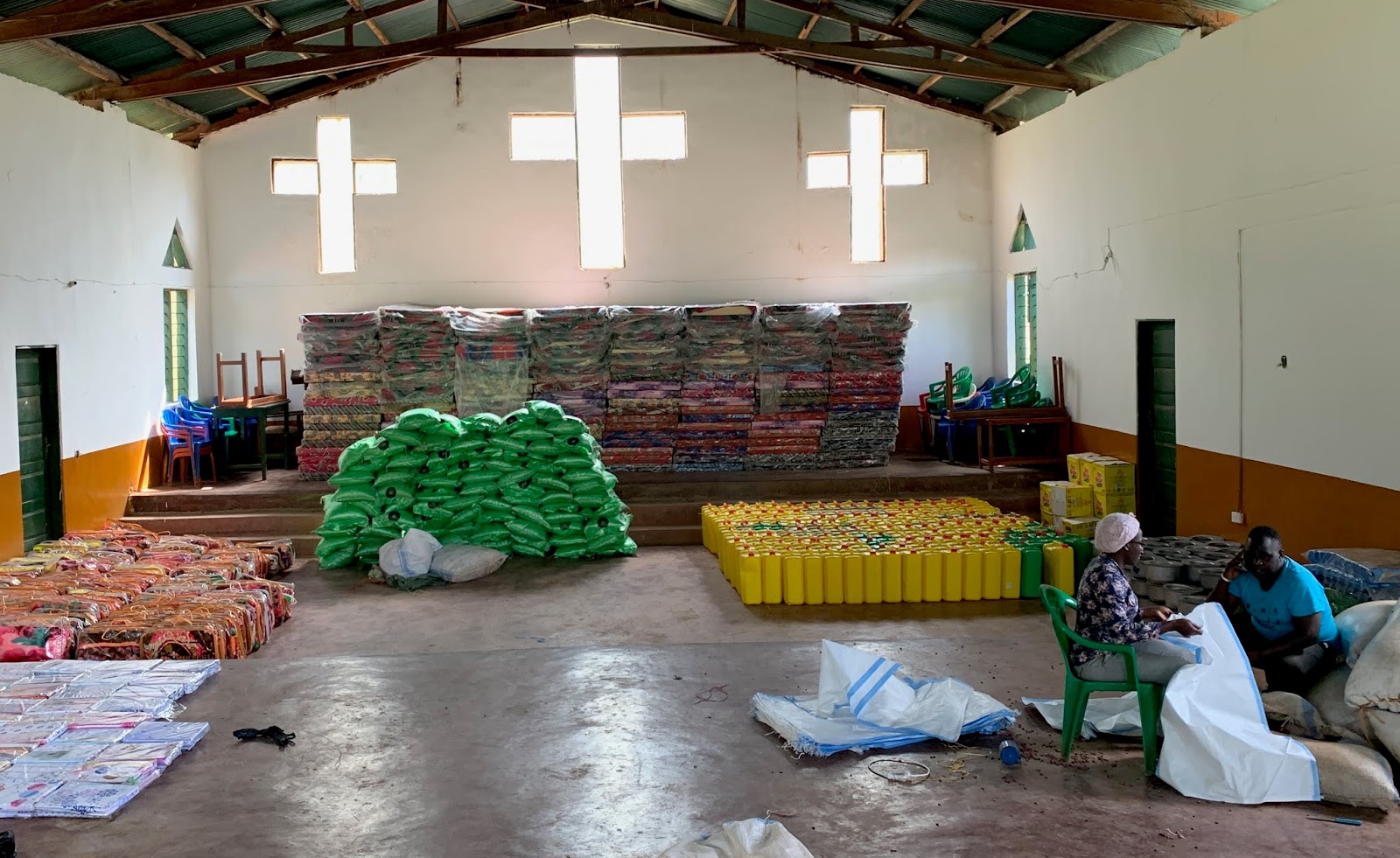
 Six days ago, the slopes of the Rwenzori mountains in Bundibugyo crumbled downward in multiple avalanches of boulders, silt, mud, water, trees, taking everything in their path. Some homes were filled with torrents of water and mud, others were pulverized into non-existence. Unknown numbers of people died; about 20 bodies were recovered in the first 24 hours but no one seems quite sure how many are still missing. As a team here, we witnessed the destruction, struggled to find passage through the buried road, and came face to face with the sorrow. The day after we began trying to feed some displaced people sheltering at a church, but as we shared the photos and saw the response from our friends and families, we believed we could do more. We requested and received immediate approval for an advance of $15,000 (Ug shillings 55Million) and the Serge Home Office worked quickly on Monday to code a web giving page and funding mechanism. By Tuesday donations began, and  we chose a team of 3 CSB grads with whom we have worked to manage the details. One, Sam, lived in the epicenter though his house was intact, so he had first-hand knowledge of affected families. Tuesday afternoon they were in the field registering an anticipated 50 families to help, which quickly became 70. Wednesday they traveled to Fort Portal over the mountains to procure supplies. We anxiously waited up for them that night as their miserably untrustworthy hired lorry broke down too many times to count. It was well after midnight when we finally started unloading in the Community Center. Thursday was a day to organize the relief and mobilize the people, so that today, Friday, 77 families could be served. These families varied from 2 to 12 people, but most were 8-ish,  so that’s ~500 affected individuals.

Each family received a life re-starter survival kit. Two mattresses, two sets of bedsheets, two blankets, a set of 8 aluminum saucepans, 5 plates, 5 cups, 3 liters of cooking oil, 15kg of beans, 25kg of rice, and two plastic jerry cans for carrying water - and Ush 50,000 cash.

The woman who lost everything, whom Scott found just sitting on a massive stone on Sunday, was there. A woman who had been struggling to get out of the sudden rush of flood waters with her one year old, and the one-year-old was swept out of her arms and never seen again, was there. Let that sink in. Six days ago, the raging flood stripped this mother of her child right in front of her eyes, right out of her grip. And on an on.

But today, the atmosphere was beautiful.

Scott shared from Matthew 1 about the prophecy from Isaiah foreshadowing that "the virgin shall bear a son and call his name Immanuel (which means "God with us").  He emphasized that despite the loss, the destruction, the sadness - God is with us.  And that these relief supplies tangibly express God's love and care today here and now.  He slowly detailed the Relief Package - and then said that many people would see that something was missing (and that might be different for different people-charcoal, matches, clothing, utensils).  In an effort to address those dashed expectations, we added a Uganda shilling 50,000 note (~$14).  A cheer went up that caused goosebumps. 

A few other thanksgivings...the team of CSB grads we worked with continually amazed us. John, Bwampu, and Sam led the effort but they drew in another dozen or more friends to load and off-load, to tally and organize. Long hours. Practical wisdom. The capacity to stretch the funds to 77 families instead of 50. The good decisions about what the essentials should include. Perseverance through mechanical setbacks and a grueling 8 hour trip. Meticulous records. An extremely well-organized distribution process with stations and documentation. Detailed thinking and forethought. And mostly, a pervading sense of the privilege of serving. Each told us how good it was for them to be able to do this, to administer God’s mercy in the form of donor largesse to people in their own community.  It is now possible in Bundibugyo to hand $15K to 20-somethings and have it accurately and efficiently spent for good.  That was not possible 15 years ago when we were managing our large grant from the Elizabeth Glaser Pediatric AIDS Foundation.  We had to do our own procurement and accounting.

Second, the team from World Harvest Mission (Serge . . . We kept the old World Harvest name in Uganda). The trauma of the landslides and flood knocked our hearts. Most of our team is pretty new, and young. We all felt guilty for even noticing our own inconveniences in the face of devastation, but it does wear you down to live for days and days without water and power and internet and phone, to have uncertain blips of service that disappear randomly, to be cut off by the road destruction. But this week we really saw the value of the opportunity to participate in Redemption. Rather than just bemoaning the brokenness, we were able to get up to our elbows in pushing back against the evil. Some of the mission kids even donated all their allowance money they had saved for two months to help a handful of affected families.

And thirdly, the survivors, with their resilient spirits. Their ability to be thankful, when this is far from justice. Their kindness and patience in waiting and receiving. Their delight in fresh new sheets and clean colorful household items. Their smiles when Scott brought down our boom box and blasted Christmas music through the day’s process.

Lastly, one more hidden beauty, our donors. So many responded quickly and raised the funds we needed to show this community that God sees. Emmanuel, God with us, rings true. We have a God who also suffered, who was also pierced and crushed by the evil of this world, who stands with the poor, who walks into the storms. Each person that sent their money became part of the visible love of God to Bundibugyo, part of the light that the people walking in darkness were able to see.

The impact of this rainy season, this time of rising temperatures in the Indian Ocean and torrential rains streaming down the Rwenzori valleys, will continue. Today we were able to directly help 500 people who lost everything they owned. But hundreds more people lost crops, or possessions, or relatives. Thousands and thousands have been put at risk by the damage to water systems. We have a long road ahead. But tonight as we wearily conclude this week, we are grateful for the picture of Christmas, of gifts, of redemption.


Monday, December 09, 2019

Bundibugyo Emergency Relief Fund Giving Opportunity


Two days have passed since the devastating floods and landslides which displaced and killed many in the place we call home - Bundibugyo District, Uganda.

Thanks to the hard work of many colleagues in Serge's Philadelphia Home Office, we may now receive donations to assist displaced families.

We hope to raise $300 per family to provide mattresses, blankets, cooking pans, and foodstuffs for 50 families.  More to follow if funds allow.  But we believe we can mobilize more quickly than some of the larger scale relief agencies which will come in with more substantial relief - but at a later date.  Our goal is a rapid response.

Please CLICK HERE to give to the BUNDIBUGYO EMERGENCY RELIEF FUND.