rotating header

Friday, November 01, 2019

When the "ordinary" feels extraordinary

The last six days have been what I imagine to be ordinary in a life-path not taken.


Day one, driving down to see our son Caleb who is in the army.  He greets us with dinner salads and gives us his bed, we wake up to walk a few blocks into town and stop for coffee and browsing the farmer's market. We drive his usual commute to base, past buildings where he normally attends classes or signs in and out, to a museum dedicated to Airborne and Special Operations. There we can browse history and ponder that someone first thought of deploying troops by parachuting out of planes less than a hundred years ago; we can hear stories of the current training.  We end the day with an hour-and-a-half drive to our daughter Julia's apartment, making dinner together.


Day two, church with our two middle children, worship and meditation.  Then my sister stops by with her husband and son on their way back to their home, and we hop in cars to drive to downtown Greensboro for the one-year party celebrating a social enterprise sort of French restaurant.  Julia's room mate works here, and the bold dream of affordable excellent food created and served by people with different-abilities, providing not just a job but a sense of accomplishment and purpose, inspires us all. Julia's church has an afternoon Swahili service (!) which feels like home. And afterwards the diverse congregation carries tables into a long line for the annual harvest dinner, celebrating the garden project Julia works on that has reclaimed land for nourishment and beauty. 20% of their produce is donated to combat hunger.


Days 3-6 find us in West Virginia, at our farm, with Luke and Abby and their new puppy Botu. This is their week of vacation, and they have taken part of it with Abby's family and for the upcoming wedding reception. But in the midst of that we get three full days of normal life. Making pizza, making gourmet tacos and pastries, hiking in the woods and dipping in the chilly autumnal river. Brilliant blue sun gives way to leaf must and misting skies. We talk, they work on studies and projects, there are bike rides and coffee. Mostly there is the delight that only a puppy can bring with his whole-body quiver of joy, his antics, his exploration, his snuggles. Caleb re-joins us for the last day, which as Abby points out brings out the best in both brothers.
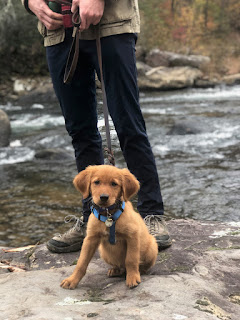


Six ordinary days, the kind of life I imagine other families experience on weekends or evenings. Pruning trees or washing dishes, rolling dough and hanging up laundry.

Only in our life, these days are fractured by thousands of miles and months of absence. We took the ordinary from our parents by moving to a far country. And now we take it from our young adult children by staying there.

So when those days can be wrested from the flooding speed of time, they are beautifully extraordinary. And perhaps all I can say is that the ache of the absence of days like these, and the depth of their goodness when they come, causes a deep chord to resonate. So that we know we are created for something like this, for connection, for living in proximity to those we love, for sharing sunshine and red leaves and good food with them. And while we love the independence and courage of our kids, and we love the deeply meaningful work God keeps in front of us, those realities come with a cost and the cost is real.

It was an extraordinary event that called us across the ocean this time, so the final four days of our ten-day visit will be rich as well--a weekend of celebrating Luke and Abby's wedding with a reception in Annapolis, a visit to Grace church and a day's Ebola vaccine follow-up at the NIH. All very good things. But the six days of ordinary are what I think I will treasure most as we go back, and those are the memories I think will sustain us with the taste of the presence of God.


Friday, October 25, 2019

Go, tell----at home and all over the world

Airports, internet, and layover gaps = a few minutes to pay attention to the culture wars that rage in places that don't have to expend energy on surviving floods or malaria or political oppression. So this morning I had coffee with two very disparate experiences: reading my daily Bible reading which happened to be Mark 16, and listening to the audio (that has raised a little firestorm) of a prominent evangelical conservative male Bible teacher making fun of a very widely respected evangelical woman Bible teacher named Beth Moore. Most women I know have been part of a Beth Moore Bible study at some time or another. She is a prolific author and speaker, but three men who appeared to be on stage at a convention discounted her ministry on the basis of their interpretation of the Bible as forbidding women from preaching.  I am sure most people heard about this days ago . . . and everything worth saying has been said. But the juxtaposition of these two passages, from the Gospel and from the news, was so startling, allow me (Jennifer) an observation.

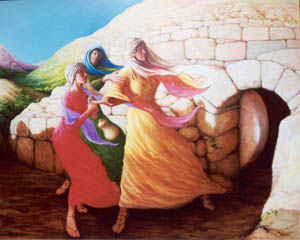
Image result for google image painting women tomb jesus

In Mark 16, the pivotal moment of history has just occurred.  Jesus has overcome death. Crucified, dead, and buried on Friday, it is now Sunday morning just after dawn, and three women named Mary Magdalene, Mary the mother of James, and Salome have come to the tomb. They had delayed applying embalming spices around his corpse due to strict observance of the Sabbath, so now their mind is on how they will remove the massive stone sealing the burial cave's entrance. Instead they find the door open, the cave empty except for a young man in a long white robe who gives them an angelic order from God: "Jesus of Nazareth is not here, he is risen! Go, tell his disciples--and Peter . . ". If the Gospel is: Jesus died and overcame sin and death and now you can follow Him and receive the resurrection life . . . then the first humans instructed to speak this Gospel were three women. The angel did not say, you pesky busy-body women thinking you can usurp the chosen disciples with your feminist ideas, go home. The angel said, go tell. Go to your colleagues, your friends, bear witness. Live your lives as a testimony. You were here to serve in a humble way with the very physical, tangible, messiness of grief and decay. Continue in that humility but speak the truth of what you have seen. 

Perhaps this hits me, because it is my life. I am up to my elbows in scabies and pus on a daily basis, and believe the call of Jesus to touch, to heal, to grieve, to pray, and to speak words of truth. For my particular church background, missionary doctor is an acceptable female vocation.  I'm thankful for that. It's not seen as a power position, and it isn't one.

We all have cultures. No one interprets the Bible from a universal out-of-the-earth perspective. For some that is a small slice of history that looks a certain way in terms of power structures between men and women, white and color, global north and south, wealthy 1% and everyone else. And depending on where and when you were born, certain verses we assign to "limited to that culture and time" and others we broaden to "applicable always".  I don't know, but I doubt the men on that stage had tassels on their clothes, or had stoned a rebellious son, or had given their coat away if asked, or sold all they had and gave to the poor, or had plucked out an eye if they glanced at pornography.  Yet all those things are literally in the Hebrew and Greek. As 21rst century speakers of English, we have to study, interpret, pray, and apply.  The Bible is true, and all of it has something to say to us. Read the Bible as poetry, as story, as theological treatise, as prophecy, as history. Grapple with the implications. All of us need to do that. All of us need the uncomfortable truths.  I am blind to the beauty and invitation of holiness on a thousand levels, self-righteous and self-protective. All of us need to wrestle with God as Jacob did, and all of us come away limping

Jesus did not mince words, but most of his anger was directed at those who thought they knew best, who wanted to fit everyone else into their boxes, who acted without charity to ensure their own power. For those rescued from lives of thievery, demon-possession, fruitless toil, social isolation, prostitution, disability . . . his words were tender.  But in both cases, his words were love. Tough love to shake us out of our self-satisfied pride; tender love to heal our bruised souls. Because Jesus cares about the men on the stage and the woman being scorned. Jesus loves them all, and us too, and to some degree we all are part-pharisee and part-prostitute, we all think better of ourselves than we ought and worse of our selves than God does. 

Thank you, Beth Moore, for your gracious response. Let's focus on the big picture. Another friend sent this link this week, a commentary on how the Spirit is moving through diverse cultures all around us.  Let's not try to tear each other down, but rather acknowledge that we're ALL going to be pretty surprised in Heaven. What would the world look like if we all took seriously doing justice, loving mercy, and walking humbly with our God?


Sunday, October 20, 2019

On Stories


Sometimes I get to explain why I wrote four young-adult magical realism novels instead of books of theology or culture. Besides the fact that I don't know enough about God to write theology, or enough about anyone to write about culture, I actually think stories offer unique ways into our thinking. They allow us to enter another's reality, to build empathy, to ponder cause and effect and morality and truth and mystery more subtly than a factual treatise would.  They get past our defenses and cause us to see the world and ourselves in new ways. Story subverts our assumptions, molds our baseline narrative, our world-view. Story engages us at the level of our imagination, not just our rational thought.

Three times this week, these ideas have jumped out for me.  First, I watched a few minutes of Ta-Nehisi Coates being interviewed about his new novel (which I have yet to read).  Everyone wants to know why someone quite successful in writing non-fiction took up this new form of communication.  He explains: "You could state verifiable facts to people, and they would just bounce right off . . . what I realized, was that what they were actually resisting was not the facts, but the implications of the facts . . . and so I realized the way you get to that is through story telling."

Secondly, I reached chapters in Global Humility on narrative and parable, in which McCullough says:
"Media and the arts have a creative, parabolic power to hold a mirror to society, to speak of judgement and hope, but in non-direct ways which engage the imagination in a society which does not accept the authority of the Bible prima facie."


And thirdly and most importantly, we hosted our Serge Kenya colleagues for a week.  George Mixon pointed out that 70% of the Bible is in story form. He came with Jack and Andrea Roylston to teach a large, interdenominational, multigenerational group about Chronological Bible Storying. This is a technique developed for primarily aural learners in oral cultures. Typically, participants work for months or years to memorize 30-40 key stories that tell the Big Story of God's work in the world from Genesis to Revelation, learning how to tell them with factual accuracy and engaging drama, how to ask questions that dig for meaning, how to open doors to encounter with capital-T Truth. We only got the introduction to this work this week, but how rich it was! George, Jack and Andrea did a 3-day seminar for 75 women and men representing over 30 churches and schools, taught at CSB chapel and two church services, worked with Sunday School teachers, and also led a 1-day seminar for CSB staff.

Most sessions went like this.  One of the team would ask a question, a big question, the kind of heart-question that we all struggle with about life. Then they would tell a story, say the story of Eve, Adam, the Serpent and God in Genesis 3, or the story of Jesus healing a bleeding woman and the dying girl in Luke 8. After telling the story straight through twice (repetition, the key to learning!), they would then engage the audience with good adult-learner techniques. Asking questions, playing games.  Everyone stand up, and you can't sit down until you provide the next sentence of the story.  Break into groups and tell each other the story. And so on. Once they were sure we had the story facts in place, they would start delving deeper. Why do you think Eve said that? What if Jairus had not asked Jesus to come? These would eventually lead to the real heart of the story: what does this tell us about God? About us? About God's relationship to us?

It was delightful to watch our friends engage. For me, to see how the stories can make SO MUCH MORE SENSE to majority-world listeners than to the world's wealthiest elites, or how they resonate with real life in 21rst century Uganda. To see how my neighbors picked up on certain details (shock and dismay when Jesus delayed going to see his sick friend Lazarus, unforgivable!) that would not have been as important to me. To witness their skill in story-telling, something that is very much a part of this culture. To see teachers at CSB make the leap to how this kind of technique (interactive, socratic) would be applicable in their classrooms in general, not just in a church-like setting.
Thankful for this week of stories!

Sunday, October 13, 2019

Africa Shining: Running faster, Stopping War, Curing Ebola, Bringing Life

Africa shines whether we notice or not, but this week a lot of people have taken notice. Because a Kenyan runner ran a marathon course in Vienna in under two hours.  Not just barely under two, but he hit the goal with 20 seconds to spare.  Eliud Kipchoge, age 34, from Eldoret the running capital of Kenya, went 26.2 miles in 1:59:40.2. That's averaging four-and-a-half minute miles, 26 times. That is something no human being had done, something humanity was not even thought capable of doing.  And in his understated Kenyan way, his words and life give rich meaning to his accomplishment. He talks about teamwork, about discipline. He has a wife and three kids. My favorite quote: "I believe in a calm, simple, low-profile life. You live simple, you train hard and live an honest life. Then you are free."
Image result for eliud kipchoge live simple quote
Eliud Kipchoge, from Google images

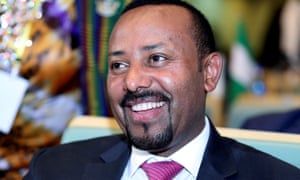
This week as well, the Nobel Peace Prize was awarded to an African.  Ethiopian Prime Minister Abiy Ahmed Ali has used his position to seek peace with neighboring Eritrea. The Nobel committee noted that he and his Eritrean counterpart President Afwerki accepted an internationally mediated border demarcation, which enabled them to definitively abandon their 50-year history of conflict, which had flared 20 years ago into all-out war claiming tens of thousands of lives. He has stood up against corruption, championed press freedom and women's representation in government. The challenges for such a large, diverse country where poverty plagues progress remain. But we hope Mr. Ahmed's work will inspire conflict resolution across the region.
Abiy Ahmed
Abiy Ahmed, from Nobel site

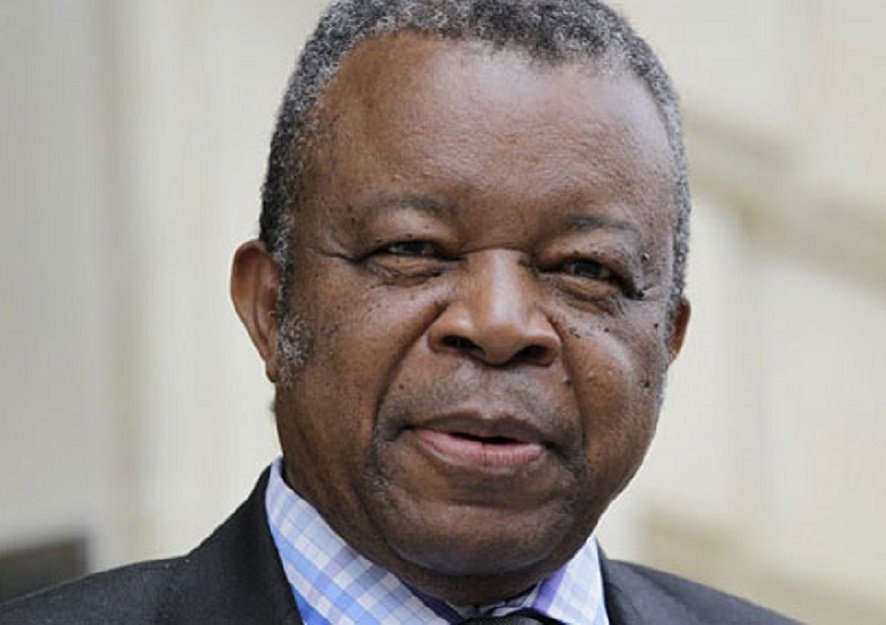
While the Ebola epidemic in the DRC is far from over (3204 cases, 2142 deaths), we have had some glimpses of good news in the last two months. First, a vaccine that has proven effective in limiting secondary spread. And second, the trial of experimental treatments reached statistical significance, so that we can no longer call this an untreatable or incurable disease. Ebola now has a treatment. This involves collecting antibodies from the serum of Ebola patients and reproducing them to treat others, an idea that began with Congolese physician Dr. Jean-Jacques Muyembe, the director of the National Institute for Biomedical Research. He is a virologist who was part of the team that discovered the virus, and has worked in every Ebola epidemic Congo has had. He called living to see his ideas take root and produce life-saving treatments "the achievement of my life."

Dr. Muyembe, from link above

Three men whose recent achievements rival and surpass any in history. Physical strength, moral fortitude, brilliant thought. But the Shining of Africa story would not be complete without a nod to the mothers of this continent. Because soon a slight majority of all children in the world will be African, in spite of the inherent dangers of childbearing on a continent with the least access to safe delivery care. Behind each of those men, beside them, are women who risked their lives without knowing their baby would change history. Women whose physical strength bore them, whose moral fortitude formed them, whose wisdom guided them. And in Kenya, Ethiopia, Congo, Uganda . . . there are today's unsung heroes washing clothes, cooking over fires, hoeing a living out of the earth, carrying children, paying school fees, kneeling in prayer. Women giving advice, giving up their own meals for their children's hunger, teaching stories and proverbs, believing in the future. Mothers who at great personal sacrifice enable the world to be blessed with Africans. This is the continent of life, the continent that has seeded and nurtured the others.


These are a friend and colleague, a patient, and a neighbor. They are not likely to have newspaper stories, prizes, or cheering crowds. But they and the millions like them are the true foundation of Africa's shining, and you'll see them again seated with Jesus at the final banquet of honor.

**
Edited to add a Kenyan woman breaking the marathon record for women this week too!!
Image result for brigid kosgei images
Brigid Kosgei, 2:14:04!! https://www.theguardian.com/sport/2019/oct/13/brigid-kosgei-world-marathon-record-paula-radcliffe-chicago
At this rate it's hard to keep up with Africa . . .

Tuesday, October 08, 2019

Linguistics as Liberation: a story of learning Lubwisi


Uganda celebrates independence tomorrow. 57 years ago the British granted the Uganda Protectorate full independence. Of course prior to the 1800's Uganda existed independently with no permission from the British at all, with four or more distinct Kingdoms, each with their own languages, traditions, militaries, trade patterns, preferred foods, capitals and courts. Besides those four, there were dozens of smaller groups creating their own cultures and habits. One of those smaller groups was the Baamba-Babwisi-Batalinga-Babulibuli grouping here on the northwest slopes of the Rwenzori mountains trailing into the vast Ituri rainforest, straddling the imaginary border lines that the British and Belgians negotiated. They lived with very minimal contact with the world at large until the British put in a dirt road in the 1950's and set up a yellow fever research station. The larger kingdoms and tribes around the area tried to dominate, and the British actually encouraged that using those more familiarly organized tribes as administrators of their taxation and profit-making. So I suspect that independence in 1962 did not much impact the average person here. Over the next two decades Uganda's central government in conjunction with Protestant (Church of Uganda) and Catholic missions had set up a few schools and clinics, and our own World Harvest predecessors were making trips from Fort Portal into Bundibugyo to run immunization clinics, public health trainings, and the beginnings of churches. In the process we realized that the predominant language spoken here, Lubwisi, had never been written down. There were no books, and no Bible.

So from the late 80's on, we have had linguists on our team who have worked with local cultural leaders and trained Babwisi themselves to take over the work. They spent years meeting with hundreds of villages to clarify the vowels and consonants and decide on what letters to use, then more years translating the Bible bit by bit. We now have a full New Testament, and some primers, and work ongoing in Psalms. Meanwhile schools are teaching kids to read in English (in spite of national policy of learning to read first in the mother-tongue language, backed up by solid evidence that such a policy leads to better English literacy in the end), all secondary education is in English, government and business occurs largely in English (well, not really here, but most places). So you might argue: WHY learn Lubwisi, why translate it, why invest hours and years into this small language at all, when English competence dominates the world? 

Because God cannot be known fully in English, or any other language.  I am deeply indebted to an excellent book I am reading but not quite finished called Global Humility by Andy McCullough. He re-writes the tower of Babel story by pointing out that after Noah, in the chapter BEFORE Babel in Genesis, a diversification of language and culture was actually the good work of humanity in the world. It was Nimrod the hunter who tried to control, centralize, enslave with one language, one tower, one place. In this perspective, the intervention of God to re-enrich the languages was not an act of punishment but an act of liberation. "A multiplicity of languages, then--and this is the important point here--is a blessing, not a curse."

This has huge implications.  Colonial languages dominate and assimilate and if we only see the world from the perspective of the powerful, we loose beauty and nuance. As missionaries we are called to the margins, to the groups who do not control the world. We are called to become like preschoolers, babies, repeating sounds and pointing at objects. We are called to make mistakes and look foolish. We are called to dependence upon the skills of our neighbors in teaching us. We are called to honor the particularities of this place and time. We are called to move out, not conscript in.

Which is what we devoted the last week to here in Bundibugyo, thanks to Karen Masso.  Karen joined this team not long after we did and we have walked this path together for a very long time now. The Massos have moved back to the USA but Karen still works as a language-learning facilitator for Serge, gathering materials, teaching, supervising, investigating options for language schools. She prefers the growing participatory approach, which involves a lot of visual aids and repetition and a recording-listening app called Mesha. She taught 14 local people in the mornings to work as language helpers and then we all had lunch together and those 14 worked with the team for the afternoon, 1 or 2 with each adult and our best helpers taking the kids in a group. One week is just a taste of what we need to continue plugging away at for months and years. But perhaps the best part of it was the capacity to bring together our very diverse group and start building community between the language experts and the needy foreigners.

Every night Karen was cutting out visual aids and arranging packets

Day one, a meeting with Karen to explain to us the process

We usually had brief times as a group then the bulk of the time was one on one or two.

Many of the new language helpers are CSB grads, including those who found faith and purpose in those years

These kids are going to zoom ahead of us in a month I am sure

The last day, we handed out certificates and tokens of appreciation to all our helpers. Just a representative sampling of the "graduation" shots.


This is a job even a new mom can do . . . 


what a gift to have a true friend spend the week with us. Missing her already.